Thirsty Industries: Steel
The world makes about two billion tonnes of steel a year, and a steelworks is one of the largest single water users on any river it stands on, drawing tens of thousands of litres for every tonne to cool furnaces, quench coke and slag, and wash gas. Nearly all of it goes back. What a steelworks does with water, why the difference between the water it takes and the water it keeps is the whole story, and what the shift from coal to hydrogen and scrap will do to it.
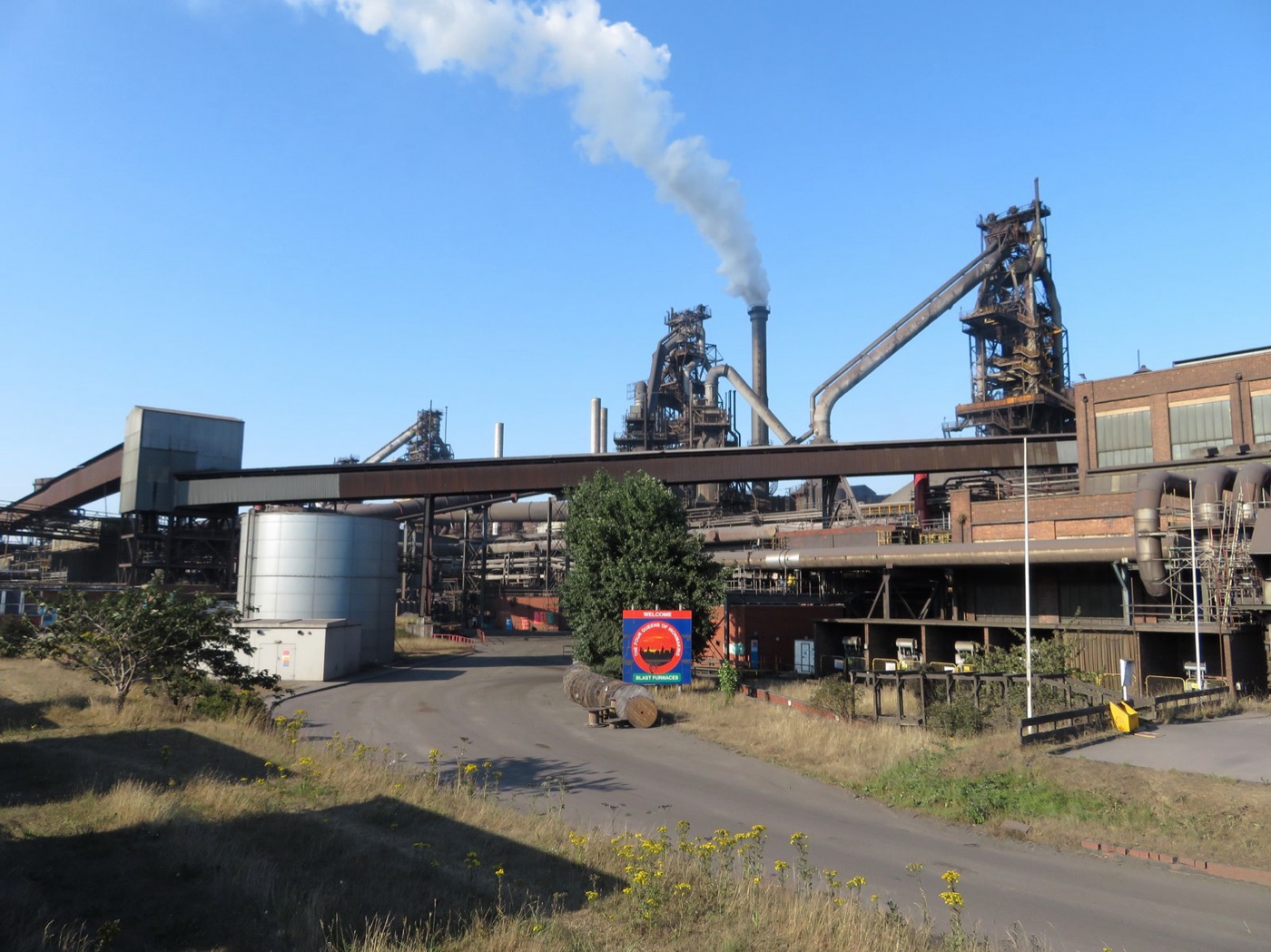
A steelworks on a river is the largest thing on the river. The blast furnaces stand as tall as a cathedral, the works stretch for kilometres along the bank, and the intake that draws the plant's water is a channel wide enough to float a barge. A large integrated works takes in a river's worth of water, on the order of a cubic metre a second or more, runs it through the walls of furnaces that hold metal at fifteen hundred degrees, and gives it back a few degrees warmer through an outfall downstream. The water is the reason the works is on the river, as much as the coal and the ore that come up it by barge.
This article is about the water in the material that most of the built world is made of. It is a large number per tonne and a very large number in total, and the interesting part is the difference between the water the works takes and the water it keeps.
What a steelworks does
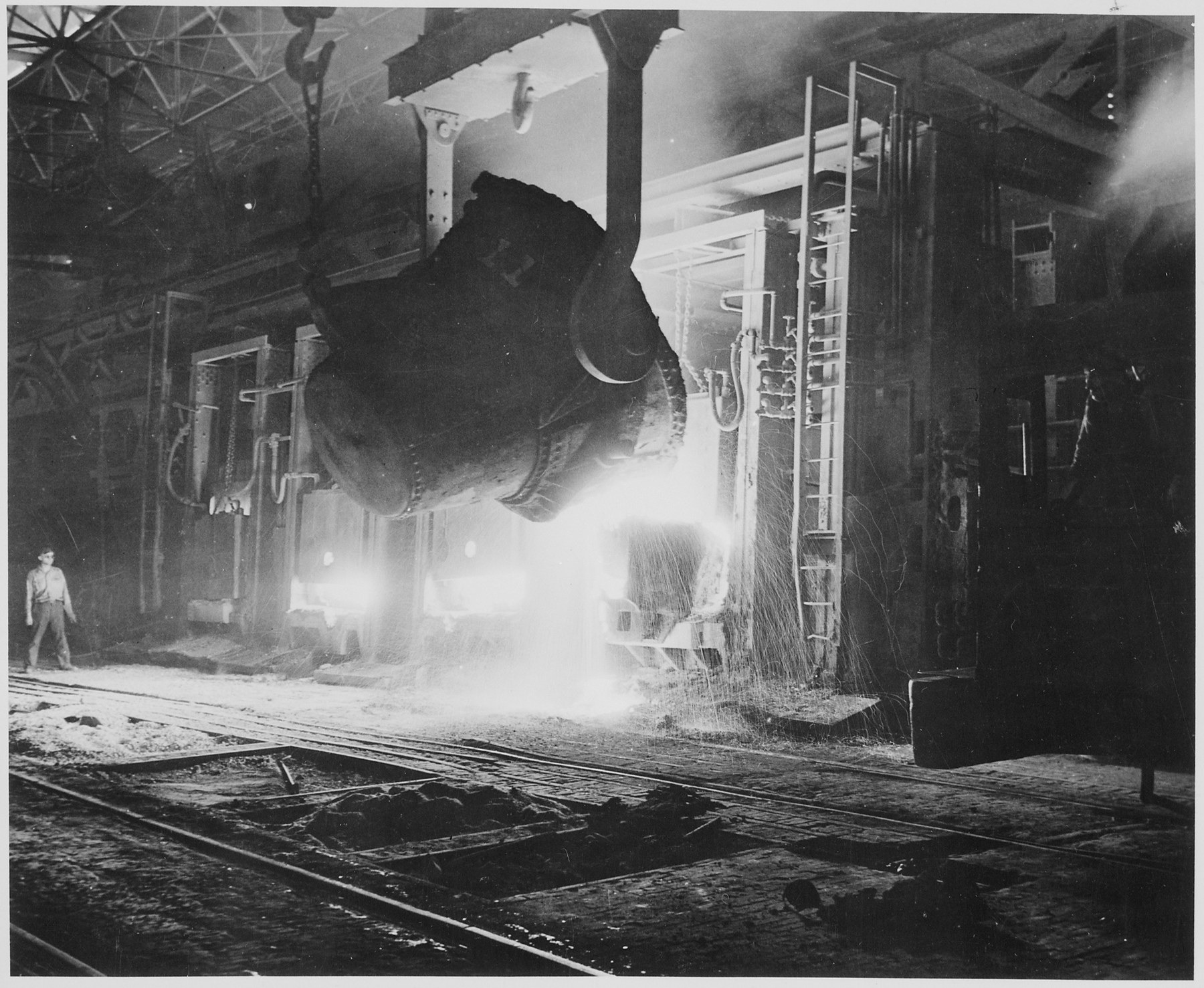
Most of the world's steel is still made the way it was made in 1900, at a larger scale. Iron ore, coke and limestone go into the top of a blast furnace, hot air is blown in at the bottom, and molten iron runs out at the hearth. The iron goes to a converter, where oxygen is blown through it to burn out the carbon and make steel. The steel is cast into slabs in a continuous caster, and the slabs are reheated and rolled into sheet, plate, beams or bars. Every one of those steps happens above a thousand degrees, and every one is cooled by water.
The blast furnace's shell is lined with water cooled plates. The converter's lance and hood are water cooled. The caster's mould is a copper box with water racing through it, and the strand of steel that comes out of it is sprayed with water as it descends, so that it solidifies before it reaches the rolls. The rolling mill's rolls are cooled by water and the scale that forms on the hot slab is blasted off with water at high pressure. The coke ovens, where coal is baked into coke, quench the red hot coke with water in a tower that sends up a plume seen for kilometres, and the slag from the furnace is granulated by pouring it into water. And the gas from the furnaces, full of dust, is scrubbed with water before it is burned or released.
| Water in a tonne of steel, blast furnace route | |
|---|---|
| Withdrawn from the river or the sea | About 28,000 litres, at the industry average |
| Returned, treated, to the source | About 25,000 litres |
| Consumed, mostly as evaporation | About 3,300 litres |
| Largest use | Cooling of furnaces, casters and mills |
| Other uses | Coke quenching, slag granulation, gas scrubbing, descaling |
| Share recirculated inside the works | Around 90 percent at a modern plant |
The industry's survey of its members, from which the numbers above come, found an average intake of 28.6 cubic metres per tonne of crude steel and a consumption of 3.3. The gap between them is the water that runs through the works and goes back. The consumption is the water that leaves as vapour from the cooling towers, the quench towers and the granulation pits, or that is locked in the sludge and the slag.
Withdrawal and consumption, again
The distinction that runs through the power station article runs through this one. A works on a river with a once through cooling system withdraws a great deal and consumes little, and warms the river. A works with cooling towers, which is most inland works and all of the newer ones, withdraws a fraction as much and consumes most of it. The industry has moved, over forty years, from the first to the second, and the effect has been that the water it takes has fallen sharply while the water it uses up has stayed about the same. Both numbers matter, and to different people: the fish care about the withdrawal and the temperature; the farmer downstream cares about the consumption.
Two billion tonnes of steel at 3,300 litres consumed comes to about six or seven cubic kilometres a year, which is, on the scale of this site, a small fraction of the concrete article's nine percent of industrial water and a large fraction of any single river. At 28,000 litres withdrawn it is about fifty five cubic kilometres, which is more than the annual flow of the Rhine. Steel is the largest industrial water user on many of the rivers it stands on, from the Ruhr to the Yangtze, and the reason it is not more often noticed is that the water comes back.
Where the steel is
China makes about half the world's steel, and most of it in the north and east of the country, on the same North China Plain whose aquifer the Beijing and myth articles describe as among the fastest emptying on Earth. Hebei province, which surrounds Beijing, makes more steel than the United States, on groundwater and on rivers that no longer reach the sea, and the steelworks that were moved out of Beijing for its air were moved to the coast, where they now draw on seawater and desalination. India, the second producer, makes its steel in the east, in Odisha, Jharkhand and Chhattisgarh, on rivers that also supply farms and towns, and the conflicts between a works and its neighbours over water, at Bhilai and at the sites proposed for new plants, have been among the sharpest in the country's industrial history. Japan, Korea and the coastal plants of Europe use seawater for their once through cooling and fresh water only for the processes that cannot tolerate salt.
| Steel's geography | Share of world production |
|---|---|
| China | About half |
| India | Around 7 percent, and rising |
| Japan, the United States, Russia, Korea | About 4 to 5 percent each |
| The European Union | About 7 percent |
| World production | About 1.9 billion tonnes a year |
The other routes
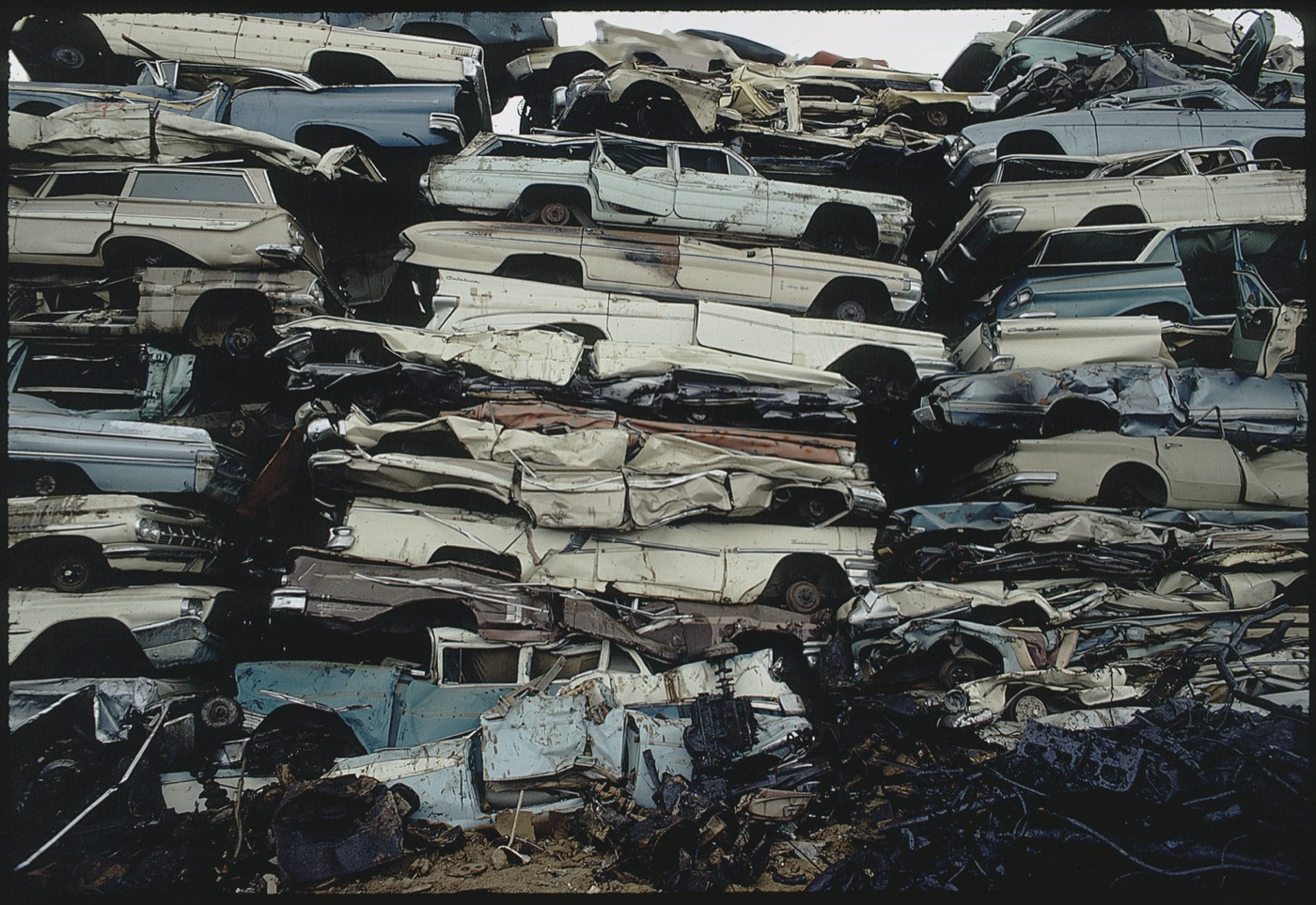
About a quarter of the world's steel, and most of the steel made in the United States, comes from scrap, melted in an electric arc furnace. The route has no blast furnace, no coke ovens and no converter, and it consumes a fraction of the water, on the order of a few hundred litres a tonne, nearly all of it in cooling the furnace and casting the steel. Steel is the most recycled material on Earth, and the scrap route is its least thirsty form, which is a water argument for collection that sits beside the carbon one.
The route that the industry is building for its carbon is different. To make steel from ore without coal, the ore is reduced with hydrogen instead of coke, in a shaft furnace, and the iron is melted in an electric furnace. The hydrogen, as its own article describes, is made by electrolysing water, at nine litres a kilogram in theory and twenty to thirty in practice, and a tonne of steel needs about fifty kilograms of hydrogen. That is a thousand to fifteen hundred litres of water consumed at the electrolyser, against the few hundred saved at the coke ovens and the quench, so that green steel, if it is made this way, will consume rather more water per tonne than the steel it replaces. The plants being built in Sweden, on the abundant water of the north, will not notice. Plants proposed for the deserts of Australia and the Middle East, where the cheap electricity is, will make their water from the sea, as the hydrogen plants beside them will.
The outfall
What leaves a steelworks is worth describing, because it is the part of the water that the river notices. The cooling water goes back warm, which is the power station article's problem in a smaller form. The descaling and rolling mill water carries oil from the machinery and iron scale, fine particles of oxide, and it is settled in pits and skimmed before it is returned or reused. The gas scrubber water carries the dust of the furnace, which is iron, zinc, lead and cyanide from the coke, and it is the dirtiest stream in the works, treated in its own plant and its sludge sent, at the better works, back to the furnace to recover the iron. The coke ovens' water carries ammonia, phenol and tar, and it is treated biologically, in a plant that resembles the sewage works of this site's other articles, before it can go anywhere. A steelworks without those plants, which describes a share of the older ones in every producing country, is a works whose river runs orange with scale and dead below the outfall, and the rivers of the Ruhr, the Don and the Monongahela were that for a century before the plants were built.
What the works has learned
The steel industry's water use has fallen by more than half per tonne since the 1970s, and the reasons are the ones every industry on this site has found. Cooling water is recirculated through towers rather than drawn once. Descaling water is settled, filtered and used again. Coke is quenched dry, with inert gas, at the newer plants, which recovers the heat and uses no water. Gas scrubbers have given way to dry filters. And the water that leaves the works is treated, for oil, for suspended solids and for the metals of the scale and the scrubber sludge, to standards that in Europe and Japan return it cleaner than the river received it. The works that have not done these things, and there are many, in the older plants of every producing country, are the ones whose outfalls colour the river.
What it teaches
Steel is the largest example on this site of an industry whose water is mostly borrowed. It takes a river through its furnaces and gives the river back, and the small share it keeps, the evaporation from the towers and the quench, is the real footprint, at about three cubic metres a tonne. That is a number that will rise a little as the industry moves to hydrogen and fall a great deal wherever it moves to scrap, and it is a number that matters most on the rivers of northern China and eastern India, where the works stand beside the farms.
3,300 litres kept, 28,000 borrowed, for every tonne of the material the rest of the water industry is built from.
Sources
- World Steel Association (2015). Water management in the steel industry: intake of about 28.6 cubic metres and consumption of about 3.3 cubic metres per tonne of crude steel, across reporting plants.
- World Steel Association, World Steel in Figures 2024: production of about 1.9 billion tonnes, and the shares of blast furnace and electric arc routes.
- Colla, V. et al. (2017). Sustainable reverse osmosis application for wastewater reuse in hot strip mills. Water Resources and Industry 17.
- Gao, C. et al. (2011). Water footprint of the Chinese steel industry, and studies of water use by route.
- HYBRIT and H2 Green Steel project descriptions: water requirements for hydrogen based direct reduction.
- Photographs: opener: Photograph of a Vat of Molten Pig Iron Being Poured into a Open Hearth Furnace at the Jones and Laughlin Steel Company, Pittsburgh, Pennsy - NARA - 535922 by Unknown authorUnknown author or not prov (public domain) via Wikimedia Commons; inline: Blast furnaces at Scunthorpe Steelworks - geograph.org.uk - 5844975 by Gareth James (CC BY-SA) via Wikimedia Commons; inline: PILE OF WRECKED AUTOS AT KLEAN STEEL CO - NARA - 542656 by Gene Daniels (public domain) via Wikimedia Commons.