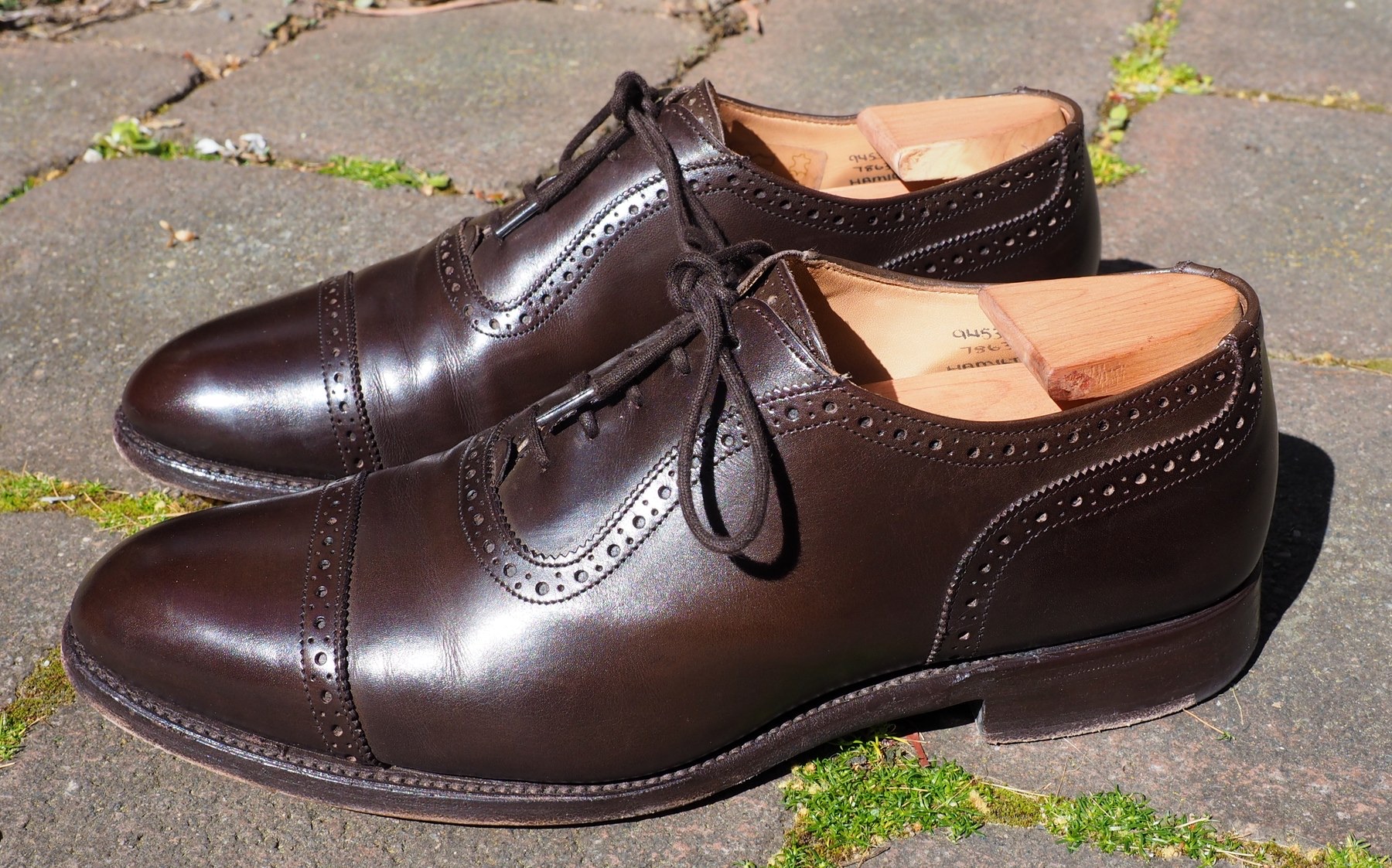
Thirsty: Leather shoes
A pair of leather shoes carries about 8,000 litres of water, as much as a pair of jeans, and almost none of it was used at the tannery. Leather is a by product of beef, it inherits a share of the animal's three years of feed, and the tannery adds a small volume of some of the hardest water in industry.
Leather is the oldest manufactured material still in daily use, and a pair of leather shoes is one of the few things in a wardrobe whose raw material was walking around a few months before. That origin is the whole of its water footprint. A pair of shoes carries about 8,000 litres, the same as a pair of jeans, and the arithmetic that produces the figure is a lesson in how the footprint method treats a by product, and in what a tannery does to the small share of water that is its own.
Eight thousand litres
By the Water Footprint Network's method, bovine leather comes to about 17,000 litres of water per kilogram in the global average, and a pair of leather shoes, which uses roughly half a kilogram of leather in the uppers, linings and insoles, to about 8,000 litres.
| Stage | Litres | Share |
|---|---|---|
| The animal, three years of feed | 7,800 | 97% |
| The tannery | 150 | 2% |
| Cutting, making, finishing | 50 | 1% |
The split is approximate; the total is the citable figure, and it is dominated, as with every animal product on this site, by feed. The tannery is a small line, and the shoemaker smaller still.
A share of the cow
Leather is a by product of beef. Cattle are raised for meat and milk, and the hide, when the animal is slaughtered, is a few percent of its value, sold on to a tanner. Nobody raises a cow for its skin. The footprint method deals with by products by dividing the animal's water among everything it yields in proportion to value, so the hide receives a few percent of the water that grew three years of grass, hay and grain, and the meat receives the rest. That few percent, spread across a hide of a few kilograms, is what makes leather 17,000 litres a kilogram, higher than beef itself per kilogram, because a hide weighs so much less than the meat.
Two consequences follow. The first is that the water in leather is the water in beef, and everything the beef article said applies: about 94 percent green, rain on pasture and feed crops, with a blue share that depends on whether the herd was raised on rain fed grass or irrigated grain. The second is that the leather did not cause the water to be used. The animal would have been raised for its meat regardless, and the hide, if not tanned, would be waste. A pair of shoes, in that sense, carries a share of water that was going to be spent, which is a different kind of fact from the water in a pair of jeans, where the cotton was grown for the cotton.
What the tannery does
The tannery's share of the water is small, and it is the part of the story that a treatment engineer knows, because tannery effluent is one of the hardest in industry.
A raw hide arrives at a tannery salted, because salt is how hides are preserved between the slaughterhouse and the tannery, and the first step is to soak the salt out. Then the hair and the flesh are removed in a bath of lime and sodium sulphide, a process called liming, which is the source of the smell that hangs over every tanning district. The hide is delimed and pickled in acid, and then tanned: soaked in a solution that binds to the collagen fibres and turns a skin that would rot into a material that will not. Most of the world's leather is tanned with chromium salts, which is fast and gives a soft, stable leather; a minority is tanned with vegetable tannins from bark, which is slow and gives the stiff leather of soles and saddles. The tanned hide is then dyed, oiled, dried and finished.
| Tannery stage | What it does | What it sends to the drain |
|---|---|---|
| Soaking | Removes the preserving salt | Salt, dirt, blood |
| Liming | Removes hair and flesh | Lime, sulphide, hair, high organic load |
| Deliming and pickling | Prepares the hide for tanning | Ammonium salts, acid |
| Chrome tanning | Stabilises the collagen | Chromium |
| Dyeing and finishing | Colour and surface | Dyes, oils, solvents |
Every stage is a bath, and a tannery uses 15 to 40 cubic metres of water for every tonne of raw hide, with the best modern plants at the low end. What leaves carries the salt from the preservation, the lime and sulphide from the hair removal, the chromium from the tanning, and an organic load from hair, flesh and blood with a chemical oxygen demand many times that of sewage. It is alkaline and hot at one stage and acid at another. It is, in short, the textile effluent of the industry article with metals and sulphide added, and the plant that treats it has to deal with each problem in turn: the sulphide oxidised before it can become poisonous gas, the chromium precipitated and removed as a sludge that is itself hazardous, the organic load fed to bacteria, and the salt, which nothing removes cheaply, left for the river or the membranes.
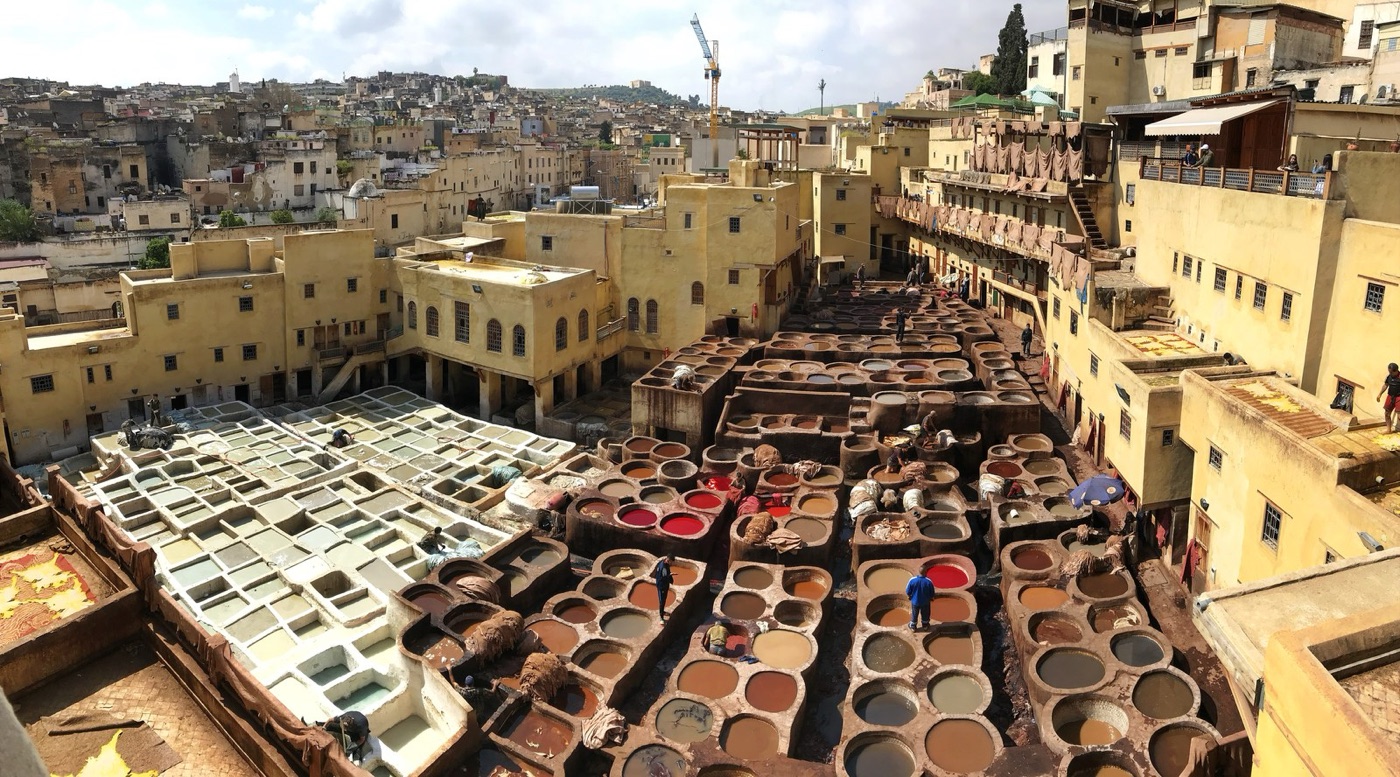
Where the tanneries are
Tanning has moved, over fifty years, from Europe and North America to the countries that supply the hides and the labour, and the water problems have moved with it. The tanning districts of Kanpur on the Ganges, of Hazaribagh in Dhaka, of Ranipet in Tamil Nadu and of Fez in Morocco have been, at various times, among the most polluted industrial sites in the world, with rivers running the colour of the dye and chromium in the groundwater. The industry's own article on this site, on leather and tanning, goes inside those districts. The point for a pair of shoes is that the tannery's small share of the footprint, the two percent, is where the water damage actually happens, because the ninety seven percent was mostly rain on grass and the two percent was chromium in a river.
Worn for a decade
Leather's other property, and the one that changes the footprint most, is that it lasts. A pair of leather shoes, resoled and cared for, can be worn for ten years, and a pair of good ones for twenty. The 8,000 litres were spent once, in the animal's lifetime and the tannery's baths, and every year of wear spreads them thinner. A pair worn for a decade carries 800 litres a year, less than a pair of canvas trainers that lasted two summers, and the difference is not in the making but in the keeping.
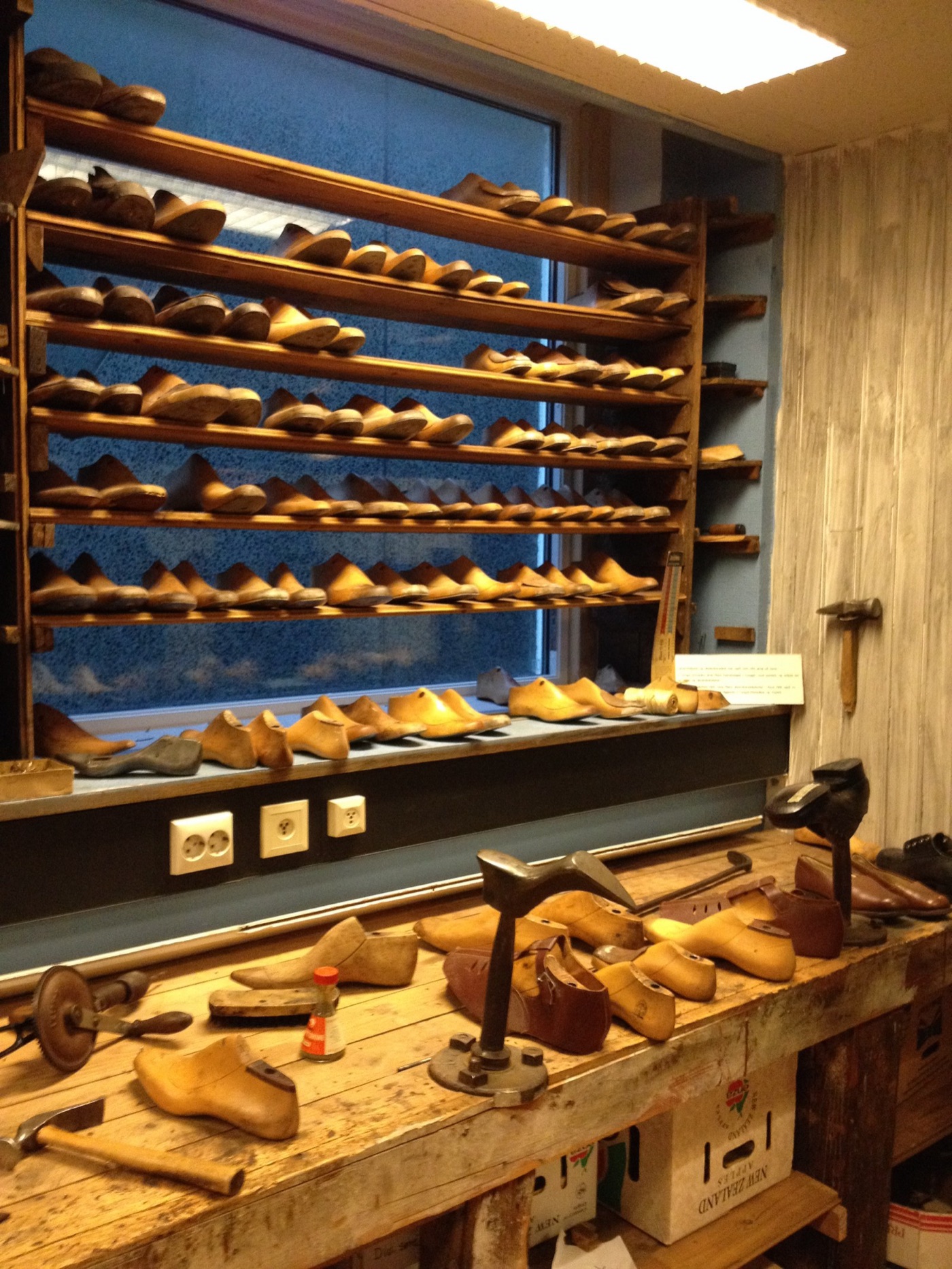
That is the same conclusion the jeans and t-shirt articles reached, and it is the one practical thing a buyer of leather controls. The water in the shoe was decided by a cow and a tannery. The water per year is decided by the owner, the cobbler and the shoe polish.
The fine print
The 8,000 litres is a global average built on an average animal, and leather varies as beef does. Leather from cattle raised on the rain fed grass of Argentina, Brazil or Ireland is close to all green water. Leather from feedlot cattle in a dry region carries more blue. The tanning district decides the rest: a modern tannery in Italy, Germany or a well run Indian cluster with a common treatment plant sends a small, treated effluent; a tannery in an unregulated district sends the whole list above to the river.
Synthetic leather, made from polyurethane or PVC on a fabric backing, carries a fraction of leather's water footprint because it inherits no animal, and a larger footprint of oil and plastic, which is a different accounting. Vegetable tanning avoids the chromium and uses more water and more time. None of the alternatives is simple, and the honest position is that a pair of leather shoes worn for ten years carries less water per year than most things in the wardrobe.
The shoe's own water
The last one percent, the making of the shoe, is small enough to describe in a paragraph and worth describing because it is where the leather becomes the object. Leather arrives at a shoe factory as finished hides, is cut to patterns with a great deal of waste, since a hide is an irregular shape and a shoe upper is not, and the pieces are stitched, lasted over a foot shaped form, and attached to a sole with adhesive or stitching. Almost none of this uses water, which is why the footprint of a pair of synthetic trainers is dominated by the plastic and the factory's energy rather than by anything wet. The water in a leather shoe was all upstream: three years of feed on a farm, a few days of baths in a tannery, and nothing to speak of on the factory floor where the shoe took its shape.
Reading the number
A pair of leather shoes is a share of a cow, and the cow's water was three years of feed, mostly rain, spent whether or not the hide was ever tanned. That is the 8,000 litres, and it is a fairer number than it looks. The tannery's water is the two percent, and it is the part worth asking about, because it is the part that can poison a river. Where the shoes were tanned, and whether that district has a treatment plant that runs, says more about their water than the size of the number does.
Sources
- Mekonnen, M.M. and Hoekstra, A.Y. (2012). A global assessment of the water footprint of farm animal products. Ecosystems 15. Bovine leather about 17,093 L/kg, global average, allocated from the animal's footprint by value.
- Water Footprint Network, product gallery: leather shoes, about 8,000 litres a pair.
- UNIDO (2011). Introduction to treatment of tannery effluents. Water use of 15 to 40 cubic metres per tonne of raw hide; effluent characterisation.
- Photographs: Cesar Chu Ortega, from a tannery in Bangladesh; opener: Tricker's brown oxford shoes by Nick-D (CC BY-SA) via Wikimedia Commons; inline: Chouara Tannery - 154 - Marokko Handybilder 2018 - Fes (27347707917) by Uwe Brodrecht (CC BY-SA) via Wikimedia Commons; inline: Vagle skofabrikk 2, Sandnes. by Urtica555 (CC BY-SA) via Wikimedia Commons.