Thirsty: Paper
A sheet of office paper carries about 10 litres of water, most of it drunk by a tree over years. The mills that turn the tree into paper have cut their own water tenfold, which makes paper one of industry's quiet successes and the tree the part nobody can shrink.
For a decade or so, most office emails ended with the same small plea in green type: please consider the environment before printing this email. It was easy to mock and easier to ignore, and it never said what, exactly, printing cost. The answer, for water, is about 10 litres per sheet, and where those litres went is a story with a happy middle and a stubborn beginning.
Ten litres
The water footprint of paper was estimated in a 2012 study by Pieter van Oel and Arjen Hoekstra, the first to apply the footprint method to the industry, and the global average for a sheet of printing paper comes out at roughly 10 litres. A sheet of A4 weighs about five grams; a tonne of paper carries something like 2,000 cubic metres of water, most of it in the form of rain that a tree drank.
| Stage | Litres | Share |
|---|---|---|
| Growing the wood | 8 | 80% |
| Pulping and milling | 1.5 | 15% |
| Everything else: bleaching, coating, transport | 0.5 | 5% |
The split is approximate; the total is the citable figure. Four fifths of the water in a sheet was used by a plant, which makes paper, in water terms, a crop product like coffee or cotton. The crop simply takes longer.
The tree takes its time
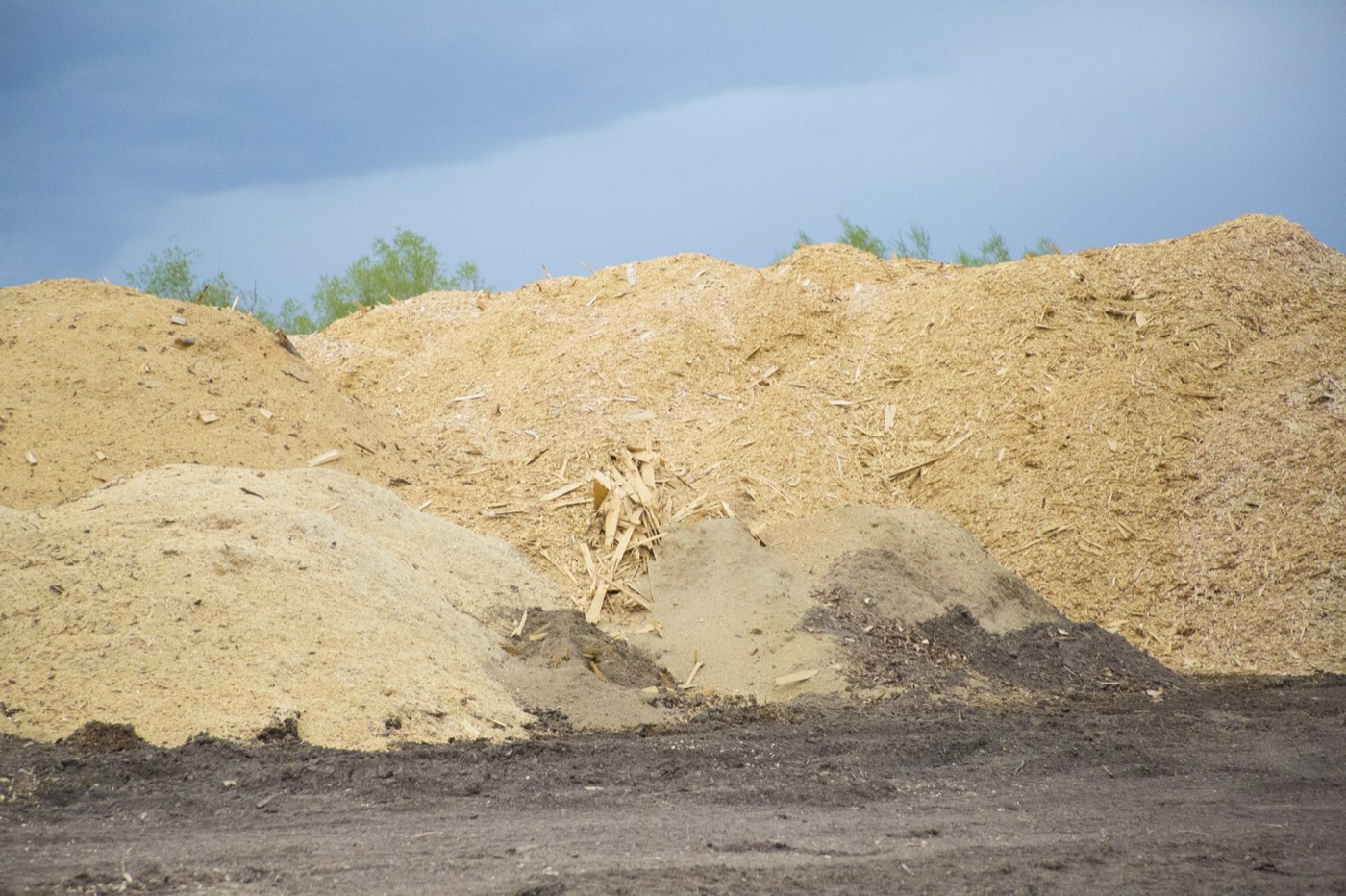
Printing paper is made from wood fibre, and the wood comes mostly from plantation trees grown for the purpose: pine and spruce in the north, eucalyptus in Brazil, Portugal, Spain and elsewhere in the south. A eucalyptus plantation is harvested after around seven years; a northern pine or spruce stand after several decades. For all that time the trees are doing what every plant does, pumping water from the soil into the air through their leaves, and building wood with a small part of it.
The method charges that water to the wood, and through the wood to the paper. A sheet of A4 inherits years of a tree's patience, and there is nothing a mill can do about it, because the tree grew before the mill was involved. This is the part of paper's footprint that nobody can shrink, and it is also, as with most crops, the gentle part. Plantation forestry is overwhelmingly rain fed. Rain on a eucalyptus stand in Portugal was not going to fill a tap.
The plantation itself is a fair subject for argument on other grounds. Eucalyptus is a thirsty tree that has been blamed, in dry regions, for lowering water tables where it replaces native scrub, and a plantation is not a forest. But the water in the sheet, counted the way every footprint here is counted, is mostly green.
The mills cleaned up
The mill's share of the footprint is the part of the story worth telling in an industry article, because it is one of the clearest examples of an industry that fixed its water.
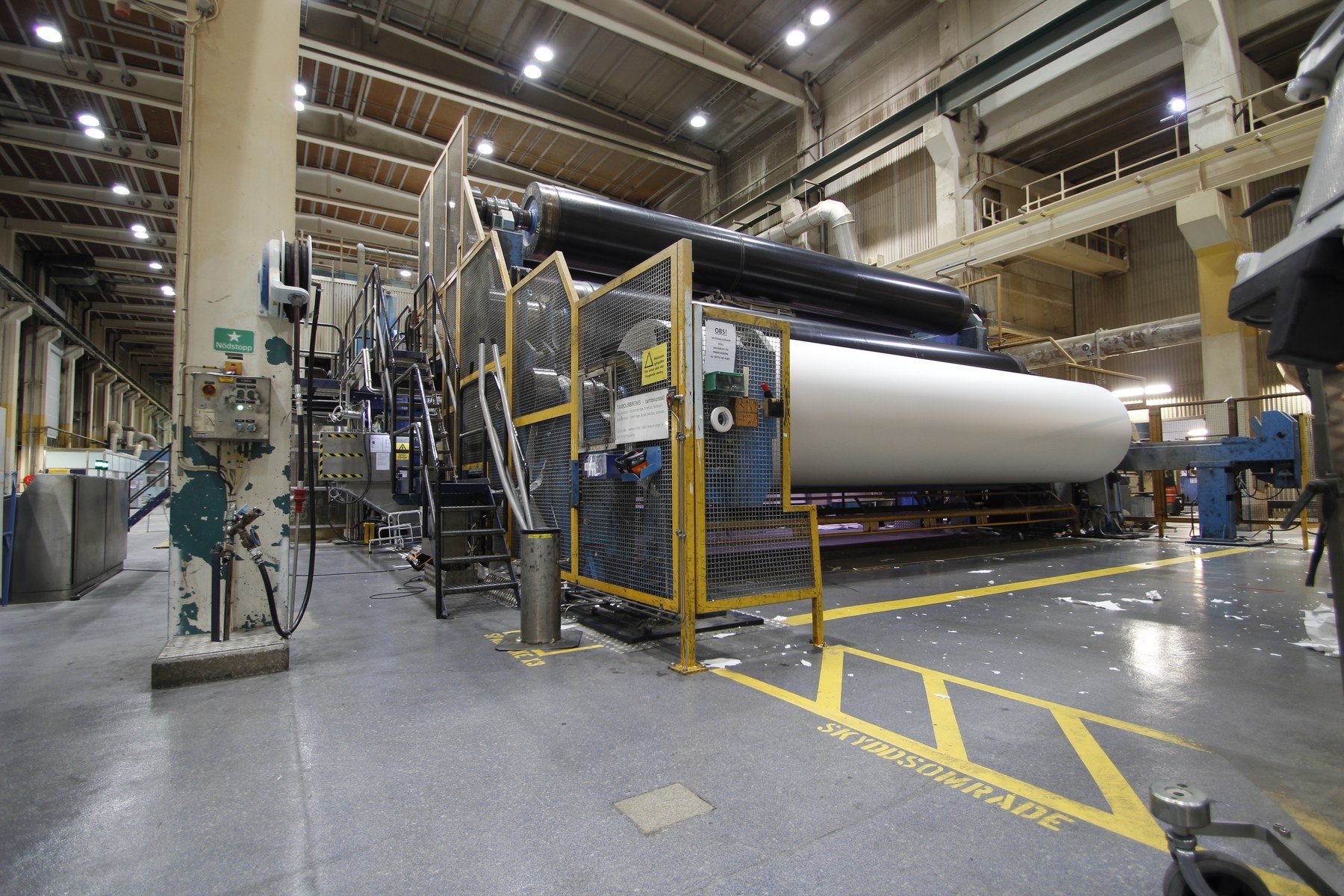
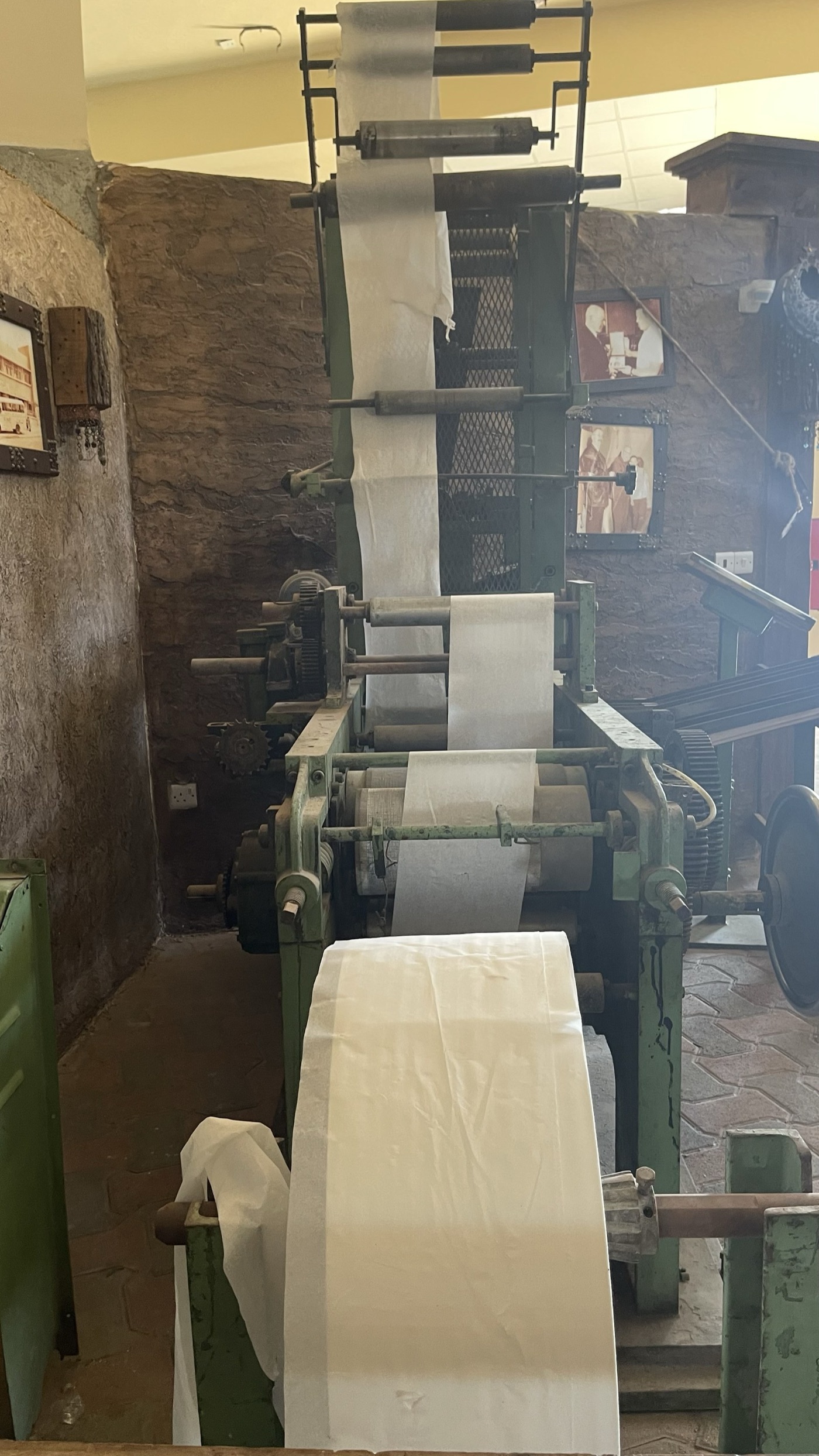
Making paper is a wet process from beginning to end. Wood chips are cooked into pulp with chemicals and water, the pulp is washed and, for white paper, bleached, and it is then spread as a thin slurry, more than 99 percent water, onto a moving wire screen. The water drains and is pressed and dried out of it, and what remains is a sheet. For most of the twentieth century a paper mill used something like 100 cubic metres of water for every tonne of paper it made, and discharged most of it, loaded with fibre, lignin and bleaching chemicals, into the nearest river. The rivers below pulp mills were among the most damaged in the industrial world.
| Water used inside a paper mill, per tonne of paper | |
|---|---|
| Mills of the mid twentieth century | Around 100 cubic metres or more |
| Good modern mills | Around 10 cubic metres |
| The best | Below that |
Good modern mills use around a tenth of that. The change came from closing the loops: the water that drains through the wire is caught and used again to dilute the next pulp, the washing stages are run in sequence so that the cleanest water does the last wash and the dirtiest the first, the bleaching chemistry moved away from chlorine, and the effluent that does leave is treated in a biological plant before it reaches the river. None of this was exotic. It was engineering, applied over decades under regulatory pressure, and it took an industry that was a byword for river pollution and made it a model of water reuse. The machines improved. The tree still takes its time.
Where the trees grow
The plantation forestry behind paper has moved, over the last half century, from the northern conifer belt to the fast growing south, and the move has a water dimension of its own.
Nordic and Canadian mills still run on spruce and pine from managed forests that regrow over decades, on rain and snowmelt in landscapes with water to spare. The growth of the industry, though, has been in eucalyptus: Brazil above all, where plantations of a few hundred thousand hectares feed some of the largest pulp mills ever built, and Portugal, Spain, Chile, South Africa and Uruguay. Eucalyptus reaches pulping size in about seven years, grows straight, and pulps well, and a hectare of it in a good climate yields several times what a hectare of northern forest does in the same time.
It is also a thirsty tree, and in dry regions that has consequences. Eucalyptus roots deeply and transpires heavily, and where plantations have replaced native scrub or grassland in places with little rain, streams have shrunk and water tables have dropped. South Africa regulates eucalyptus planting for that reason, treating the tree as a stream flow reduction activity that needs a licence. In wet Brazil the same tree is a modest neighbour. As with every crop on this site, the water in the product depends on the address of the plant, and the address of a plantation is a decision somebody made.
Tissue, cardboard and the rest
Printing paper is a small part of what the industry makes, and the water story differs across the range.
Cardboard and packaging, which is now the largest part of the industry's output as printing declines and online shopping grows, is made mostly from recovered fibre, old boxes pulped into new ones, and carries the mill's water without the tree's. It is the paper product that has gone furthest into the loop. Tissue, at the other end, is made mostly from virgin fibre, because recycled fibres are too short to make a soft, strong sheet, and tissue is used once and flushed or binned, so it never returns to the loop at all. Newsprint, which was once the great consumer of recovered fibre, is disappearing with the newspapers. The fibre a society uses moves through this system, from virgin pulp to printing paper to packaging to packaging again, losing length at each turn, and the water in it is highest at the first step and lowest at the last.
The everyday scale
What makes paper worth an article is not the size of its number but the scale at which it is used. One sheet is nothing. A ream of 500 sheets, the box that fits in a printer drawer, is 5,000 litres. A box of five reams is 25,000 litres, the volume of a small swimming pool. An office printer that gets through a box a week is moving a swimming pool of water through it every few months, sheet by sheet, and nobody sees a drop.
| Paper, by the unit people actually handle | Litres |
|---|---|
| One sheet of A4 | about 10 |
| One ream of 500 sheets | about 5,000 |
| One box of five reams | about 25,000 |
The recycled sheet skips the forest
Recycled paper is made from paper, and paper does not grow. A sheet made from recovered fibre skips the tree entirely, and since the tree was four fifths of the footprint, that roughly halves the number: the mill still uses its water, and de inking recovered fibre takes a little more processing than virgin pulp, but the years of rain are not repeated. The printer tray, in this one respect, is a water decision, and it is a decision that costs nothing to make.
The footnote is that fibre cannot be recycled forever.
Europe recovers and reuses a larger share of its paper than any other region, above 70 percent by the industry's own count, and the recovered fibre travels: bales of old cardboard from European and American cities are shipped to mills in Asia, where they become the boxes that carry goods back. The loop is global, and the water in it, as with every product on this site, was spent where the tree grew rather than where the box was folded. Each cycle shortens the fibres, and after five or six rounds they are too short to hold a sheet together, so the system always needs some fresh wood coming in. But a sheet that has been recycled once carried half the water of the one beside it, and most office paper is never recycled at all.
Reading the number
The email footers had a point, and they never said what it was. Ten litres a sheet is small, and five thousand a ream is not, and the difference between them is only the number of sheets. Paper is the product where the mill did its job, decades ago and thoroughly, and where what is left is the slow, gentle, rain fed water of a tree, multiplied by the printer.
Sources
- van Oel, P.R. and Hoekstra, A.Y. (2012). Towards quantification of the water footprint of paper: a first estimate of its consumptive component. Water Resources Management 26. Global average on the order of 10 litres per A4 sheet, dominated by the growth of the wood; recycled fibre roughly halves it.
- Published pulp and paper mill water benchmarks (CEPI, European Commission BREF for pulp and paper): historical use above 100 m³ per tonne, modern integrated mills around 10 m³ per tonne or below.
- South Africa, National Water Act (1998): commercial forestry listed as a stream flow reduction activity requiring a licence.
- Stage split (wood, pulping and milling, everything else) is approximate and illustrative; the total is the citable figure.
- Photographs: opener: PM-52 Dryer section by Work With Sounds (CC BY-SA) via Wikimedia Commons; inline: Old machine used to produce hydrogen paper - Front view by Mervat (CC BY) via Wikimedia Commons; inline: Wood Chips pile ET5A3082 (26916422455) by Intermountain Forest Service, USDA Regio (public domain) via Wikimedia Commons.