Thirsty Places: Bangalore
India's technology capital was built on a plateau of lakes, nine hundred metres above the sea and a hundred kilometres from a river, and it drained the lakes, built over them, and pumped the ground beneath until, in the summer of 2024, the wells of half the city ran dry and the technology companies told their staff to work from home. What Bangalore's water is, where the lakes went, what a lake fire looks like, and what the city is trying to get back.
In the spring of 2024 the technology companies of Bangalore did something they had not done since the pandemic: they told their staff to work from home. The reason was water. The wells that supplied the office parks, the apartment towers and the outer suburbs of India's technology capital had run dry, the tankers that filled the gap had tripled their prices and could not meet the demand, and the state government banned the use of drinking water for washing cars and watering gardens and fined the households that did. The city's water board, which supplies the old city from a river a hundred kilometres away, could do nothing for the new one, because the new one was never connected.
This article is about a city of fourteen million people on a plateau with no river, built on a landscape of lakes that its founders dug to hold the rain, and what happened when the lakes were built over and the ground beneath them was pumped dry.
A city of tanks
Bangalore stands nine hundred metres above the sea on the Deccan plateau, in a climate with about nine hundred millimetres of rain a year, delivered in two monsoons, and it has no river. The city's founder, a sixteenth century chieftain, solved that the way the whole of south India solved it: by building tanks, earth dams across the shallow valleys of the plateau that caught the monsoon in hundreds of lakes, connected by channels so that when one filled it overflowed into the next. The lakes irrigated the fields, recharged the wells, cooled the air and gave the city its water for four hundred years. In 1960 the city district had several hundred of them.
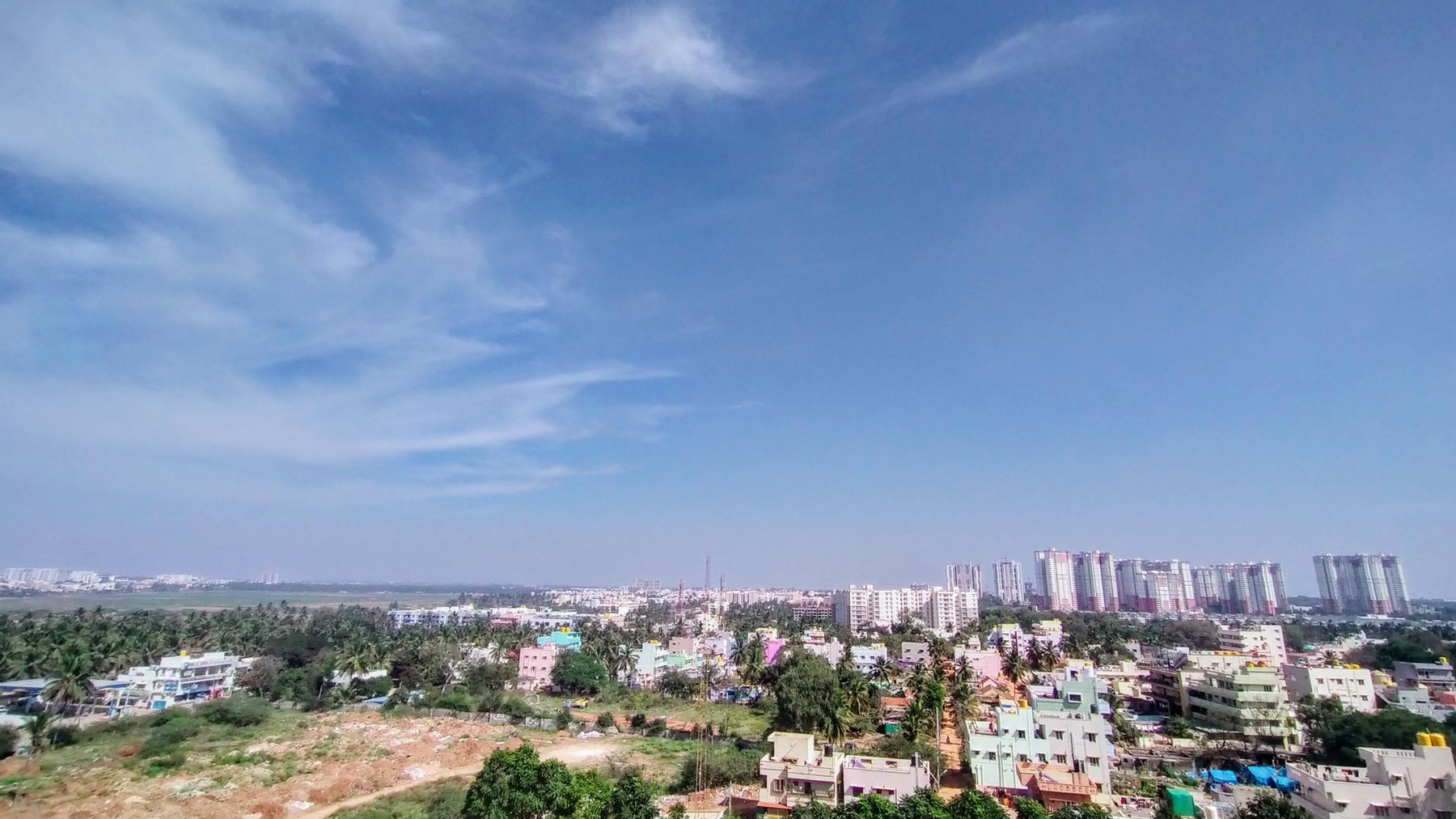
The city grew, from a million people in 1950 to fourteen million now, and the lakes were what it grew on. A lake bed is flat land close to the city that belongs to nobody in particular, and one by one the lakes were drained, filled and built over, into the bus station, the stadium, the golf course, the housing colonies, and, from the 1990s, the technology parks of the eastern and southern suburbs that made the city famous. A study by the Indian Institute of Science counted the wetlands lost since 1973 at around eighty percent. The channels that connected the lakes were built over too, so the rain that once moved from lake to lake now runs off paved ground into storm drains and floods the streets in a heavy monsoon, and does not refill the ground.
| Bangalore's water | |
|---|---|
| Population | About 14 million |
| Rain | About 900 millimetres, in two monsoons |
| River | None; the Kaveri is 100 kilometres away and 400 metres lower |
| Piped supply from the Kaveri | About 1.45 billion litres a day, for roughly half the city |
| The rest | Borewells and tankers |
| Lakes and wetlands lost since 1973 | Around 80 percent |
The river a hundred kilometres away
When the lakes and the wells could no longer supply the city, the state reached for the Kaveri, the river that drains the hills to the south west and that Karnataka has fought Tamil Nadu over for a century. The first stage of the Kaveri supply reached the city in 1974, and four more have followed, each a chain of pumping stations lifting water from the river at Torekadanahalli, four hundred metres below the city and a hundred kilometres away, up to the plateau. The lift is one of the largest for any city's supply, and the electricity to run it is the water board's largest cost. The fifth stage, opened in 2024, brought the total to about 1.45 billion litres a day.
That supplies the old city and the districts inside the municipal boundary as it stood in the 1990s. The city that grew after, the software corridors along the ring roads, the towers of Whitefield and Electronic City and Sarjapur, were built outside the network, by developers who sank borewells, on the assumption that the pipes would follow. They did not, and by 2024 about half the city lived on groundwater and tankers.
The wells
Bangalore's aquifer is the fractured granite of the plateau, which holds water in cracks rather than in a sand bed and refills slowly, from the lakes that were, and from the rain that once soaked in through open ground. The city has, by the state's count, several hundred thousand borewells, drilled deeper every year as the water table fell: forty metres in the 1990s, a hundred and fifty by the 2010s, and in the outer suburbs of 2024, four or five hundred metres and dry. A run of poor monsoons in 2023 took the last margin, and in March 2024 the wells across the eastern and southern city failed together.
What followed was the tanker economy of the Chennai and Karachi articles in its most concentrated form. The apartment towers, which house hundreds of families on a single well, bought tankers by the dozen a day at prices that rose from a few hundred rupees to several thousand, and when the tankers could not find water either, from wells in the villages ringing the city that were also failing, the towers rationed by floor. The state took control of the tanker trade, fixed the prices and registered the trucks, banned the use of drinking water for cars, gardens and construction, and drilled emergency wells. The monsoon arrived in June and the crisis passed, as it does.
The lake that catches fire
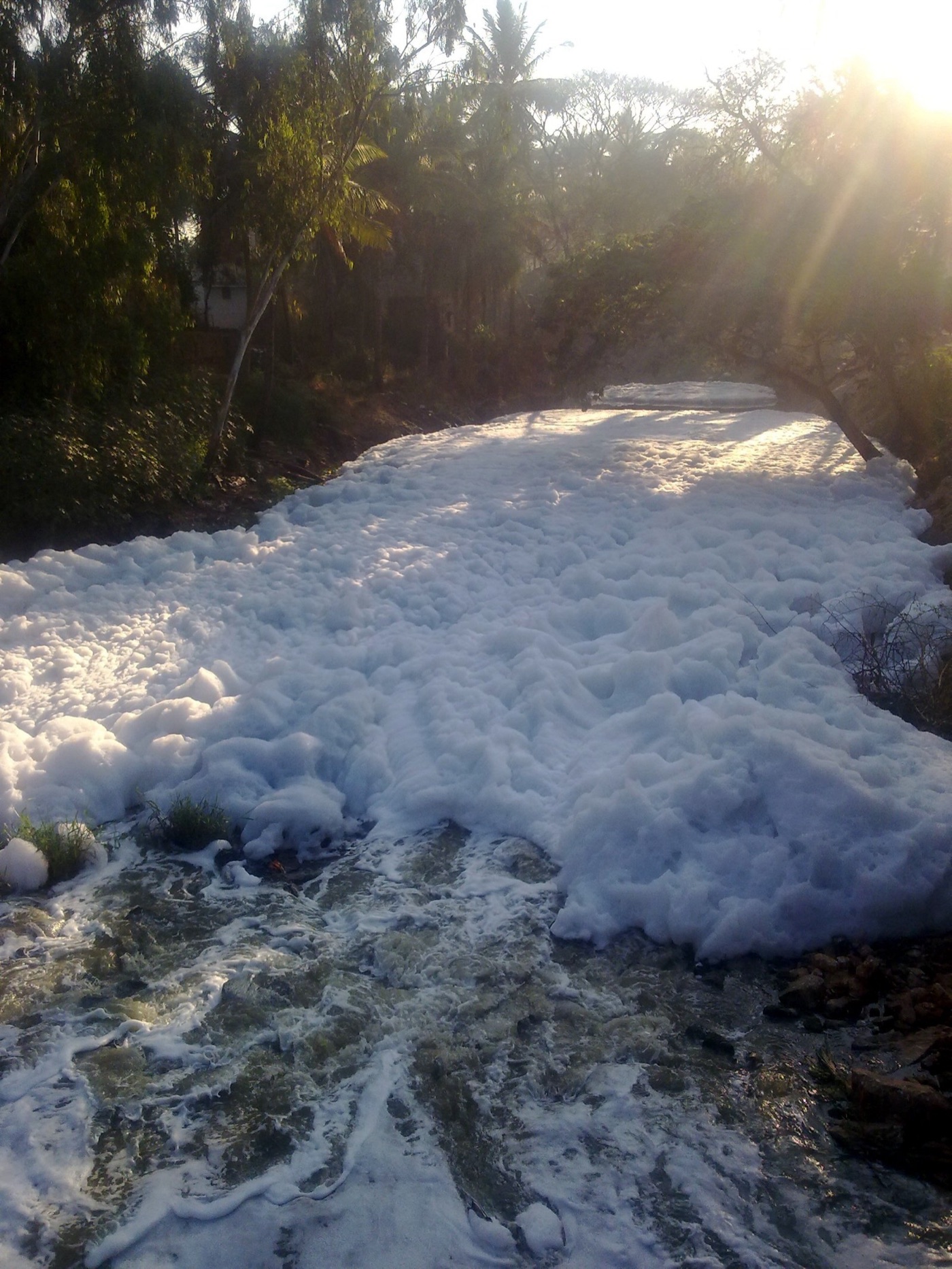
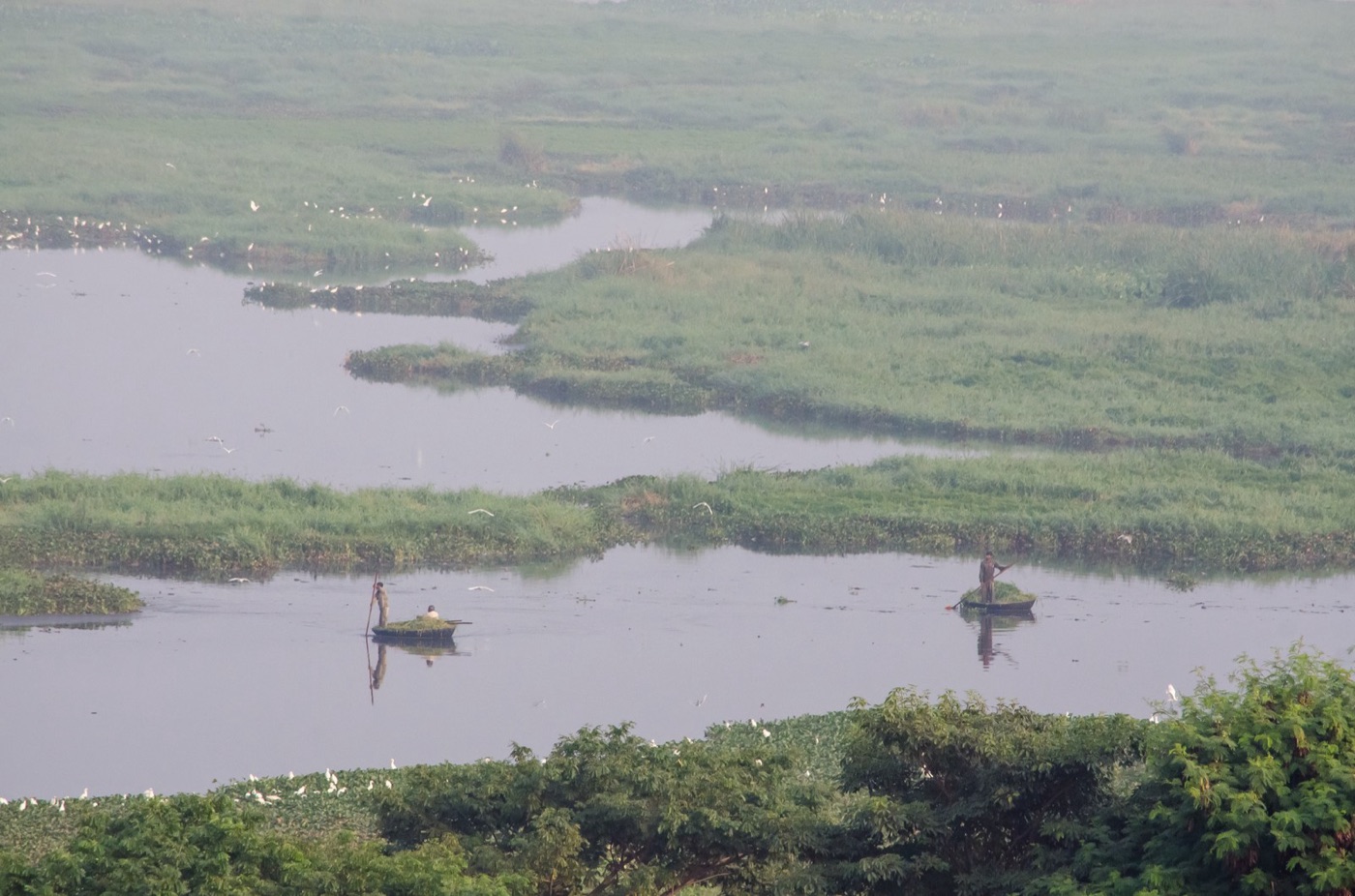
The lakes that survived are the city's other water story. Bellandur, the largest, and Varthur below it lie at the bottom of the eastern city's drainage, and they receive what the city sends down: the sewage of a million or two people, treated partly or not at all, and the effluent of the industries along the channels. The lakes foam. On windy days a white froth of detergent and sewage rises metres high at the outlets and blows across the roads, and in 2015 and again in 2017 and 2018 the froth on Bellandur caught fire and burned for hours, in what became the picture of the city's water. The National Green Tribunal ordered the city to stop the sewage, fined the water board and the polluters, and the treatment plants around the lake have been enlarged since; the foam still rises in the monsoon.
| What happened to the lakes | |
|---|---|
| Built over | The majority: bus stand, stadium, colonies, technology parks |
| Cut off | The channels between them paved, so they no longer fill each other |
| Polluted | The survivors receive sewage and effluent; Bellandur foams and has burned |
| Restored | A few dozen, desilted, fenced and fed treated water, by citizen groups and the city |
The villages that feed the tankers
The tanker that arrives at a Bangalore tower filled at a well in a village outside the city, and the villages are where the crisis went next. The peri urban belt around Bangalore, once fields fed by the same lakes, became in the 2010s the source of the city's tanker water: farmers sold their groundwater by the load, at prices that beat any crop, and drilled deeper to keep selling. By 2024 those wells were failing too, and the villages, which had given up farming for water, had neither. The state's response, registering the tankers and fixing the price, addressed the city's end of the trade. The villages' end, an aquifer emptied to supply a city that was built on the lakes that used to fill it, is the part nobody has a rule for, and it is the same trade that Chennai, Lima and Karachi run, seen from the side of the well.
What the city is trying to get back
The answers are the ones this series always arrives at, and Bangalore has begun each of them late.
The pipes are being extended: the fifth Kaveri stage was designed for the outer city, and the water board is laying mains through the districts that ran dry, though connecting several million people to a network takes years and the towers will keep their wells. The sewage is being treated and returned: the city has one of the larger treatment capacities in India, and the treated water, which used to go to the lakes and the river, is now pumped in part to the lakes deliberately, to refill them, and in part to the farming districts to the east, where it recharges the wells that the tankers draw from. Rainwater harvesting is compulsory on every building of any size, as in Chennai, and the compliance is patchy and improving, and the lakes that citizens' groups have restored, desilted and fenced and fed with treated water, have raised the water table for hundreds of metres around them. The city has learned, from a lake that burned and a summer without wells, what the tanks were for.
What it teaches
Bangalore is the city in this series that had its storage built for it four hundred years ago and threw it away for building land. The lakes were the reservoir, the recharge and the flood control at once, and the plateau has no other, so that a city that built over eighty percent of them was always going to reach a summer with no water and a monsoon with too much. The river a hundred kilometres away supplies the half of the city that existed when the pumping started; the other half found out in 2024 what it had been standing on.
Fourteen hundred metres of lift from a river a hundred kilometres away, for a city that was built on lakes.
Sources
- Bangalore Water Supply and Sewerage Board, Cauvery water supply stages I to V and the 2024 supply figures.
- Ramachandra, T.V. et al. (2016). Wetlands: treasure of Bangalore. Indian Institute of Science, ENVIS. Loss of lakes and wetlands since 1973.
- Karnataka Groundwater Directorate and the 2024 Bangalore water crisis: reporting by The Hindu, Reuters and the BBC, March to May 2024.
- Nagendra, H. (2016). Nature in the City: Bengaluru in the Past, Present, and Future. Oxford University Press.
- Reporting on the Bellandur and Varthur lake fires and foam events, 2015 to 2018, and the National Green Tribunal orders.
- Photographs: opener: Skyline of Varthur, Bangalore by SlowPhoton (CC BY-SA) via Wikimedia Commons; inline: Rajakaluve storm water drain Bellandur Lake east by Sandip Bhattacharya (CC BY) via Wikimedia Commons; inline: Bellandur Lake on a foggy wintery morning by Ashwin Kumar (CC BY-SA) via Wikimedia Commons.