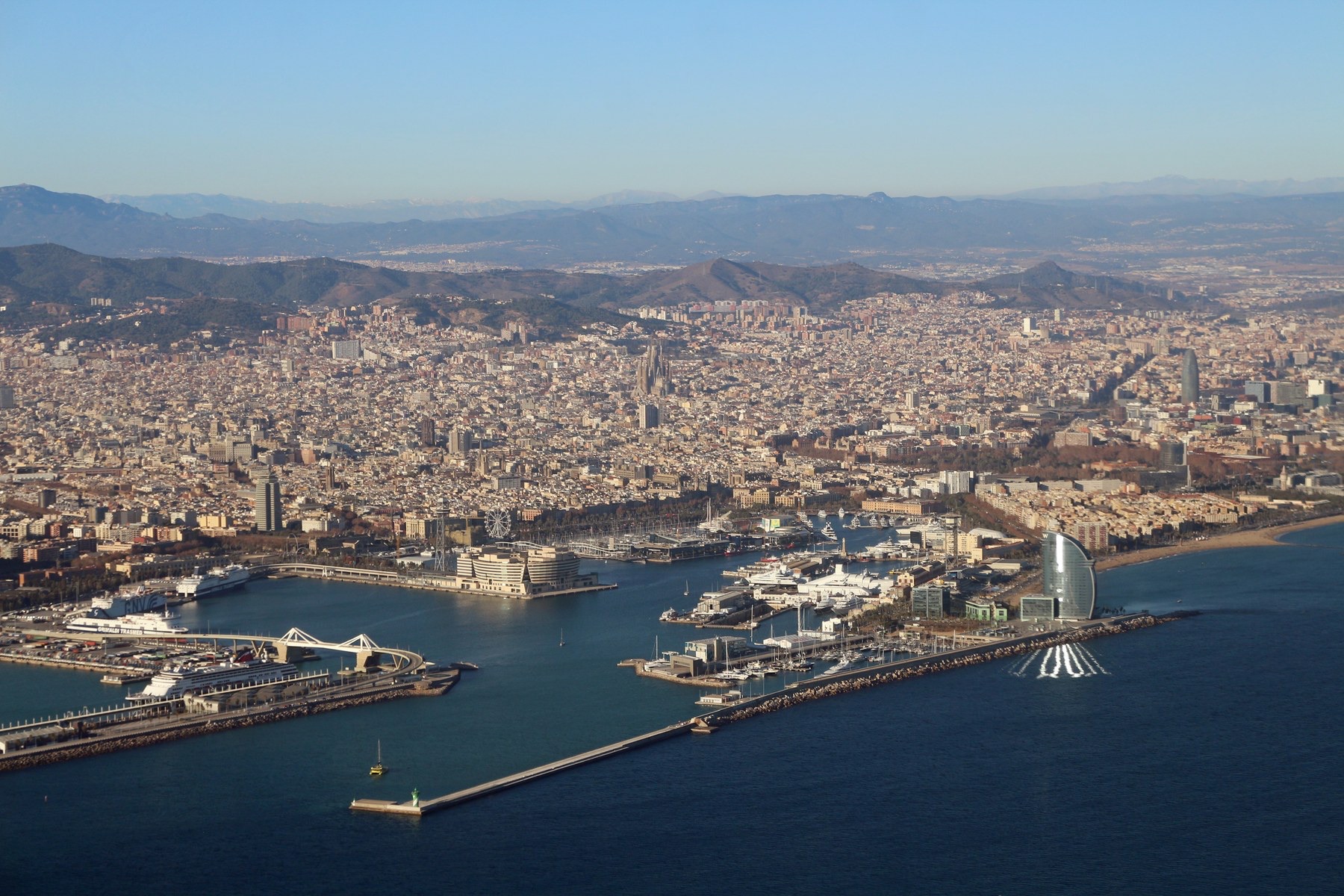
Thirsty Places: Barcelona
In the spring of 2008 a city of five million in one of the richest regions of Europe ran its reservoirs down to a fifth and brought drinking water in by ship from Marseille. It built the largest desalination plant on the continent in answer, and in 2024 it ran dry again, with the plant running flat out. What Barcelona's water is, what the tanker ships and the plant did, why the second drought was worse, and what a wet country's dry corner has learned twice.
In May 2008 a tanker ship tied up in the port of Barcelona and began pumping ten million litres of drinking water into the city's mains. It had come from Marseille, and it was the first of six. The reservoirs behind the city, on the Ter and Llobregat rivers in the hills of Catalonia, had fallen to about a fifth of their capacity after eighteen months without rain, and a city of five million, in one of the wealthiest regions of Europe, was buying water by the shipload while its politicians argued over a pipeline. The rain came in June, the ships stopped, and the city built, within a year, the largest desalination plant on the continent.
Sixteen years later the reservoirs fell again, lower and for longer, with the plant running at full capacity. This article is about a city that learned the same lesson twice, and what it did the second time.
A wet country's dry corner
Catalonia is green by Spanish standards, with the Pyrenees to the north and rivers that flow all year, and Barcelona has never had the desert arithmetic of the Spanish south. Its problem is a different one: the city and its region have grown to five million people on two modest rivers, the Ter and the Llobregat, whose reservoirs hold about two years of the city's supply when full, and whose catchments depend on a Mediterranean climate that has always swung between wet years and dry ones and is now swinging harder. A run of two dry winters empties the system. A run of three, which is what the 2020s brought, empties it past the point where the old rules apply.
The city has no large aquifer, its rivers are shared with the farms and towns upstream, and the obvious extra source, the Ebro, the largest river in Spain, runs through the south of the region on its way to a delta whose farmers and fishermen have fought every proposal to divert it. The 2008 crisis was, above all, an argument about the Ebro.
| Barcelona's water | |
|---|---|
| Population served | About 5 million, in the metropolitan area |
| Sources | The Ter and Llobregat rivers, reservoirs in the Catalan hills |
| Reservoir capacity | About two years of supply |
| Reservoir level, May 2008 | About 20 percent |
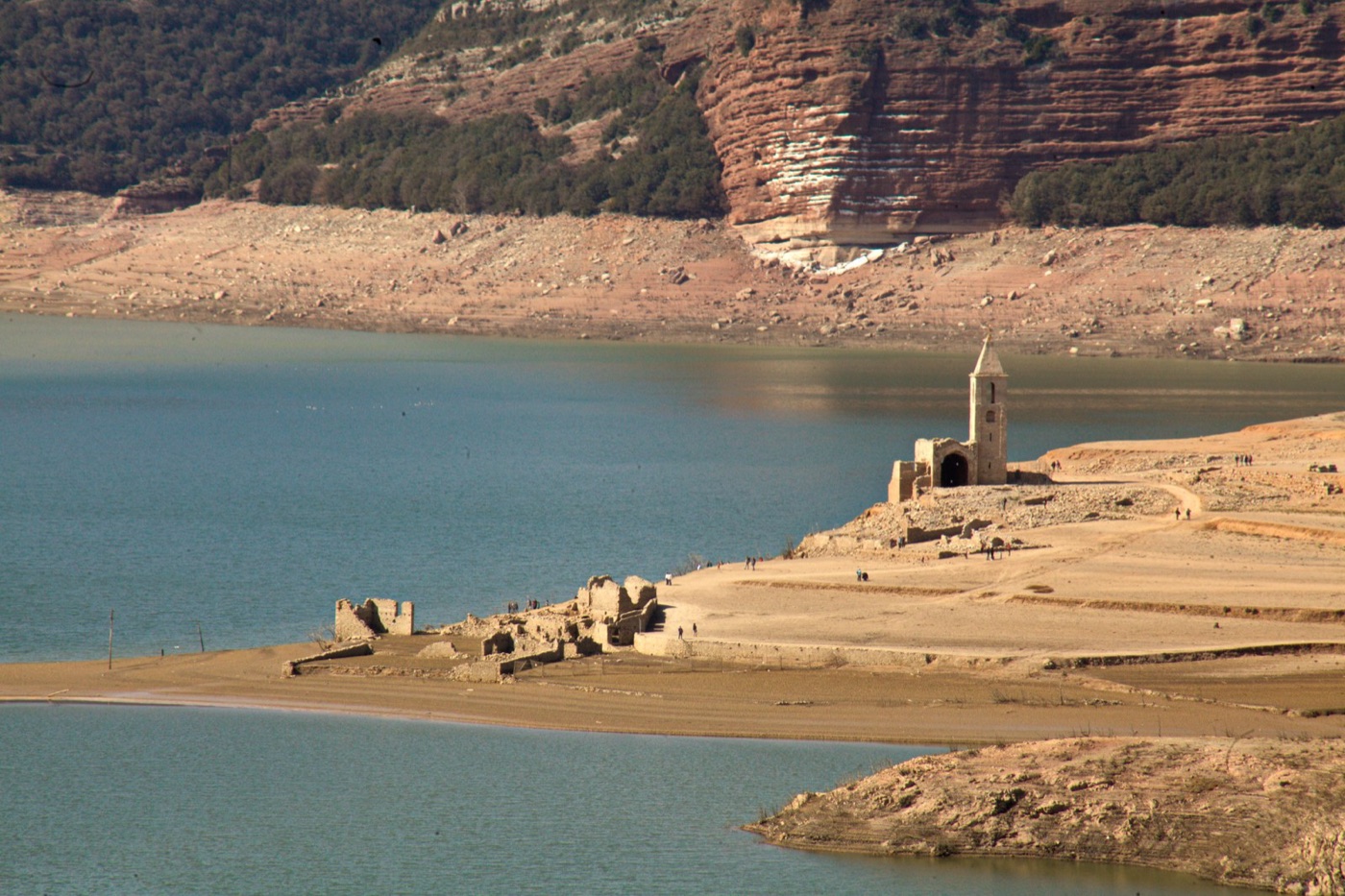
| Reservoir level, February 2024 | About 15 percent, the lowest recorded |
| El Prat desalination | 200,000 cubic metres a day, up to a quarter of supply |
The ships
By the spring of 2008 the region's water agency had banned garden watering, closed public fountains and cut the pressure at night, and the reservoirs were still falling. The government of Catalonia proposed an emergency pipeline to take water from the Ebro at Tarragona, a hundred kilometres south, and the government in Madrid, which had cancelled a larger Ebro transfer four years earlier under pressure from the delta, refused it and then, under a different name, allowed a smaller one. While the pipe was argued, the city hired ships. Six tankers made the run from Marseille and from Tarragona over May and June, at a cost the press reported in the tens of millions of euros, delivering, all together, a few days of the city's use. It was a gesture as much as a supply, and it was the picture of the drought: a European capital of design and tourism with water arriving by sea.
The rain arrived in June, in quantity, and the pipeline was cancelled before it was built. The ships had bought a few weeks. The plant bought the next decade.
The plant
The El Prat desalination plant, on the coast south of the city beside the airport, opened in July 2009, a year after the ships. It is a seawater reverse osmosis plant of the kind the desalination article describes, with a capacity of 200,000 cubic metres a day, about a quarter of the metropolitan supply, and at its opening it was the largest in Europe. It was built in eighteen months on the strength of the drought, and then the drought ended.
For the ten years that followed the plant ran at a small fraction of its capacity. The reservoirs were full, river water cost a fraction of desalinated water, and the utility ran the membranes only enough to keep them in condition. Critics called it the most expensive insurance policy in Spain; the water agency called it exactly that, and kept paying the premium. The same happened, over the same decade, to the plants Australia built in its Millennium Drought, and the arguments were the same.
The second drought
The rain stopped in 2021 and did not return in any quantity for three years. By the autumn of 2023 the Ter and Llobregat reservoirs were below twenty percent, in February 2024 the regional government declared a drought emergency for six million people, the first in the system's history, and the reservoirs touched fifteen percent, below 2008's low. The city cut its allowance to 200 litres per person per day, then 160, a figure that covered farms, industry and leaks as well as households; it banned car washing, garden watering and the filling of private pools; it cut agricultural allocations by eighty percent and industrial ones by a quarter; and it announced, and then did not need, a second round of ships, this time with a floating desalination plant in the port as the alternative.
What held the city was the plant and two things built alongside it. El Prat ran at full capacity for the whole of 2023 and 2024, supplying a quarter of everything the city drank, and the utility commissioned a second, portable desalination unit in the port. The Baix Llobregat reclamation plant, which treats the city's sewage to a high standard and had since 2019 been sending its water up the Llobregat to be released into the river above the drinking water intakes, was run at its limit, so that Barcelona drank, for the first time and in large part, its own reused water by way of the river, in the manner the Orange County article describes. And the public cut its use to about 100 litres a day per person in the city itself, among the lowest of any large city in Europe, without rationing by rota. The reservoirs began to refill in the spring of 2024, and the emergency was lifted in the summer.
| The two droughts | 2007 to 2008 | 2021 to 2024 |
|---|---|---|
| Length | About 18 months | About 3 years |
| Reservoir low | About 20 percent | About 15 percent |
| What saved the city | Six ships, then rain | Desalination at full capacity, reuse into the river, a cut in use |
| Desalination share | None | About a quarter of supply |
| Household use, city | Around 120 litres a day | Around 100 |
| Emergency declared | No | Yes, February 2024 |
What it is building now
The second drought settled an argument that the first had left open. The region is doubling the El Prat plant and building a second on the Tordera to the north, so that desalination can supply half the metropolitan area in a dry year. It is enlarging the reclamation plant so that a larger share of the city's sewage returns to the river above the intakes, which is cheaper than the sea. It is lining and metering the agricultural canals that took, before the cuts, most of the region's water. And it has kept the tariff structure that charges steeply above a household allowance, which is why the city's use fell in 2024 and did not fully rise again.
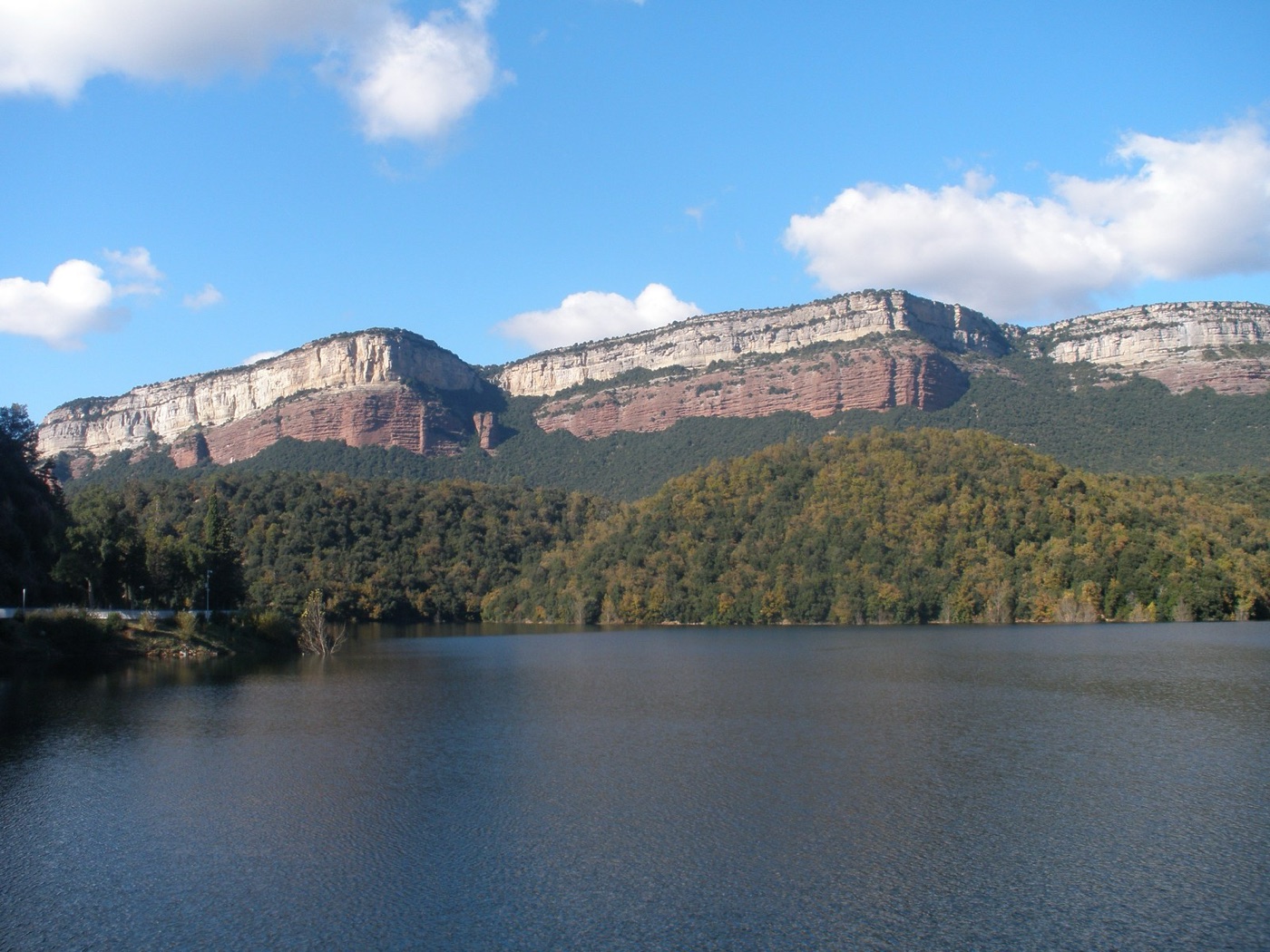
What it has learned about the plant is the harder lesson. A desalination plant built for a drought sits idle in the wet years and is called a waste, and it saves the city in the dry ones and is called too small. The region has decided to run it at a steady share of supply in every year, which costs more in the wet years and means that in the dry ones it is already running, its membranes conditioned and its staff in place, rather than being started from cold as the reservoirs fall.
What it teaches
Barcelona is the place in this series that shows what a rich city does with a drought: it buys time expensively, builds the plant, and then argues about the plant until the next drought proves it. The second time, the plant, the reuse and a public that had been through it once held the city without ships. The margin was a few weeks of reservoir and a quarter of the supply from the sea, and the region has judged that too thin and is doubling both. It is the desalination myth's true sentence in practice: the sea as the last answer, for a coastal city that has done the cheaper things and still comes up short in the third dry year.
Six ships in 2008, none in 2024, and a plant that ran empty for ten years and full for two.
Sources
- Agència Catalana de l'Aigua, reservoir levels for the Ter and Llobregat system, 2007 to 2008 and 2021 to 2024, and the drought emergency declarations of February 2024.
- Aigües de Barcelona and Aigües Ter Llobregat, the El Prat desalination plant: 200,000 cubic metres a day, opened 2009, and its output through the 2024 drought.
- March, H., Saurí, D. and Rico Amorós, A.M. (2014). The end of scarcity? Water desalination as the new cornucopia for Mediterranean Spain. Journal of Hydrology 519.
- Reporting by El País, La Vanguardia and Reuters on the 2008 tanker shipments from Marseille and the 2024 emergency measures.
- Consorci Besòs Tordera and the Baix Llobregat reclamation plant, indirect potable reuse into the Llobregat since 2019.
- Photographs: opener: Aerial View of Barcelona While Landing by Coolcaesar (CC BY) via Wikimedia Commons; inline: Embassament de Sau al 13 per cent. Sant Romà de Sau. IMG1665 by Amadalvarez (CC BY-SA) via Wikimedia Commons; inline: Pantà de Sau by Jan Tomàs (CC0) via Wikimedia Commons.