Thirsty Places: Israel
A country that is more than half desert grows its own food, exports fruit, and drinks the sea. Most of that comes down to two decisions made in the 1960s: to deliver water to plants a drop at a time, and to send a city's treated sewage to the farms of the Negev. What drip irrigation is, why it was invented where it was, and what a country built on it looks like.
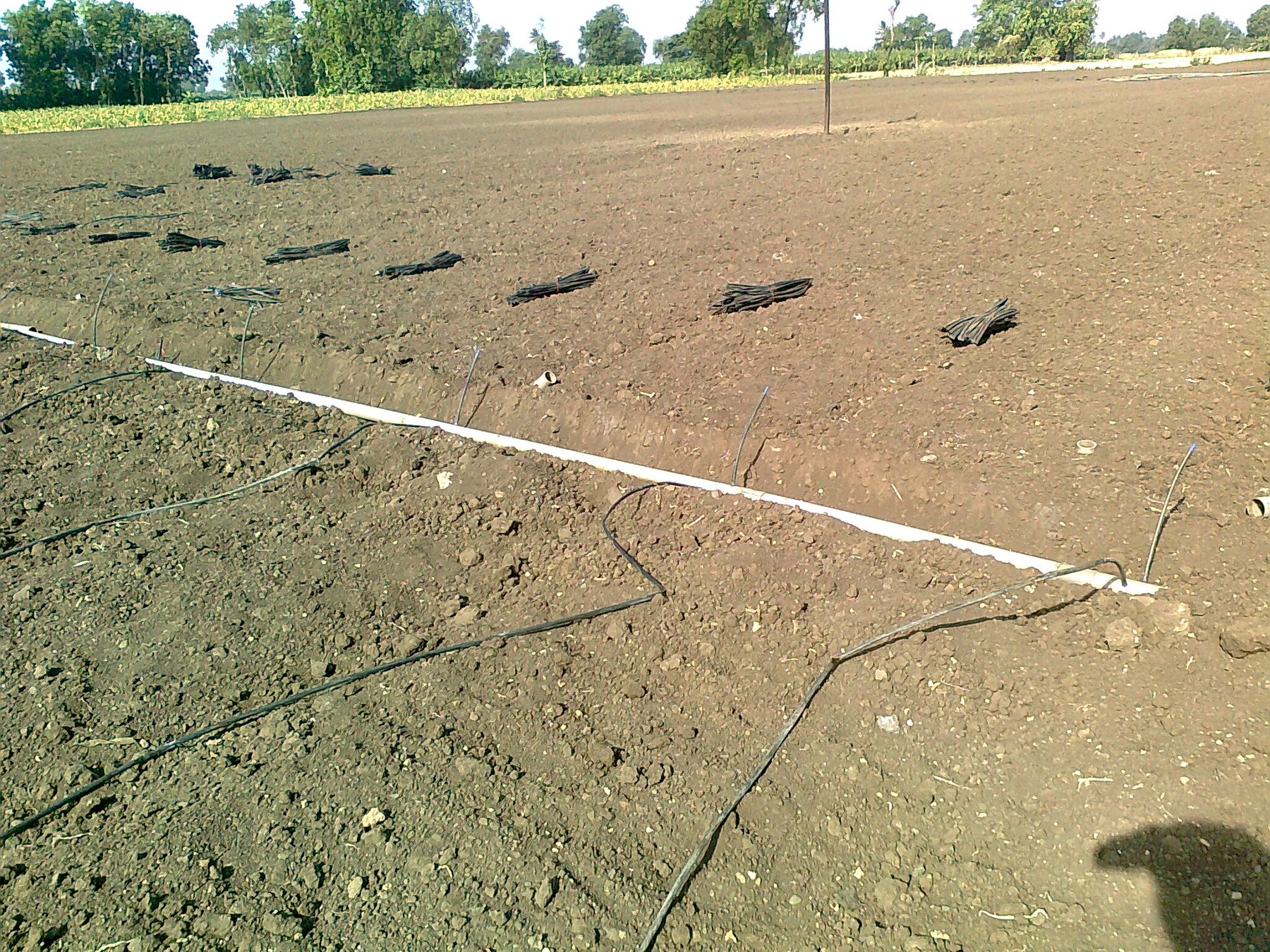
Stand at the edge of a field in the northern Negev in July and the ground is grey, cracked and hot enough to feel through a shoe, and the field is green. The crop, peppers or tomatoes or a young orchard, stands in rows, and along each row runs a thin black plastic pipe, lying on the soil, with a small dark patch of damp beneath it every thirty centimetres. That is all the water there is. Nothing sprays, nothing floods, nothing runs off. The pipe drips, at the root, a litre or two an hour, and the plant takes it before the sun can.
Israel is more than half desert, and it is one of the few countries in the world where a visitor can see, in one landscape, both of the ideas that let a dry country feed itself. This article is about the first of them, the drip line, and about the second, which is where the water in the drip line came from.
A tree beside a leaking pipe
The story the industry tells about drip irrigation begins, as such stories often do, with an accident noticed by the right person. Simcha Blass was a water engineer who had designed much of Israel's early pipe network, and in the 1930s, the story goes, he saw a tree growing larger and greener than its neighbours, and found, beside it, a buried pipe with a small leak. The tree was being fed slowly, at the root, all the time, and it was thriving on less water than the trees around it received in a flood every few weeks. It took plastics, which arrived after the war, to make the idea practical: a pipe that could be laid cheaply along every row, with emitters that would let out a controlled trickle without blocking.
Blass developed the emitter, and in 1965 a kibbutz in the Negev, Hatzerim, agreed to manufacture it. The company that grew from the kibbutz workshop, Netafim, is now the largest maker of drip irrigation in the world, and the technique is used on every continent, on vines in California, sugar cane in India and vegetables in Kenya.
What a drip line does
Traditional irrigation floods a field or sprays it, and most of what is applied never reaches a root. It evaporates from the wet surface, runs off, soaks below the roots, or feeds the weeds between the rows. In a hot, dry climate the losses are large: half the water applied by flood irrigation can be gone before the crop gets it.
A drip line delivers water directly to the root zone of each plant, slowly, through emitters spaced along the pipe, and it keeps the soil there at the moisture the crop wants, continuously, rather than swinging between flood and drought. The surface between the rows stays dry, so nothing evaporates from it and no weeds grow. Fertiliser can be dissolved in the water and delivered with it, in the right dose, to the root. And because the water is applied at a rate the soil can absorb, none runs off and little goes below the roots.
| Irrigation method | Where the water goes | Share reaching the crop, roughly |
|---|---|---|
| Flood, in furrows or basins | Over the whole field, and below it | A half or less |
| Sprinklers | Into the air, then onto the whole surface | Around two thirds to three quarters |
| Drip | To the root zone of each plant | Nine tenths or more |
The result, on the same crop, is roughly half the water for the same yield, and often a better yield, because the plant is never stressed. In water footprint terms, described throughout this site, drip cuts the blue water of a crop, the pumped share, which is the share that matters most in a dry country, and it does it with a plastic pipe.
The catch
Drip has a cost and a discipline. The pipes and emitters have to be bought and laid, and in poor countries the capital is the barrier. The emitters block, with silt, with scale from hard water, with algae and with roots, and a drip system needs filtered water, regular flushing and, in many climates, chemical treatment of the water, which is the antiscalant article's problem on a farm. Drip on a crop of low value, wheat or rice, rarely pays; on vegetables, fruit, vines and sugar cane it pays quickly, and that is where it has spread. And a drip line that delivers water precisely can also deliver it to too many plants: efficiency lowers the water per crop, and a farmer who uses the saving to plant more takes as much from the aquifer as before. Israel manages that with the other half of the system, which is a national water budget and a price.
Where the water comes from
Drip decides how the water is used. The second idea decides where it comes from, and it is the reason the Negev's fields are irrigated at all.
Israel's water is a national system, carried from the wet north to the dry south by a pipeline and canal, the National Water Carrier, completed in 1964, and allocated by a single authority that meters and prices every cubic metre, to farms as well as to cities. The natural supply, the Sea of Galilee, the coastal aquifer and the mountain aquifer, was fully used by the 1970s, and the country added two more sources on top of it.
The first is reuse. The sewage of Tel Aviv and its region, some two million people, goes to a treatment plant called the Shafdan, and its effluent, instead of going to the sea, is spread over sand basins on the coastal dunes and allowed to soak down into the aquifer, where it is filtered for months, as Orange County's is, and then pumped out and piped a hundred kilometres south, in a separate network, to irrigate the crops of the Negev. Other cities' effluent is treated and reused more directly on farms nearer to them. Israel reuses a larger share of its treated wastewater for agriculture than any country in the world, a share that the OECD reports as far above any other member's, and a large part of the country's farm water has already been through a city.
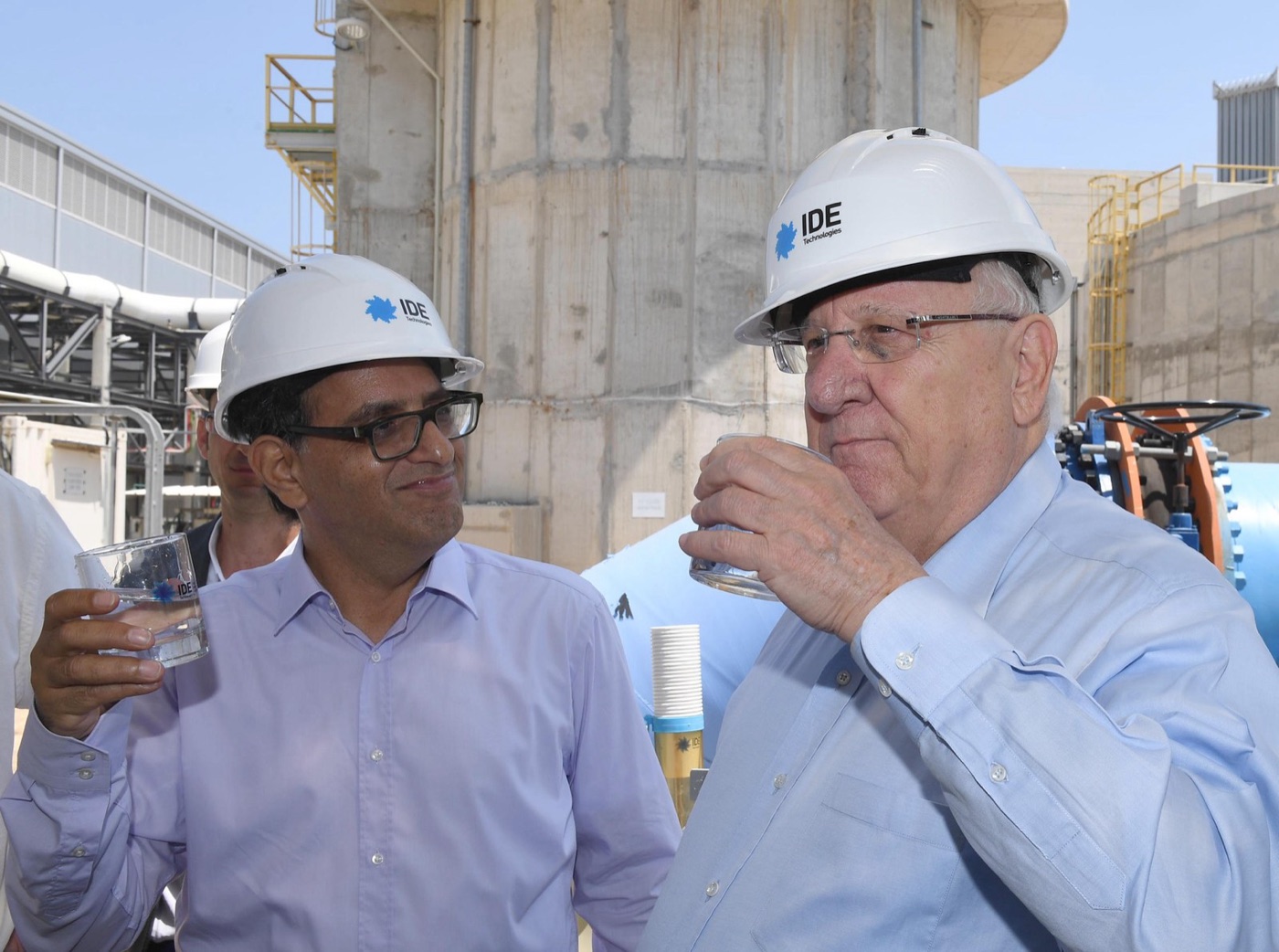
The second is the sea. Five reverse osmosis plants on the Mediterranean coast, built between 2005 and 2015 and described in the desalination article, now supply the majority of the country's domestic water, which frees the natural sources, and the reused water, for the farms.
| Israel's water, in order of arrival | |
|---|---|
| The National Water Carrier, 1964 | Moved the wet north's water to the dry south |
| Drip irrigation, 1965 | Halved what the crops needed |
| Reuse, from the 1970s | Sent the cities' treated sewage to the farms |
| Desalination, from 2005 | Supplied the cities from the sea, freeing everything else |
| Metering and pricing throughout | Made every cubic metre count |
The price of a cubic metre
The part of the system that visitors do not see is the bill. Israel meters every connection, farms included, and prices its water in rising blocks: a household pays a moderate rate for its first allocation and a much higher one for every cubic metre above it, and a farmer receives an annual quota and pays sharply more for exceeding it. The price covers the cost of the water, including the desalination plants, and it is one of the highest in the developed world. It is also the reason the drip lines are there. Drip pays for itself quickly when water is expensive and metered, and it rarely pays when water is cheap and unmeasured, which is why the technique invented in the Negev spread first to the countries that price their water and last to the ones that do not. The pipe is the visible half of the invention. The meter is the other half.
A country built on the drip
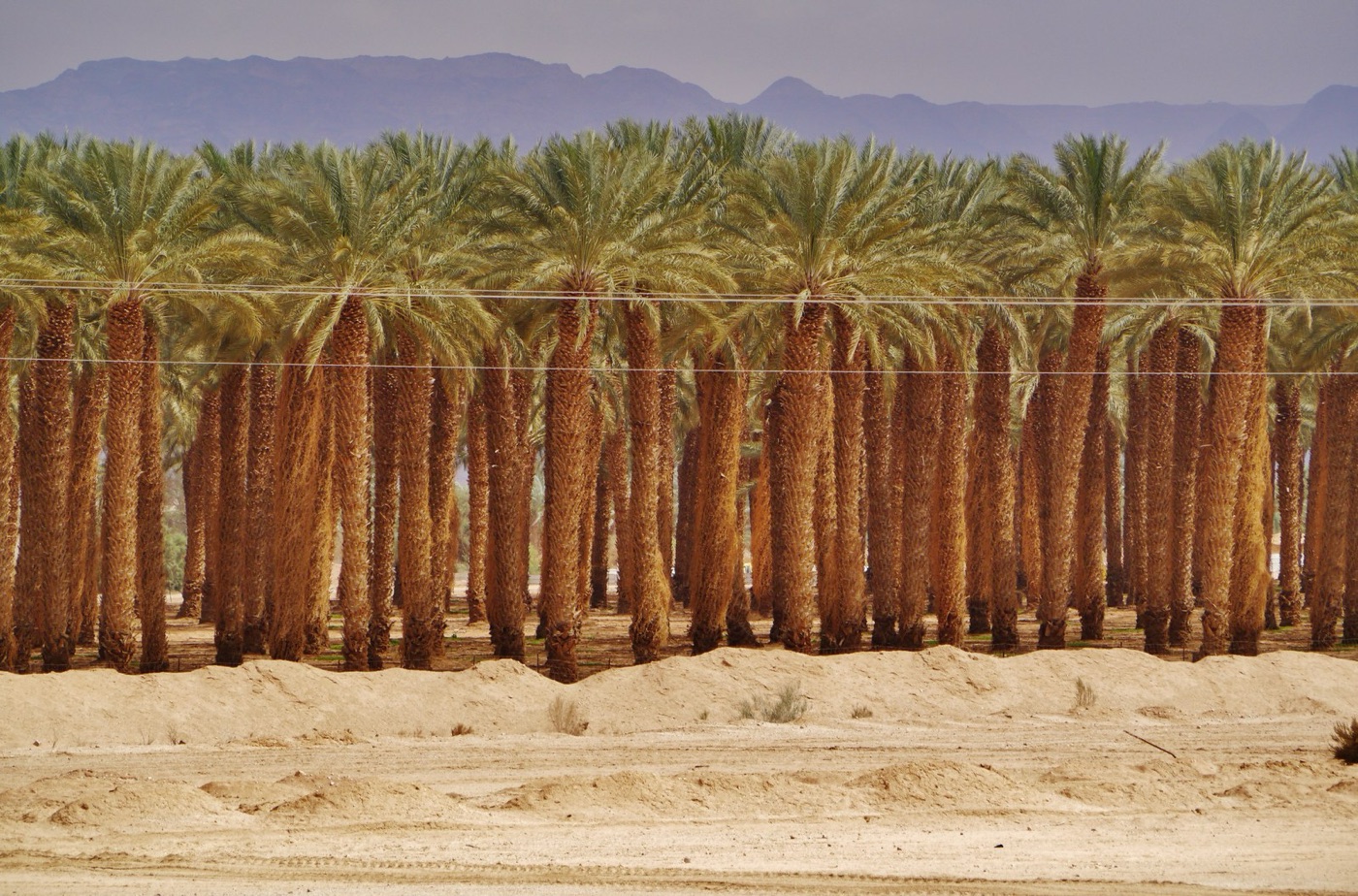
The visible result is a landscape that should not exist: orchards and vegetable fields in a desert, a country that exports peppers and citrus to Europe in winter, and a water supply that grew while the natural sources did not. The less visible result is a habit. Israelis pay for water by the cubic metre at a price that reflects its cost, farmers receive an allocation and are charged for exceeding it, and a national campaign in the drought of the late 2000s asked the country to save water and it did. It is Cape Town's lesson, learned a generation earlier, in a country that never had the option of not learning it.
What it teaches
Two lessons travel, and they travel together. Drip irrigation is the single largest saving available in the sector that uses seventy percent of the world's water, it was invented in a desert because a desert needed it, and it is spreading to the crops and the countries that can pay for it. And reuse is where the water for the drip line can come from: a city's sewage, treated and sent to the fields, is a supply that grows with the city and does not depend on the rain. Israel put the two together sixty years ago. The countries now doing the same, in California, in Spain, in India, are following a drip line back to a leaking pipe in the 1930s and a kibbutz workshop in 1965.
Sources
- Netafim, company history: Simcha Blass and the first drip irrigation system at Kibbutz Hatzerim, 1965.
- Israel Water Authority: the National Water Carrier (1964), the Shafdan wastewater treatment and reuse scheme serving the Dan region and the Negev, and desalination's share of domestic supply.
- OECD (2020) and the Israel Water Authority on the share of treated wastewater reused in agriculture, the highest reported of any country.
- Siegel, S.M. (2015). Let There Be Water: Israel's solution for a water starved world. St Martin's Press.
- Photographs: opener, Drip irrigation work in a farm 1 by abhiriksh (CC BY-SA) via Wikimedia Commons; inline: Reuven Rivlin in a visit at IDE - Sorek Desalination Plant (6453) by Mark Neyman (CC BY-SA) via Wikimedia Commons; inline: Israel Palmenplantage in der südlichen Negev-Wüste 4 by Zairon (CC BY-SA) via Wikimedia Commons.