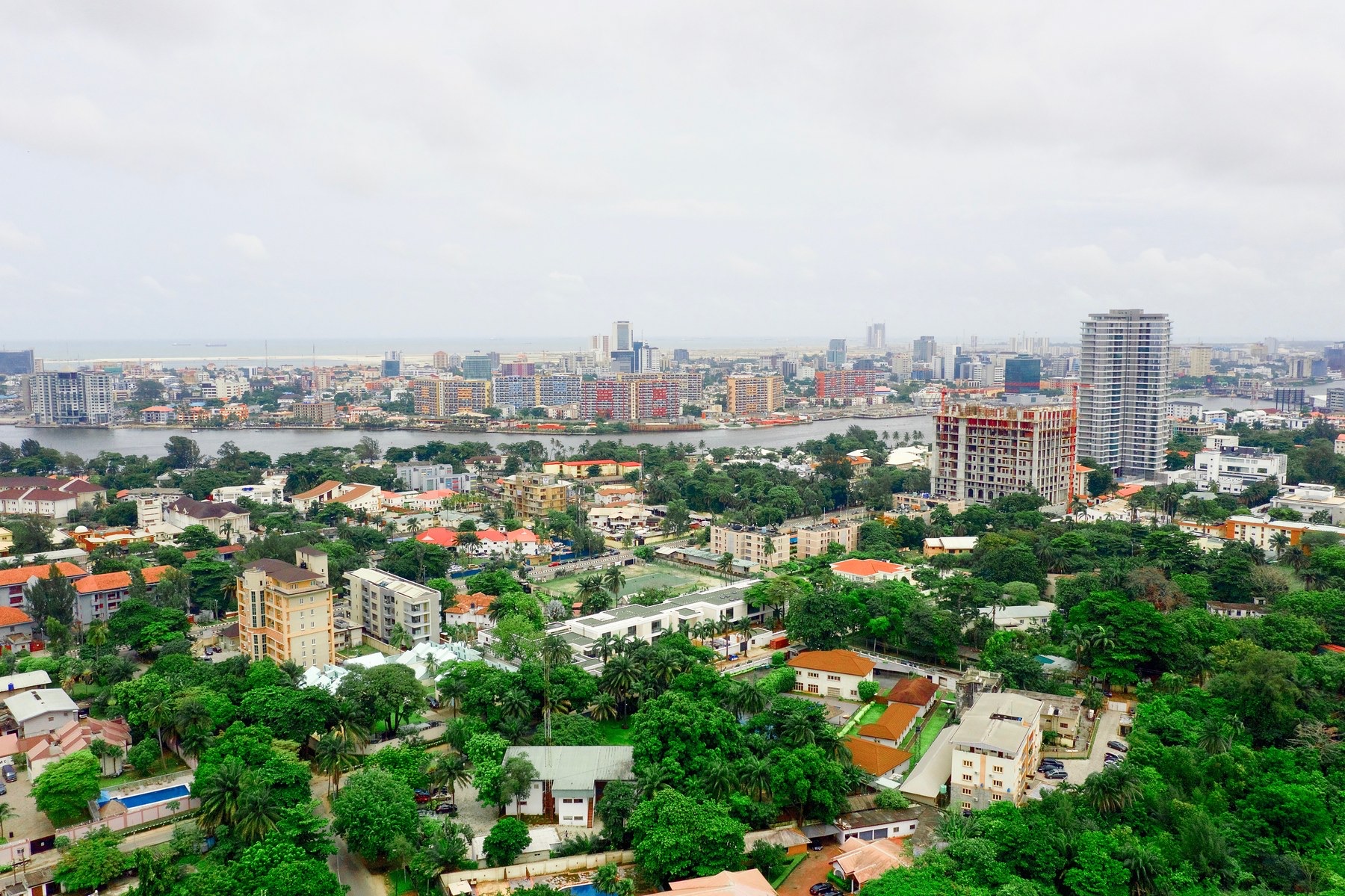
Thirsty Places: Lagos
The largest city in Africa sits on a lagoon, gets two metres of rain a year, floods every wet season, and delivers piped water to about one household in ten. The rest buy from boreholes, vendors and sachets, and the sachet, half a litre of water in a plastic bag, is how most of Lagos drinks. What the city's water is, why the utility built for a million serves twenty, what a sachet costs, and why a wet city can be a thirsty one.
Lagos is built on water. The city stands on a string of islands and a low mainland between a lagoon and the Atlantic, in a climate that delivers around two metres of rain a year, and every wet season the rain comes down faster than the drains can carry it and the streets fill to the knee. A river runs into the lagoon from the north, the ocean pounds the bar to the south, and the water table in much of the city is a metre below the surface. By every measure of supply, Lagos is one of the wettest cities on Earth. About one household in ten has a working tap.
This article is about a city of more than twenty million people that floods with water it cannot drink and buys, in plastic bags, the water it cannot pipe.
A utility built for a million
The city's water company, the Lagos Water Corporation, traces its plants to the colonial works of the 1910s and the expansions of the 1970s and 1990s, and its installed capacity, on paper, is around 900 million litres a day, which would be a fair supply for a city of five million at the rates this site has met elsewhere. Its actual output is a fraction of that, by its own reports on the order of a third, because the plants run on a power grid that fails daily and on generators the corporation cannot fuel, because the pumps and filters are decades past their design lives, and because the pipes that carry the water lose, by every estimate, most of it before it reaches a customer. The network reaches a minority of the city's districts, and where it reaches, the water arrives intermittently, at low pressure, and is not trusted.
The result is that the utility supplies, by the most generous count, about a tenth of the city's households, in the older and wealthier districts of the islands and the mainland's core. The other ninety percent found their own water.
| Lagos's water | |
|---|---|
| Population | Over 20 million, and growing by several hundred thousand a year |
| Rainfall | About 2,000 millimetres a year |
| Installed treatment capacity | About 900 million litres a day |
| Actual output | Roughly a third of that |
| Households with a working piped connection | About 10 percent |
| Main sources for the rest | Boreholes, vendors, sachets |
The borehole under the house
The city's answer was to drill. Lagos sits on a coastal aquifer of sand a few metres down, and a borehole with a small electric pump can be sunk beside a house in a day for a sum a middle class household can pay. There are, by the state's estimates, several hundred thousand of them, under houses, apartment blocks, hotels, churches, schools and factories, and they supply most of the city's washing, cooking and, where the owner trusts it, drinking.
The aquifer is paying for it. Near the coast the sea has moved in as the fresh water was pumped out, and boreholes across the islands and the southern mainland have turned brackish. Everywhere, the shallow water lies within a few metres of the pit latrines and soakaways that most of the city's sanitation consists of, and surveys of borehole water find faecal bacteria in a large share of it, along with iron and, in the industrial districts, whatever the factories put into the ground. A borehole is a private utility with no treatment plant, drawing from a shared aquifer that nobody manages, and the households that can afford it treat the water with filters and chlorine, and the households that cannot drink it as it comes.
The vendor and the sachet
For the part of the city with neither a tap nor a borehole, which is a majority, there are two more suppliers. The vendor, called a mai ruwa across Nigeria, pushes a cart of jerrycans filled at a borehole or a public tap and sells them door to door, at a price per litre that runs, as in Karachi and Lima, ten to twenty times the utility's tariff, and for water of unknown quality.
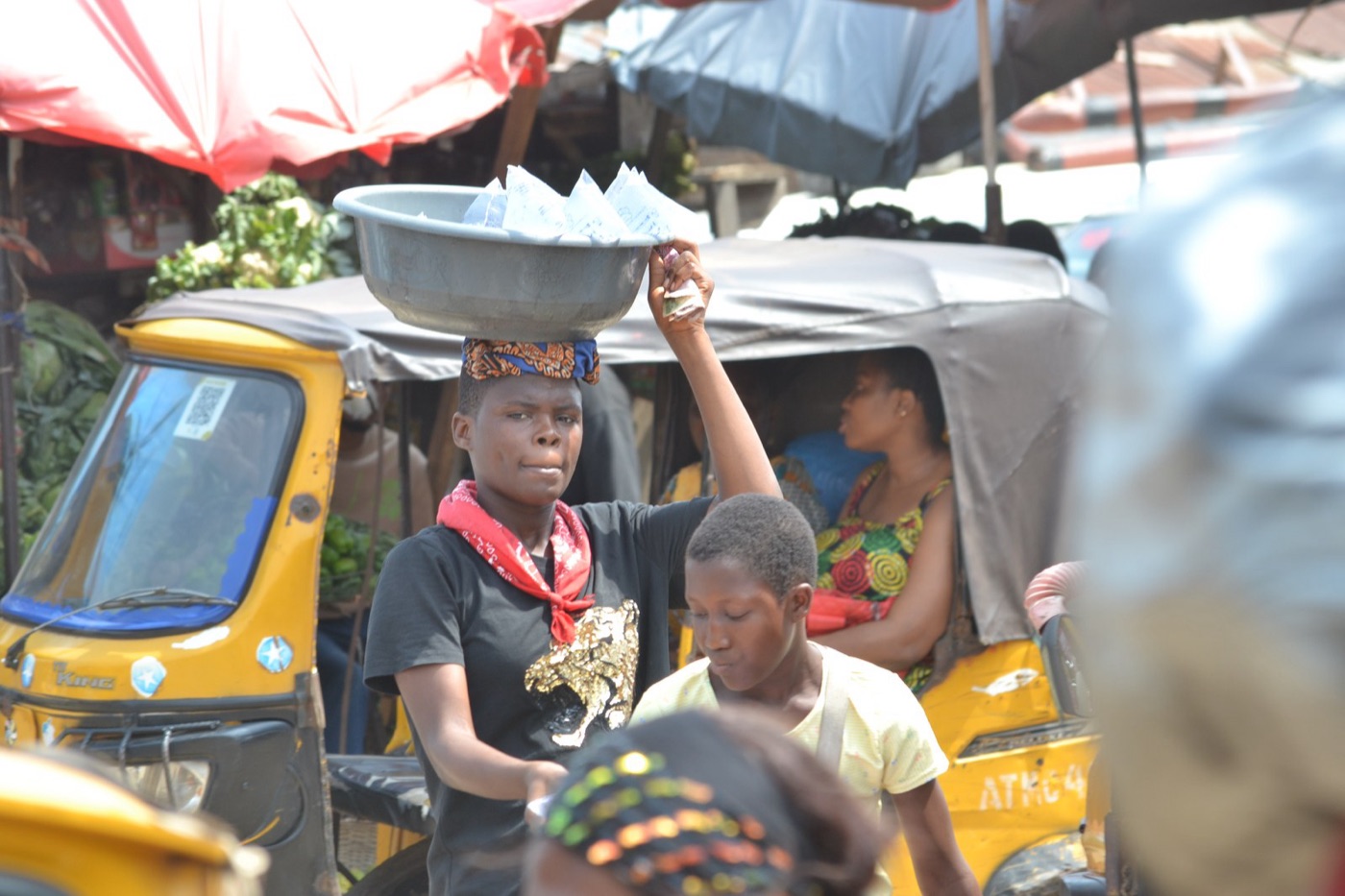
And there is the sachet. Pure water, as it is called on the street whatever is in it, is half a litre of water sealed in a polythene bag, produced by thousands of small factories from borehole water passed through a filter and, at the better ones, an ultraviolet lamp, and sold cold for a few naira from coolers at every bus stop, market and junction. It is how most of Lagos drinks. It is cleaner, in the surveys, than most boreholes and vendors, because it has at least passed a filter; it is cheaper per litre than bottled water; and it produces, across the city, several billion plastic bags a year, which are dropped where they are emptied and washed into the drains, where they block the flow that the wet season needs. The sachet is a rational answer to a failed utility and a plastic answer to a flooding city, and it is both at once.
| How Lagos drinks | Share, roughly | Price per litre against the tariff |
|---|---|---|
| Piped water | About 10 percent of households | The tariff, when it arrives |
| Private borehole | A large share of the middle class | The pump's electricity; treatment at home |
| Vendors with carts | Much of the rest | Ten to twenty times |
| Sachet water | Most people, for drinking | Many times, in half litre units |
| Bottled water | The wealthy | The most of all |
The power behind the pumps
Every part of Lagos's water runs on electricity that is not there. The national grid supplies the city for a few hours a day on a good day, and the water corporation's plants, its pumping stations and the boreholes of twenty million households all run, for most of the time, on diesel generators. A plant designed to treat a hundred million litres a day and run on a grid that fails at noon produces what it can before the generator's fuel runs out, and a borehole pump in a house runs when the household can afford the diesel. Lagos's water is therefore rationed by fuel as much as by supply, and the price of a litre from a borehole rises and falls with the price of diesel at the pump. The plans for new treatment plants all include their own power, because nobody who has run a plant in the city believes the grid will be there, and that doubles the cost of every litre before the pipes are counted.
The flood
The wet season lays the other half of the story on the street. Lagos is flat, a metre or two above a lagoon whose level rises with the tide, and it was built without the drainage a city of twenty million needs. The rain runs off roofs and paved ground into open drains, the drains are blocked with sachets, refuse and silt, the lagoon backs up at high tide, and the water stands in the streets and the ground floors for hours or days. The sea, meanwhile, is eating the ocean shore of Victoria Island, and the reclaimed land the city has built on the bar, Eko Atlantic, has shifted the erosion along the coast to the neighbourhoods east of it.
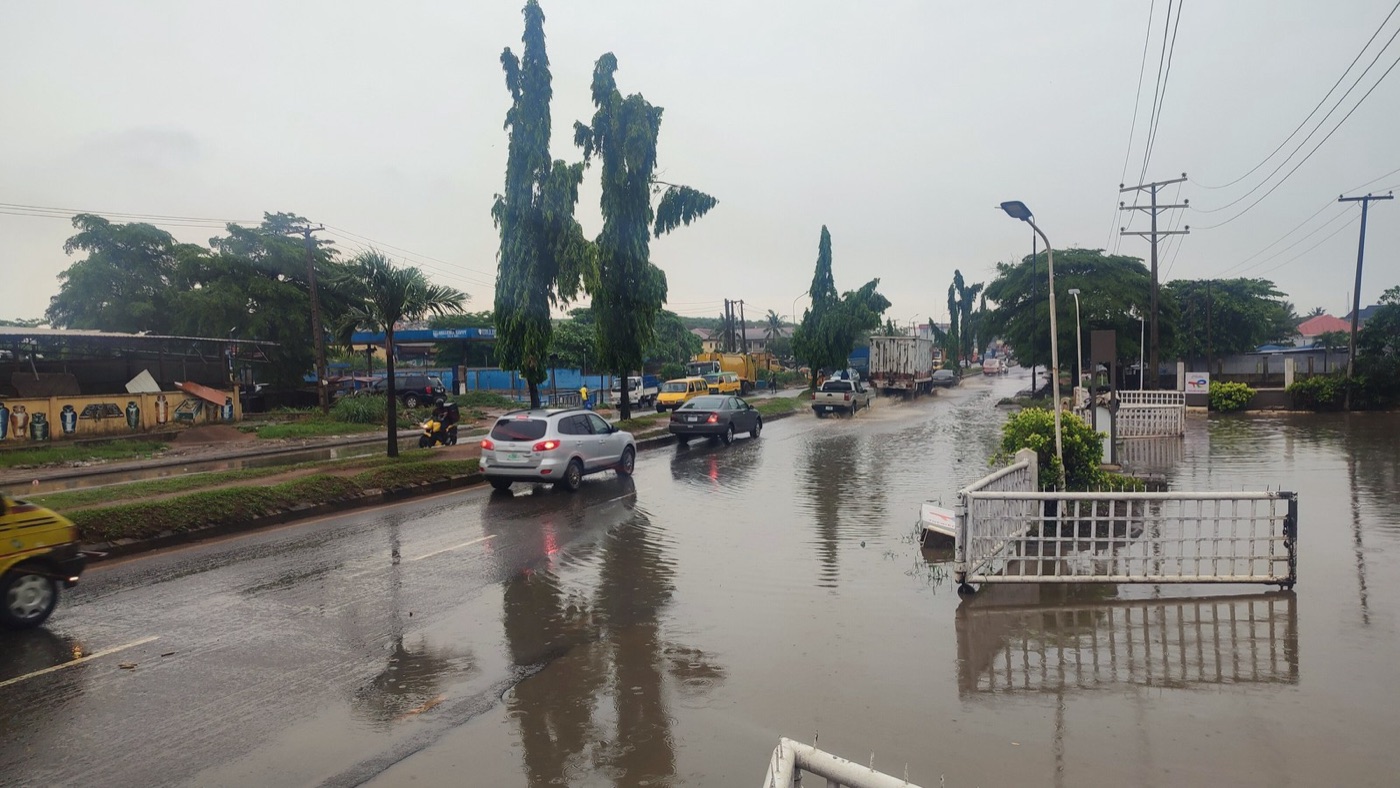
A city with two metres of rain and a lagoon at its door could catch, store and treat its own water. What it has done, so far, is drain it as fast as the drains allow and buy it back in bags.
What has been tried
The plans exist. The water corporation's master plan proposes new treatment plants, the rehabilitation of the old ones, a metered network and a tariff, and it has been rewritten twice since 2010 while the city added ten million people. A proposal in the 2010s to bring in private operators to run the plants met street protests, on the fear of prices and of water being sold to the poor at rates only the rich could pay, and was shelved. The state has begun to license and regulate the boreholes and the sachet factories, with limited reach. The most effective work has been the smallest: community managed water points and kiosks in the informal settlements, run by the residents, selling treated water from a shared borehole at a fraction of the vendor's price. It is the Orangi model from Karachi, and it works at the scale of a lane.
What it teaches
Lagos is the wettest city in this series and among the thirstiest, and it shows that a shortage can be a shortage of something other than water: of the utility, the pipes, the power and the treatment that turn rain and a lagoon into a supply, and in their absence a city of twenty million builds its own, one borehole and one sachet at a time, at a cost per litre the utility could never charge and with a plastic bag for every half litre. The rain still falls. It goes into the street, and the street goes into the lagoon.
Two metres of rain, a tenth of the taps, and the rest in a bag.
Sources
- Lagos Water Corporation, Lagos Water Supply Master Plan (2010, updated 2020): installed capacity, actual output and the share of the population served.
- World Bank (2019). Nigeria: Lagos water supply and sanitation diagnostic. Coverage, borehole dependence and vendor prices.
- Stoler, J. et al. (2012). Sachet water quality and brand reputation in two low income urban communities in Accra, Ghana. American Journal of Tropical Medicine and Hygiene 87, and Lagos studies on sachet water quality.
- Nigerian Federal Ministry of Water Resources and UNICEF (2021). Water, sanitation and hygiene national outcome routine mapping.
- Reporting by Reuters, the Guardian Nigeria and Premium Times on Lagos flooding, borehole salinisation and the 2021 water bill protests.
- Photographs: opener: Ikoyi, Lagos, Nigeria by Reginald Bassey (CC BY-SA) via Wikimedia Commons; inline: A sachet water seller and a tricycle man conveying people to their places of work by Onyinyeonuoha (CC BY-SA) via Wikimedia Commons; inline: Flooded road in Lagos by Bibiire1 (CC BY-SA) via Wikimedia Commons.