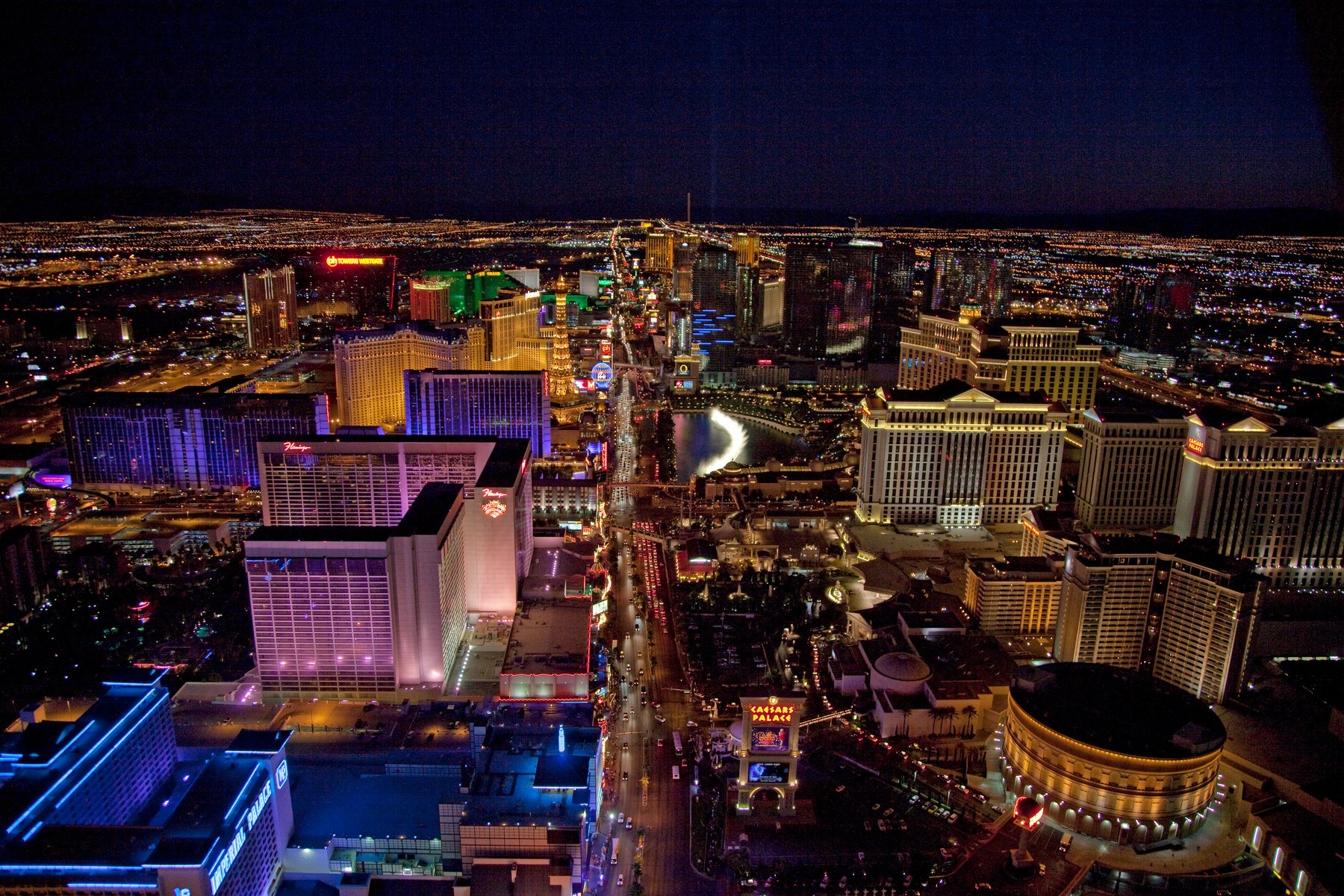
Thirsty Places: Las Vegas
A city of two million people in the driest desert in North America, with fountains on its main street, has cut its river water use by a quarter while its population grew by half. It did it by treating and returning nearly every drop used indoors, by paying people to dig up their lawns, and, in the end, by banning grass. What Las Vegas does with its water, and why it is a better model than its reputation.
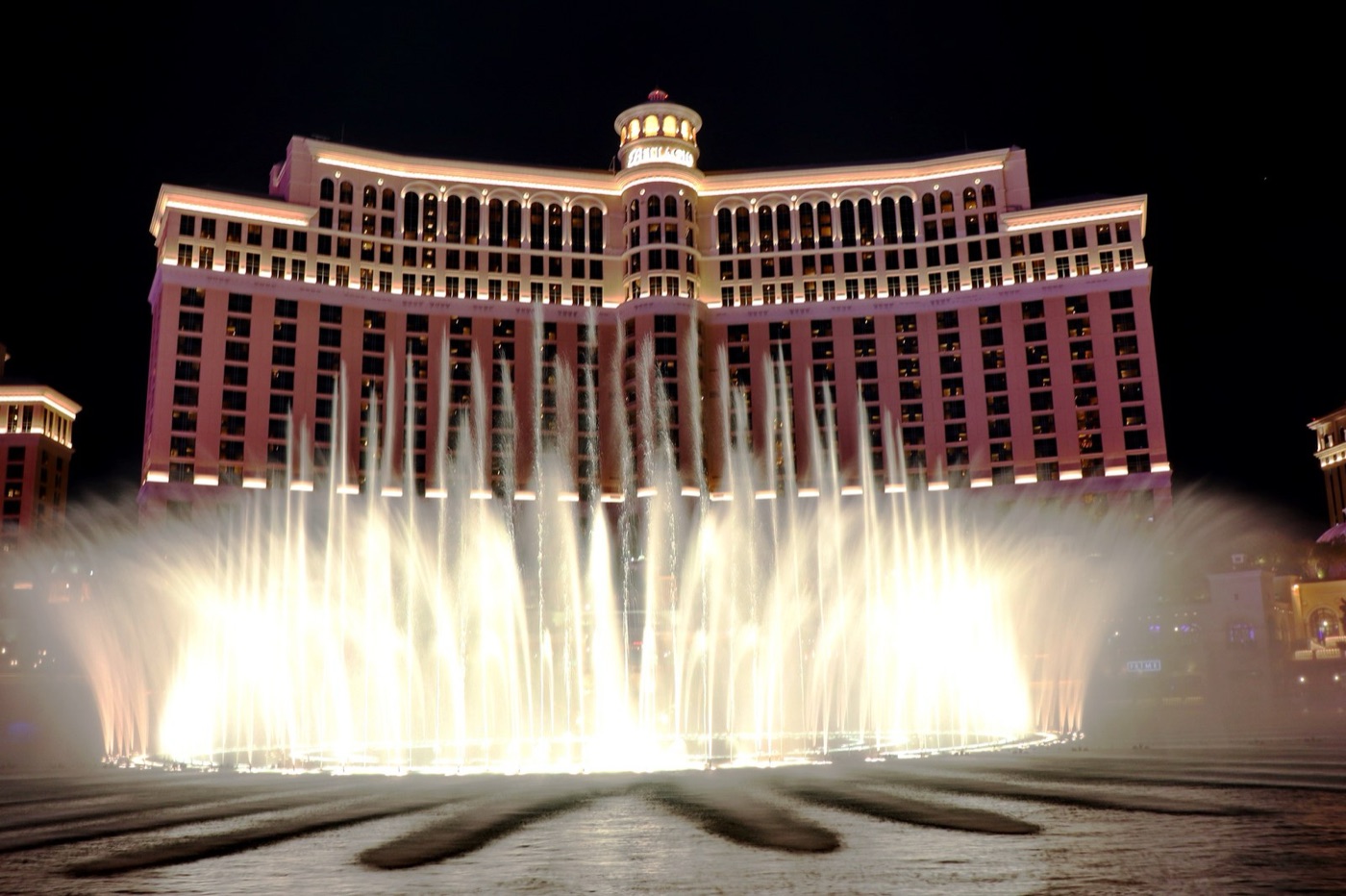
The fountains in front of the Bellagio hotel on the Las Vegas Strip fire every fifteen minutes in the evening, a choreographed wall of water rising thirty storeys into the desert air to music, and they have stood for a generation as the picture of water wasted. The picture is wrong, in an instructive way. The fountains run on a lake fed largely by a private well under the hotel and by water that has already been used and returned, and the amount they lose to the sky each year is a rounding error in a valley whose water problem lies elsewhere.
Las Vegas sits in the Mojave, the driest desert in North America, on about ten centimetres of rain a year, with two million people and forty million visitors. It has the smallest share of the Colorado River of any of the seven states that divide it, and it has spent twenty years learning to live inside that share while the river shrank. This article is about how, because it is a better model than its reputation.
The smallest share
The Colorado River was divided among the seven states of its basin in 1922, in a compact signed after an unusually wet decade, and Nevada, which in 1922 had almost nobody living in it, was given 300,000 acre feet a year. An acre foot is about 1.2 million litres, so the state's share is around 370 million cubic metres, roughly two percent of the river. California received more than fourteen times as much. Arizona nearly ten.
Las Vegas takes about ninety percent of its water from that share, drawn from Lake Mead, the reservoir behind the Hoover Dam, through intakes in the lake bed. The other ten percent is groundwater from under the valley. There is no other source, no snowpack, no river of its own, and no realistic prospect of more from the Colorado, whose flow has fallen by about a fifth since the compact was signed and is expected to fall further. In 2022 Lake Mead dropped to its lowest level since it was filled, low enough to expose the original intake and to trigger the first ever federal shortage declaration, which cut Nevada's take. The city had seen it coming for two decades.
| Las Vegas's water | |
|---|---|
| Nevada's Colorado River share | 300,000 acre feet, about 370 million cubic metres a year |
| Share of the city's supply from the river | About 90 percent |
| Rain | About 10 centimetres a year |
| Population, greater Las Vegas | About 2.3 million, up by about half since 2002 |
| Colorado River water used, change since 2002 | Down by about a quarter |
The credit
The first thing that makes Las Vegas unusual is geography, and the city's water authority turned it into an accounting rule. The valley drains back into Lake Mead through a channel called the Las Vegas Wash. Every drop of water used indoors, in a shower, a kitchen, a hotel laundry or a casino restroom, goes down a drain to one of the valley's treatment plants, is cleaned to a high standard, and flows down the wash into the lake, a few kilometres upstream of the intakes that draw it out again. Under the rules of the river, Nevada receives a credit for every acre foot returned and may take it out again. The state's real allocation, in effect, is 300,000 acre feet of consumption, and indoor water is not consumed.
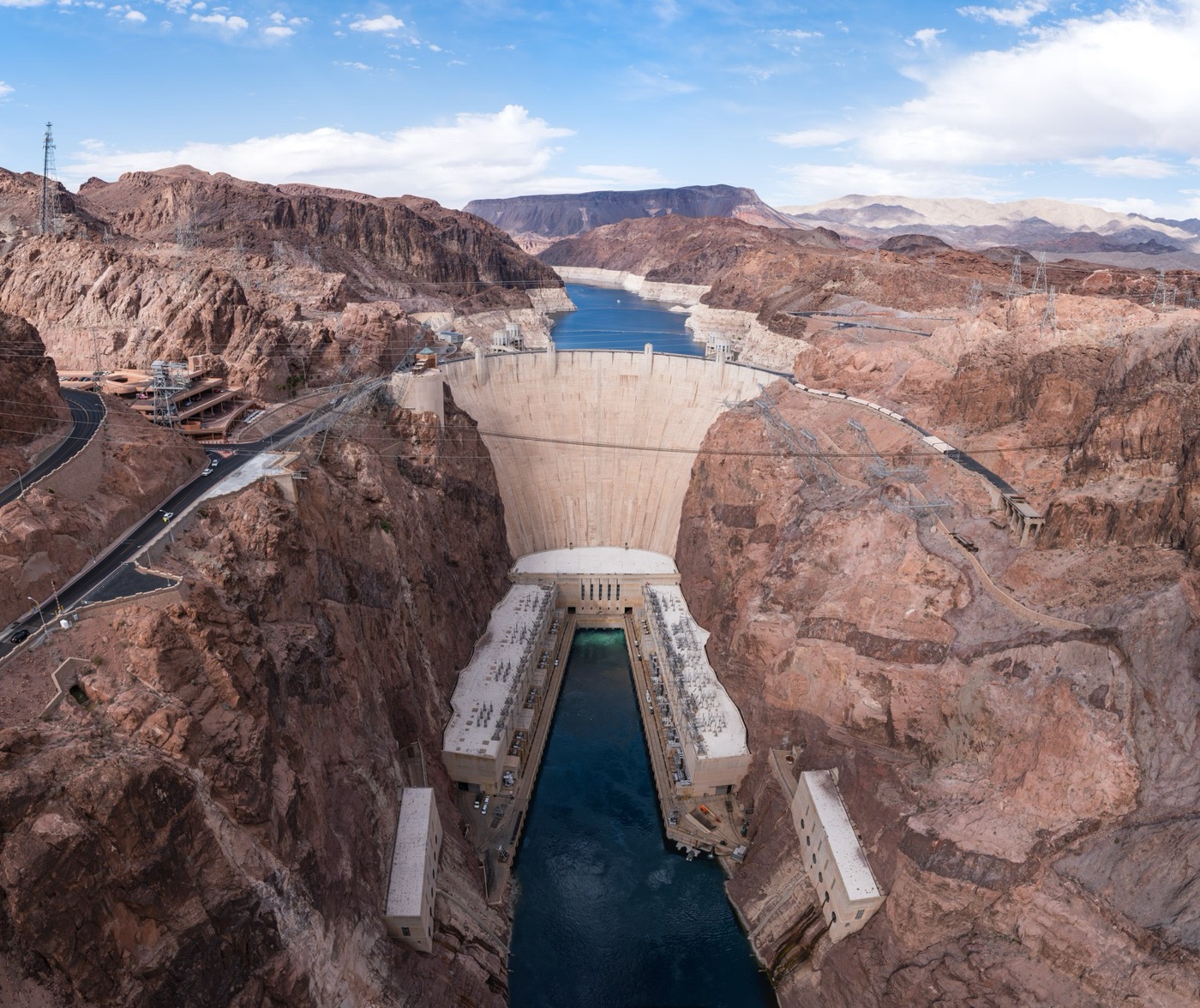
The consequence is that almost all of the city's indoor water, which is most of what a hotel or a casino uses, has a footprint close to zero. The Bellagio's fountains, and the pools and the laundries and the kitchens of the Strip, draw water that goes back. The Strip as a whole uses about seven percent of the valley's water and returns most of it. That is the answer to the picture.
What is actually lost
If indoor water returns, what does not return is water that goes into the air. In the Mojave that means water sprayed on grass. A lawn in Las Vegas needs several hundred litres per square metre a year to stay green in a summer of forty five degrees, all of it evaporating or passing through the grass into the sky, none of it reaching a drain. In the 1990s the valley's suburbs were built with lawns as if they were in Ohio, and outdoor use was well over half of the city's consumption. It was, in the words of the water authority, the only water the city really spent.
So the authority went after the grass. From 1999 it paid residents and businesses to tear out lawns and replace them with desert planting, at rates that rose over the years to several dollars a square foot, and it has funded the removal of more than 200 million square feet of turf, about the area of two thousand football pitches. It banned new front lawns in 2003, restricted the size of back ones, set watering days and hours, and fined violations. Golf courses, of which the valley has dozens, were given water budgets and moved to reclaimed water and to less grass. Per person use fell by about half.
In 2021 Nevada went further than any state had, and passed a law banning what it called non functional turf: grass that nobody walks on, in road medians, office parks, roundabouts and the front of apartment complexes. From 2027 it may not be irrigated with Colorado River water at all. About a third of the valley's remaining grass falls under the ban.
| What Las Vegas did about grass | |
|---|---|
| Turf rebate, since 1999 | Over 200 million square feet removed |
| New front lawns | Banned since 2003 |
| Watering schedules | Assigned days, no daytime watering in summer |
| Golf courses | Water budgets, reclaimed water, less turf |
| Non functional turf | Banned by state law from 2027 |
| Per person use since 2002 | Roughly halved |
The visitors
The forty million visitors a year are the part of the city's water that visitors ask about, and the answer is that they are a small share of it. A hotel room on the Strip uses a few hundred litres a day, in the shower, the toilet, the laundry and the kitchen that serves it, and nearly all of it goes down a drain and back to the lake. The Strip's resorts have, under the water authority's rules, replaced their lawns with desert planting, fitted their rooms with low flow fixtures, and moved their laundries to systems that recycle rinse water. The pools evaporate, and so do the fountains, and the sum of the two is a few thousand acre feet a year against a valley consumption of a quarter of a million. The tourists are not the city's water problem. The tourists' picture of it, taken from a hotel balcony above a fountain, is the reason the problem is misunderstood.
The lake
Lake Mead is the reservoir the whole lower river lives on, and its level is the number that decides the city's year. When it is full the lake stands at about 372 metres above sea level. The federal rules set a series of trigger elevations below that, at which the lower basin states take cuts in a fixed order, and the lake passed the first of them in 2021 and the second in 2022, when it fell to about 320 metres, its lowest since it was filled in the 1930s, with a pale band of exposed rock a hundred feet high around its shore where the water had been. The city's third intake, at the bottom of the lake, was built for exactly that band. Wet winters in 2023 and 2024 raised the lake by several metres, and the negotiations over the river's future, which will set the cuts for the 2030s, are being conducted on the assumption that the wet winters were the exception.
The plumbing
Two pieces of engineering complete the picture. The first is the intake. As Lake Mead fell, the city's two original intakes, built when the lake was full, came close to the surface, and the authority spent about 1.5 billion dollars on a third, a tunnel bored under the lake bed to an intake at the very bottom, finished in 2015, along with a pumping station that can draw water even if the lake falls below the dam's own outlets. It was called the third straw, it was built on the assumption that the river would keep falling, and the assumption has so far been right.
The second is the sewage works. The valley's return flow credit only works if the water returned is clean enough to be drunk again after a spell in the lake, and the plants that treat it, at Clark County and the city, run the chain this site has described in the Orange County and Windhoek articles, with nutrient removal and, at the largest, filtration and ultraviolet disinfection, before the water goes down the wash. The wash itself has been turned from a flood channel into a chain of constructed wetlands that polish the water further on its way to the lake.
What it has not solved
Las Vegas has made itself efficient inside a share that is shrinking, and efficiency has a floor. The city has already taken most of the grass and returned most of the indoor water. Its next gains are smaller, and the river's next cuts may not be. The 2022 shortage took a tenth of Nevada's share. Deeper cuts, negotiated among the seven states through the 2020s, could take more. The authority has bought and banked water in Arizona and California, invested in a desalination plant for California in exchange for river water, and planned for a pipeline from rural Nevada's groundwater that it has, so far, not built. The city's future is a river it does not control, and the best it can do is be the state that wastes least of it, which it now is.
What it teaches
The lesson from Las Vegas is the one every reuse article on this site circles: measure what leaves the system, and go after that. The city ignored the water that could be recovered and concentrated on the water that could not, and it found, once it looked, that the water it could not recover was grass. A fountain in front of a casino is a spectacle. A lawn in a road median in the Mojave is a loss. Las Vegas is the place that told the two apart.
300,000 acre feet, in the driest desert in North America, with room to spare. The fountains are fine. The grass had to go.
Sources
- Southern Nevada Water Authority, Water Resource Plan and annual conservation reports: Colorado River allocation, return flow credits, per capita use, and the turf rebate programme.
- Nevada Assembly Bill 356 (2021): prohibition on the use of Colorado River water to irrigate non functional turf in southern Nevada from 2027.
- US Bureau of Reclamation, Lake Mead elevation records and the 2022 and 2023 shortage declarations under the Colorado River Interim Guidelines.
- Colorado River Compact (1922) and the Boulder Canyon Project Act (1928): Nevada's 300,000 acre foot apportionment.
- Clark County Water Reclamation District, treatment and return of reclaimed water to the Las Vegas Wash and Lake Mead.
- Photographs: opener: Night aerial view, Las Vegas, Nevada, 04649u by Carol M. Highsmith (public domain) via Wikimedia Commons; inline: Hoover Dam and Black Canyon seen from the Mike O'Callaghan–Pat Tillman Memorial Bridge, panorama, Arizona–Nevada by Christian David (CC BY-SA) via Wikimedia Commons; inline: Las Vegas, Bellagio Fountains, 2018.11.24 (15) by Vahe Martirosyan (CC BY-SA) via Wikimedia Commons.