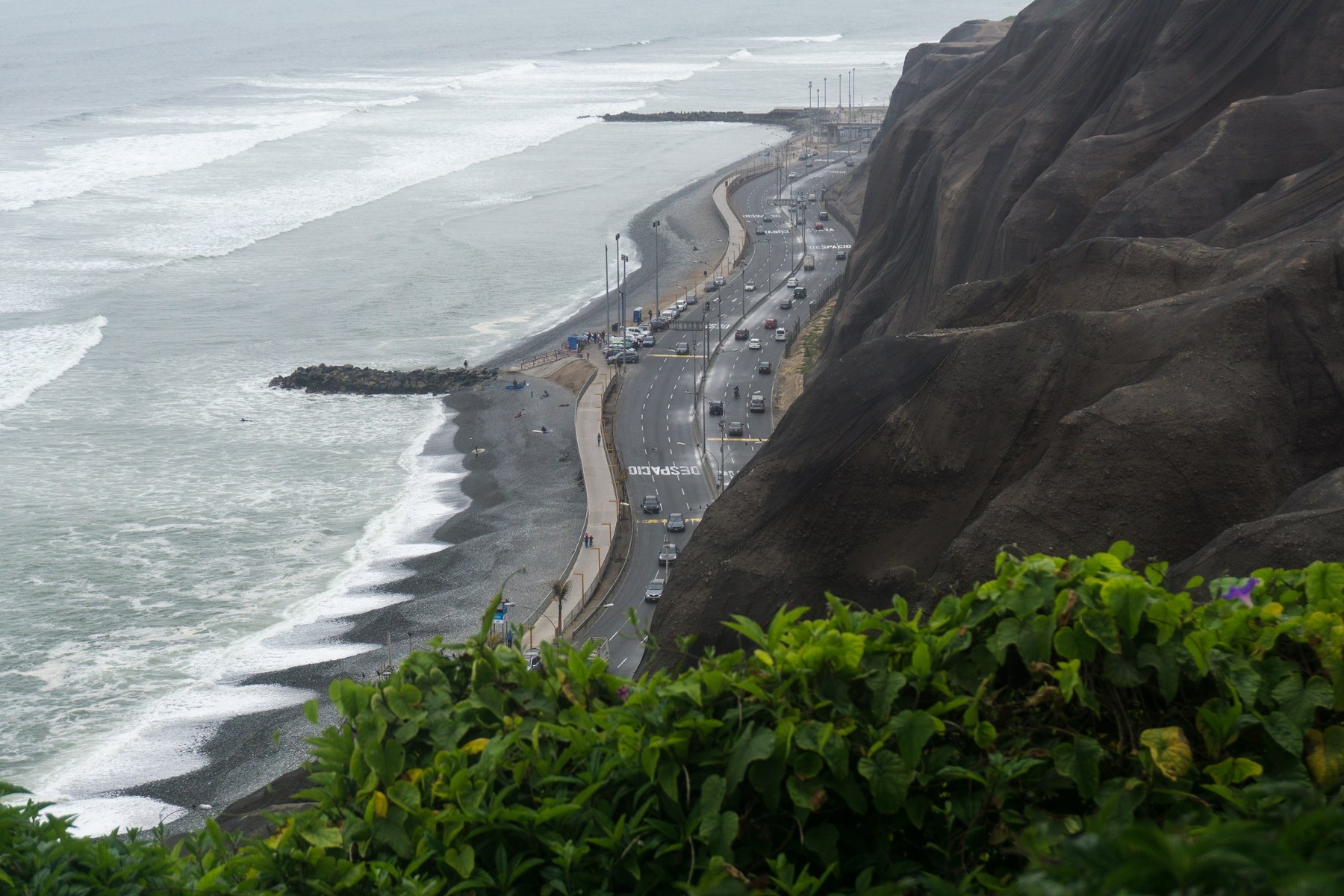
Thirsty Places: Lima
Ten million people live in a city where it almost never rains, on a coastal desert between the Pacific and the Andes, drinking a river that is fed by glaciers that are melting away. A million and a half of them have no pipe and buy water from trucks at ten times the price the wealthy pay for theirs. What Lima's water is, where it comes from, what the fog on the hills has to do with it, and why the poorest city district in this series pays the most per litre.
Lima is a city that does not expect rain. Its houses have flat roofs with no gutters, its streets have no storm drains worth the name, and the grey sky that sits over it for most of the year, the garúa, delivers a damp mist that beads on the windows and almost never falls. The official figure is about nine millimetres a year, which is less than a single afternoon's storm in Chennai. Ten million people live under that sky, on a strip of desert between the Pacific and the Andes, and every drop they drink came down from the mountains in a river that is, in the dry season, nearly all melted ice.
This article is about the second largest desert city on Earth, about a river fed by glaciers that are disappearing, and about the arithmetic of a city where the poorest people pay the most for water and get the least.
A desert with a river
The coast of Peru is a desert because of the ocean. The Humboldt current brings cold water up from the Antarctic along the shore, the cold sea chills the air above it, and the chilled air cannot rise to make rain. It makes fog instead, which is the garúa, and it leaves the coast among the driest places on the planet, drier than most of the Sahara. What water the coast has comes from the Andes, sixty kilometres inland, where the same air, forced up over the mountains, drops its moisture on the high slopes and feeds rivers that cut down through the desert to the sea.
Lima has three of them. The Rímac, which runs through the middle of the city, supplies about three quarters of its water, through a treatment plant on its banks at La Atarjea that is one of the largest in South America. The Chillón to the north and the Lurín to the south supply the rest, along with wells into the aquifer that the rivers recharge. All three are seasonal. In the wet season in the mountains, from December to April, they run brown and full. In the dry season, from May to November, the rain stops in the Andes too, and the rivers are fed by what melts from the glaciers and drains from the high lakes and the wetlands of the páramo.
| Lima's water | |
|---|---|
| Population | About 10 million |
| Rainfall | About 9 millimetres a year |
| Main source | The Rímac River, about three quarters of supply |
| Dry season flow | Largely glacier melt and stored water from the high Andes |
| People without a piped connection | About 1.5 million |
| Price of tanker water, per litre, against the piped tariff | Around ten times |
The ice
The glaciers of the tropical Andes are the water tower of the Pacific coast, and they are melting faster than almost any on Earth. Peru holds about seventy percent of the world's tropical glaciers, and it has lost, by the national inventory, about half their area since the 1960s, with the smaller and lower ones disappearing altogether. The Cordillera Central, whose ice feeds the Rímac, has lost more than that. A glacier is a store that fills in the wet season and drains in the dry one, and as it shrinks the dry season flow of the rivers it feeds rises for a time, as the ice gives up its reserve, and then falls, permanently, when the reserve is gone. Hydrologists call the turning point peak water, and for the rivers of central Peru it is judged to be near or past.
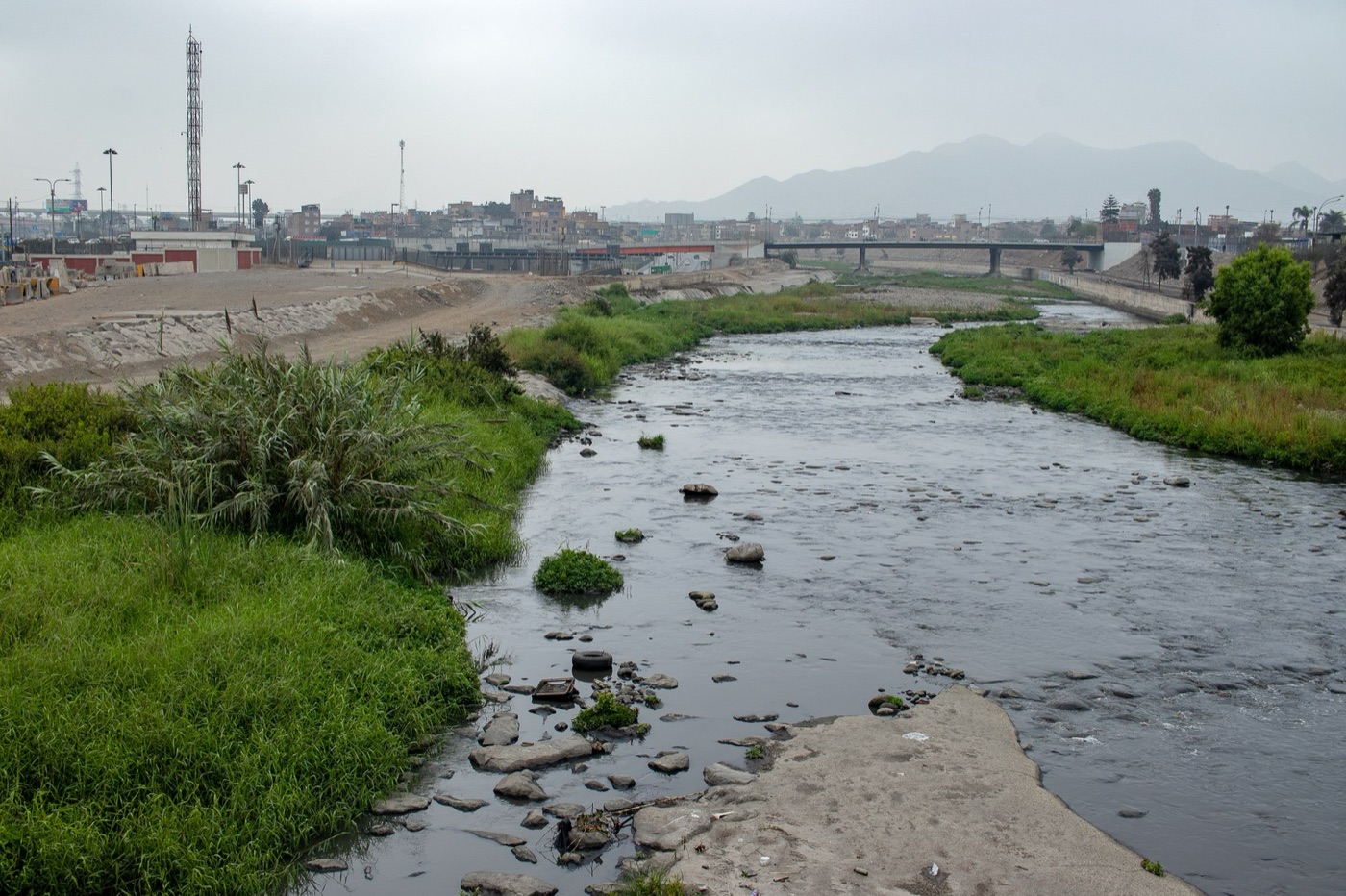
Lima's answer, over the last thirty years, has been to replace the ice with concrete. The water utility and its predecessors have built a chain of dams on the high lakes of the Rímac's headwaters, at over four thousand metres, to hold the wet season's rain and release it through the dry one, and a tunnel through the continental divide, the Marca scheme, that brings water from the Mantaro basin on the wet side of the Andes into the Rímac's. More tunnels are planned. The city is, in effect, building an artificial glacier out of reservoirs and moving the divide of the continent a few kilometres east, and it is the only strategy available to it.
The hills
The plain of Lima is served. The hills are not. The city grew, from the 1950s onwards, by migration from the Andes, and the migrants built where the land was free, which was the steep, dry, rocky slopes at the city's edge, in settlements that climb the hills in terraces of brick and plywood. Laying pipe up those slopes, with pumping stations at every rise and roads that are often stairs, is slow and expensive, and the utility has been doing it for decades and is still perhaps a million and a half people short.
Those people buy water from trucks. The tanker fills at a municipal point on the plain, drives up the hill, and sells by the drum, into a plastic or steel container on the roof or in the yard that is open to the dust and the sun. The price per litre, in the surveys that have measured it, is around ten times what a household in Miraflores or San Isidro pays for piped water from the tap, and the water is worse, having been stored warm in a drum for days. The poorest districts of Lima spend a larger share of their income on water than any other, for the least of it, which is a pattern this series has met in Mexico City and Chennai and which Lima shows in its starkest form, because the alternative source, rain, does not exist.
| Two Limas | The plain | The hills |
|---|---|---|
| Supply | Piped, treated at La Atarjea | Tanker trucks and drums |
| Price per litre | The tariff | About ten times the tariff |
| Quality | Chlorinated mains water | Stored warm in open containers |
| Use per person | Several hundred litres a day in the wealthy districts | A few tens of litres |
The fog
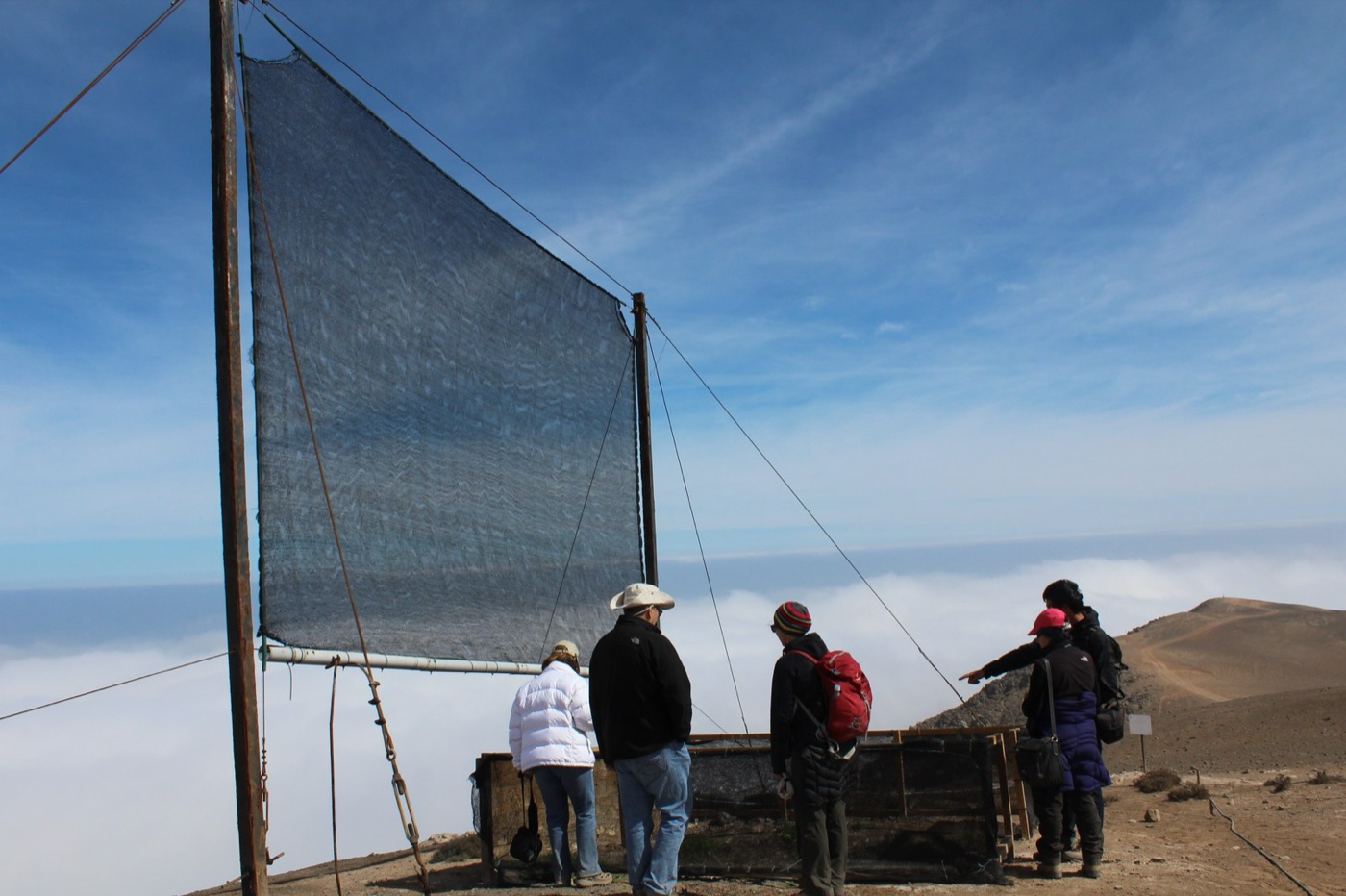
On the hills above the southern city, in a district called Villa María del Triunfo, a few communities have done something with the garúa. The fog that rolls in off the Pacific from May to November is dense enough, on the ridges, to be caught: a mesh of fine plastic netting stretched between poles, several metres square, collects the droplets as the fog blows through, and they run down into a gutter and a tank. A single net yields a few hundred litres on a good day, enough for a family's washing and a garden, and the water is soft and clean, being the rain the sky never quite delivers. The method came from the Atacama in Chile, where the same current makes the same fog, and it has been carried to Lima by non profits and by the communities themselves.
It is a small amount of water, and it will not supply a city. What it supplies is the household that owns the net, without a truck, without a bill, and without waiting for a pipe that has been promised for twenty years, and it is, on the hills of Lima, the only water that belongs to the people who drink it.
The plant on the river
The Rímac arrives in Lima carrying more than water. The valley above the city holds mines, and the river has, for a century, carried their metals, along with the sewage of the towns along it and the silt of the wet season's floods, which can turn the river into a brown torrent in hours. The treatment plant at La Atarjea, at the point where the river enters the city, is where all of that is dealt with, and it is one of the larger conventional plants in the Americas: intakes that can be closed when the river runs too dirty to treat, settling basins the size of football pitches for the silt, the coagulation and filtration of their own article, and chlorine at the end. The plant has a few days of raw water stored in reservoirs beside it, against a flood or a spill upstream, and in the wet season of 2017, when a run of storms on the coast sent mudslides down the valleys, the river was too thick to treat for days and the city's supply was cut, district by district, for the first time in decades. The plant is the city's kidney and its bottleneck: everything the Andes send down passes through it, and it can only pass what it can clean.
The sewage, and the sea
The other half of the city's water is where it goes. For most of Lima's history its sewage went into the Pacific, untreated, through outfalls along the shore, and the beaches of the city were closed to swimming for decades. Two large plants built in the 2010s, at Taboada in the north and La Chira in the south, now treat most of the city's flow before it reaches the sea, and the beaches have reopened. The next step, which the utility has begun, is the one Singapore and Windhoek took: to treat the water further and use it, for the parks that the city irrigates with drinking water, for the farms in the river valleys, and, in time, for the aquifer. In a city with nine millimetres of rain, the sewage is the second largest river, and it flows every day of the year.
What it teaches
Lima is the desert city that shows what happens when the store that fed a river is a glacier and the glacier goes. The city's answer, reservoirs and tunnels in the high Andes, is the right one and it is a race against the ice. What the city has not answered is its hills, where a million and a half people pay the most for water in the country, and where the fog nets are a reminder that the sky over Lima does hold water, and that it is the people at the bottom who have had to find a way to catch it.
Nine millimetres a year, a river of melting ice, and a net on a ridge in the fog.
Sources
- SEDAPAL (Servicio de Agua Potable y Alcantarillado de Lima), annual reports: coverage, sources, the Rímac, Chillón and Lurín rivers, and the Marca and Huascacocha transfer schemes.
- SENAMHI, Peru's meteorological service: Lima rainfall records, about 9 millimetres a year at the airport station.
- Vuille, M. et al. (2018). Rapid decline of snow and ice in the tropical Andes: impacts, uncertainties and challenges ahead. Earth Science Reviews 176.
- Ioris, A.A.R. (2012). The geography of multiple scarcities: urban development and water problems in Lima, Peru. Geoforum 43. Tanker prices and the settlements.
- Reporting by Reuters, the Guardian and El Comercio on fog catchers in Villa María del Triunfo and the price of tanker water.
- Photographs: opener: Lima 2019-10-19-3 by Alexey Komarov (CC BY-SA) via Wikimedia Commons; inline: Río Rímac, Lima 2021 by Pasajero perdido (CC BY-SA) via Wikimedia Commons; inline: Atrapanieblas en Alto Patache by Pontificia Universidad Católica de Chile (CC BY-SA) via Wikimedia Commons.