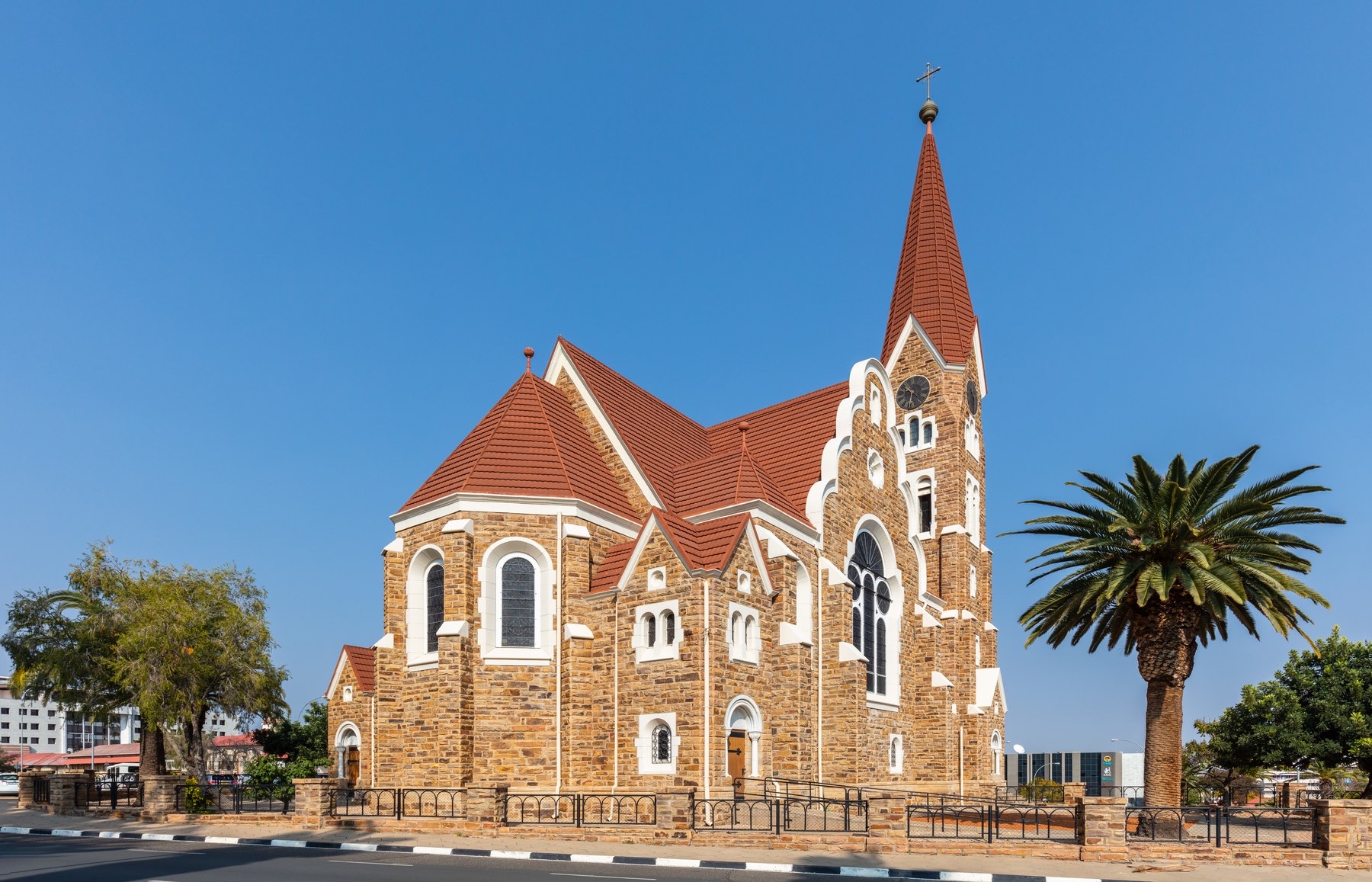
Thirsty Places: Windhoek
Long before Singapore, the capital of the driest country in sub Saharan Africa began sending its treated sewage straight back to its taps, and has done so since 1968 without a single recorded outbreak. How Windhoek did what no other city dared, what its plant looks like, and why it took the rest of the world fifty years to follow.
There is a photograph, taken in the late 1960s, of a group of Namibian officials in suits standing at a tap in Windhoek, each holding a glass, and drinking. It was a staged moment, and it was decades ahead of its time. The water in the glasses had been sewage a few hours earlier, and it had come to the tap not by way of a river or a reservoir but straight from the plant, through the mains, as drinking water. Nobody had done that before. Almost nobody has done it since. Windhoek has done it every day for more than fifty years.
The Singapore article on this site describes NEWater, the reuse scheme that the world admires. This one is about the city that got there first, more directly, with less money, and with a great deal less attention.
The driest capital
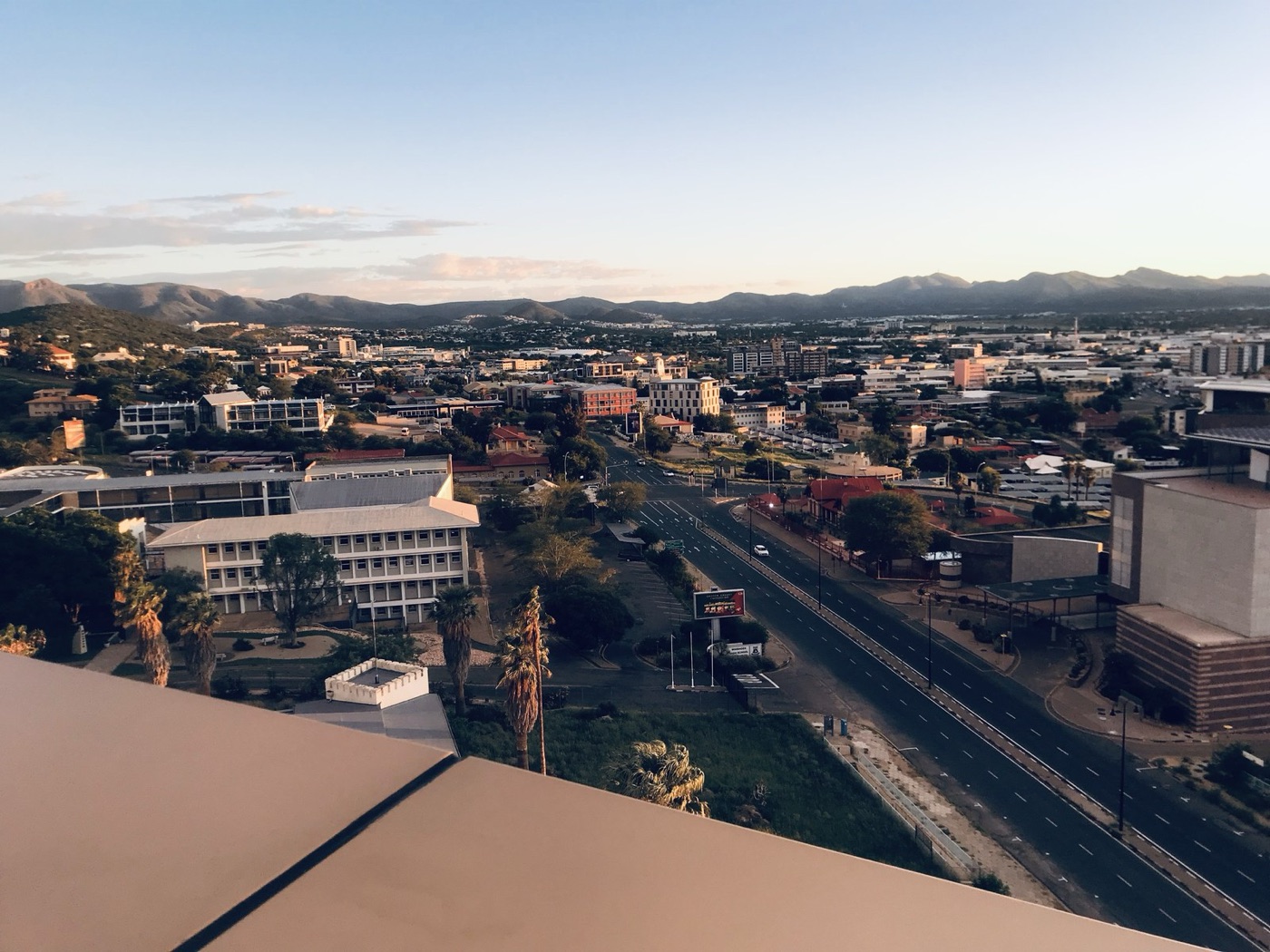
Namibia is the driest country in sub Saharan Africa, a land of desert and semi desert between the Kalahari and the Atlantic, and Windhoek sits on its central plateau, seven hundred kilometres from the nearest perennial river. The city was founded on springs, grew on boreholes into the aquifer beneath it, and by the 1950s had drawn that aquifer down to the point where the boreholes were failing. Dams were built on the ephemeral rivers to the north, which fill in a good rainy season and evaporate for the rest of the year. The city kept growing. By the 1960s the engineers of the municipality had done the sums for every source within reach and found all of them short.
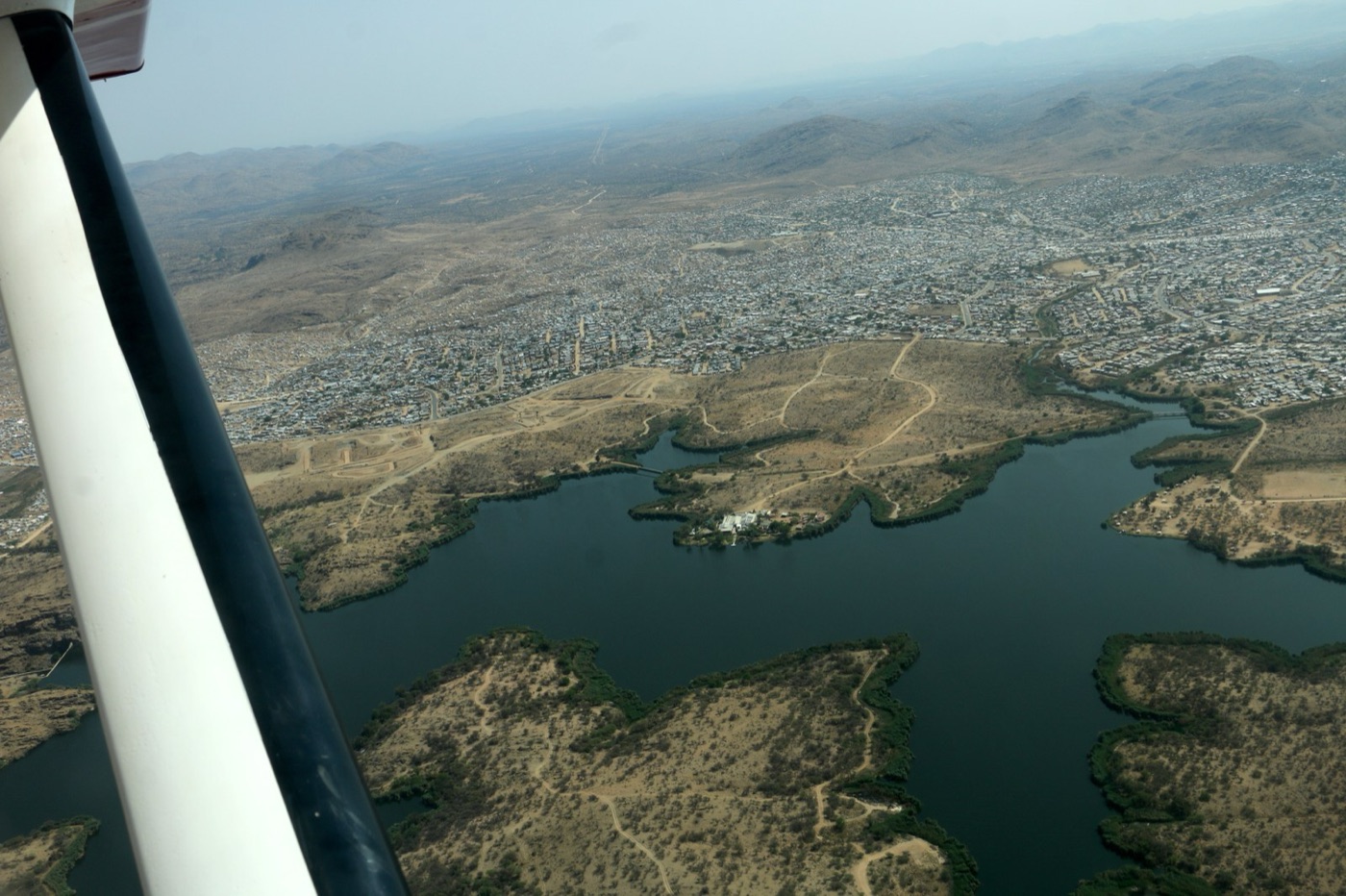
The one source that grew with the city was the city's own sewage, and in 1968 Windhoek did what its engineers had been proposing for a decade. It built a plant beside the Goreangab dam that took the effluent from the sewage works, treated it further, and blended it into the drinking water supply.
| Windhoek's water | |
|---|---|
| Nearest perennial river | About 700 kilometres away |
| Rainfall | About 370 millimetres a year, most of it evaporating |
| Sources | Boreholes, dams on ephemeral rivers, and reclaimed water |
| Reclaimed water's share of drinking supply | Up to about a third |
Direct, not indirect
The distinction that makes Windhoek unusual is one word.
Singapore's NEWater, Orange County's reuse scheme, and nearly every other potable reuse project in the world are indirect. The reclaimed water is put into a reservoir or pumped into an aquifer, where it mixes with rain or groundwater and sits for months, and is then drawn out and treated again at an ordinary drinking water plant before it reaches a tap. The reservoir or the aquifer is called the environmental buffer, and it serves two purposes: a real one, in that time and dilution add a margin of safety, and a psychological one, in that the water people drink has, by then, been in a lake.
Windhoek has no lake to spare. Its plant sends reclaimed water into the mains directly, blended with water from the dams and the boreholes, at up to about 35 percent of the supply. The industry calls this direct potable reuse, and for fifty years Windhoek was almost the only place on Earth doing it. The water that leaves the plant is drinking water, the pipe runs to the city, and the people in the photograph were the first to prove it.
What the plant does
The first plant of 1968 was replaced in 2002 by the New Goreangab Water Reclamation Plant, which treats up to 21,000 cubic metres a day and is the one running today, and its design is the answer to the question everyone asks, which is how it can possibly be safe.
The answer is the multiple barrier principle: a chain of treatment steps rather than one that must never fail, each capable of removing the same pathogens and contaminants by a different mechanism, so that a failure in one is caught by the next. The water arriving at the plant has already been through the city's sewage works, the biological treatment described elsewhere on this site. It is then dosed with ozone, which oxidises organic molecules and kills microbes; coagulated and floated, so that fine particles are lifted off in a froth; filtered through sand; treated with ozone again; passed through granular activated carbon, which adsorbs dissolved organic compounds and traces of pharmaceuticals; filtered through ultrafiltration membranes, which hold back anything the size of a virus; and chlorinated. Every stage is monitored online, and the plant's water is tested more often and for more things than the water from any of the city's dams.
| The New Goreangab plant, in order | What it removes |
|---|---|
| Sewage works, before the plant | Organic load, solids, most bacteria |
| Ozone | Organic molecules, microbes, taste and colour |
| Coagulation and dissolved air flotation | Fine particles, algae |
| Sand filtration | Remaining particles |
| Ozone again | Further oxidation |
| Granular activated carbon | Dissolved organics, pharmaceuticals, pesticides |
| Ultrafiltration | Bacteria, viruses, protozoa |
| Chlorine | Disinfection, and the residual for the pipes |
The plant also refuses water. If the effluent arriving from the sewage works is out of specification, because an industrial discharge has upset the works or because a monitor reads high, the intake closes and the plant waits, and the city runs on its other sources for the day. That right of refusal is written into its operating rules and it is the reason the industry that studies Windhoek trusts it.
The water bank under the city
Direct reuse is the famous part of Windhoek's water, and it is one of three things the city does with its used water.
The second is a separate network. Water from the sewage works that is treated but not to drinking standard is piped, in its own purple pipes, to parks, sports fields, cemeteries and the gardens of the city, so that the treated drinking water is never spent on grass. Most of Windhoek's public green space is watered this way.
The third is storage. The aquifer under the city, which the boreholes of the 1950s drew down, has since 2006 been used as a bank. In wet years, when the dams are full and the reclamation plant has spare capacity, treated water is pumped down into the aquifer through injection boreholes and left there, where it cannot evaporate, until a dry year comes and the boreholes pump it back. The scheme, managed aquifer recharge in the industry's language, gives the city a reserve that no dam in its climate could hold, because a dam in central Namibia loses more to the sun than it supplies, and an aquifer loses nothing. Between the reclamation plant, the purple pipes and the water bank, Windhoek uses each litre it collects more times than almost any city on Earth, and it does so because it had no alternative when it began and no reason to stop once it had.
Fifty years without an outbreak
The record is the argument. In more than half a century of direct reuse there has been no recorded outbreak of waterborne disease in Windhoek attributable to the reclaimed water, and epidemiological studies that compared the health of the city's population with that of other Namibian towns found no difference. The plant has been visited, audited and written about by every water agency in the world that has considered reuse, and it appears in the American National Research Council's 2012 report on the subject as the case that proves direct potable reuse can be done.
That record was earned with a caution that bordered on the obsessive, and deliberately so. The plant's operators have always known that a single failure would end direct reuse not only in Windhoek but everywhere, for a generation.
Why the world took fifty years
If Windhoek proved in 1968 that a city could drink its treated sewage safely, the obvious question is why it took until the 2000s for Singapore and Orange County to follow, and until the 2010s for direct reuse to be seriously proposed in the United States and Australia. The answer is not engineering. The plant's technology of 1968, and even of 2002, was ordinary, and any competent utility could have built it.
The answer is the buffer. Cities with a reservoir or an aquifer to spare have always preferred to put their reclaimed water through one, because the public accepts water that has been in a lake and, until recently, rejected water that has not, and because regulators had no rules for the direct kind. Windhoek had no such choice, and a city without a choice makes decisions that cities with alternatives put off. It also had, in the 1960s, a small population, a strong municipal engineering department, and a public that had watched the boreholes fail and understood why. Those conditions are rare together.
They are becoming less rare. Texas permitted direct potable reuse for the town of Big Spring in 2013 and for Wichita Falls, in emergency, in 2014. California published regulations for it in 2023. Several Australian and South African cities have it in their plans. All of them cite Windhoek, and all of them are building, half a century later, the chain of barriers that a small city in the desert worked out when the boreholes ran dry.
What it teaches
The Singapore article on this site concluded that the barrier to water reuse is almost never technology. Windhoek is the proof, from the other direction: a city that had no alternative, built the technology in 1968, and has run it safely ever since, while cities with alternatives spent fifty years deciding whether to try. The lesson is the same one, and it is older than NEWater. Water that has been used can be used again, directly, safely, if the plant is built as a chain of barriers and run by people who are allowed to say no. Windhoek's officials proved it with a glass at a tap, and the glass has never been refilled from anywhere else.
Sources
- Lahnsteiner, J. and Lempert, G. (2007). Water management in Windhoek, Namibia. Water Science and Technology 55. The 1968 plant, the 2002 New Goreangab plant, and the multiple barrier treatment train.
- du Pisani, P.L. (2006). Direct reclamation of potable water at Windhoek's Goreangab reclamation plant. Desalination 188.
- Windhoek Goreangab Operating Company (WINGOC): plant capacity of 21,000 cubic metres a day and blending limits of up to 35 percent of the city's supply.
- US National Research Council (2012). Water Reuse: Potential for Expanding the Nation's Water Supply. Windhoek as the reference case for direct potable reuse.
- Photographs: opener, Iglesia de Cristo, Windhoek, Namibia, 2018-08-04, DD 02 by Diego Delso (CC BY-SA) via Wikimedia Commons; inline: Goreangab Damm by Hp.Baumeler (CC BY-SA) via Wikimedia Commons; inline: Windhoek City Centre 01 by Pekondjelo Himufe (CC BY-SA) via Wikimedia Commons.