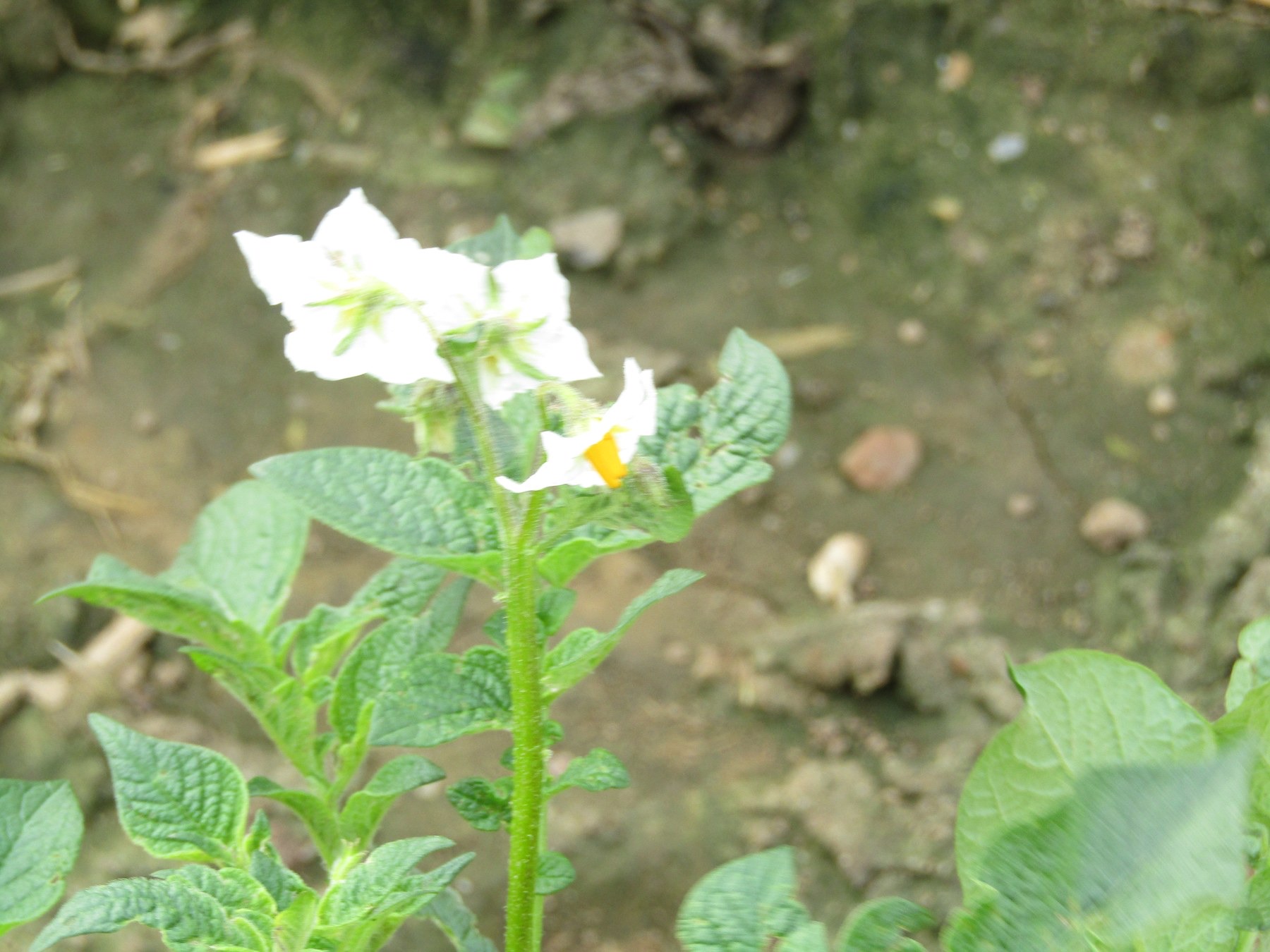
Thirsty: Potato
A kilogram of potatoes takes about 290 litres of water, which makes it the least thirsty staple on Earth by a wide margin, and a bag of crisps takes about a thousand per kilogram, which is the same potato with the water taken out. Where a potato's water goes, why the tuber beats every grain, what the crisp factory and the chip line do with water, and why the potato is the crop a dry world should be growing more of.
The potato is a tuber from the Andes that feeds more people, per litre of water, than any other staple crop on Earth, and it is on this site because it is the answer to a question the site keeps asking. A kilogram of potatoes takes about 290 litres of water to grow, in the global averages. Wheat takes six times that, rice nine, and beef fifty. The potato's advantage lies in its yield rather than its thirst: it gives more.
This article is about where a potato's water goes, why a tuber beats a grain, what happens to the number when the potato is fried, and why the crop that fed Europe's poor for three centuries is the one a warming, drying world is turning to again.
The crop
The potato grows in cool climates on any soil that drains, from sea level to four thousand metres in its Andean home, and it grows fast: a plant set in spring yields a crop of tubers in three or four months, at forty tonnes to the hectare in a good field in the Netherlands or Idaho, and twenty in an average one. Wheat yields four to eight tonnes on the same land, and rice five to seven. The potato is three quarters water when it is dug, so the dry matter is a quarter of that, and it is still, per hectare and per season, about twice the food of any grain.
The plant's water use per hectare is unremarkable, similar to a cereal's over its shorter season. Its water per kilogram of food is a fraction, because the yield is so much larger.
| Water per kilogram, global averages | Litres | Yield per hectare, roughly |
|---|---|---|
| Potatoes | About 290 | 20 to 40 tonnes |
| Maize | About 1,200 | 5 to 10 tonnes |
| Wheat | About 1,800 | 4 to 8 tonnes |
| Rice | About 2,500 | 5 to 7 tonnes |
| Per calorie, potatoes against wheat | About a third of the water |
Where the water is
The potato's water is mostly green. The crop grows best where summers are cool and rain is regular, in northern Europe, the northern United States and Canada, the Andes, and the hills of China and India in the cool season, and in those places the rain does most of the work. The blue share, irrigation, is large in two kinds of place: the sandy soils that grow the best crops because they drain well and also dry fastest, in Idaho, Washington, the Dutch polders and the English fens, where the potato is irrigated through the summer from rivers and wells; and the dry regions that have taken up the crop, in the Middle East, North Africa and the Indian plains, where it grows in the winter on irrigation alone.
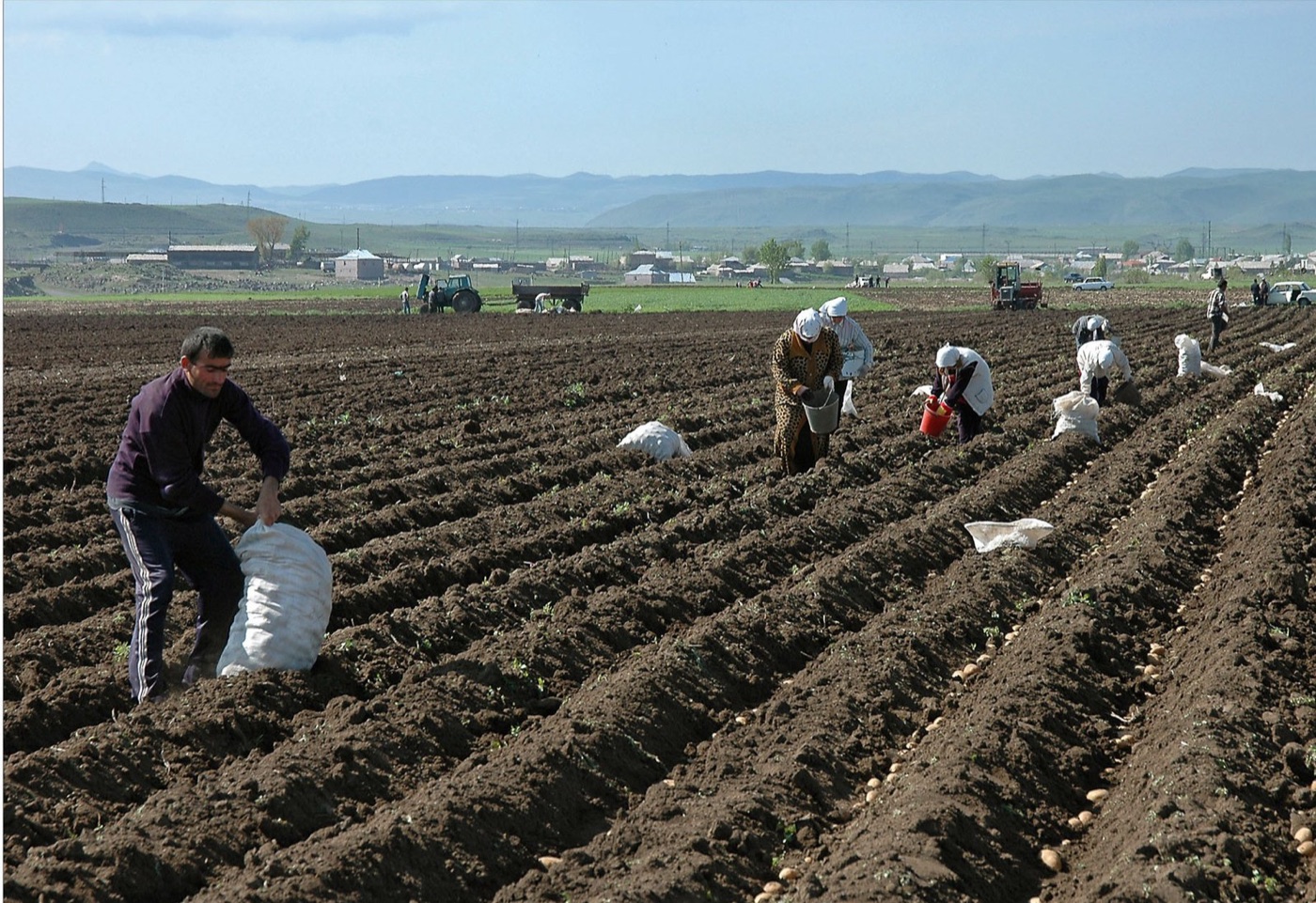
The grey share is the fertiliser and, above all, the pesticides. The potato is a heavily sprayed crop, against blight, the fungus that emptied Ireland in the 1840s and still destroys crops in a wet summer, and against the beetles, aphids and nematodes that attack it, and the grey water needed to dilute what runs off is a larger share of the potato's footprint than of most crops'.
| A potato's 287 litres, global average | Litres |
|---|---|
| Green, rain | About 190 |
| Blue, irrigation | About 35 |
| Grey, diluting fertiliser and pesticide | About 60 |
The factory
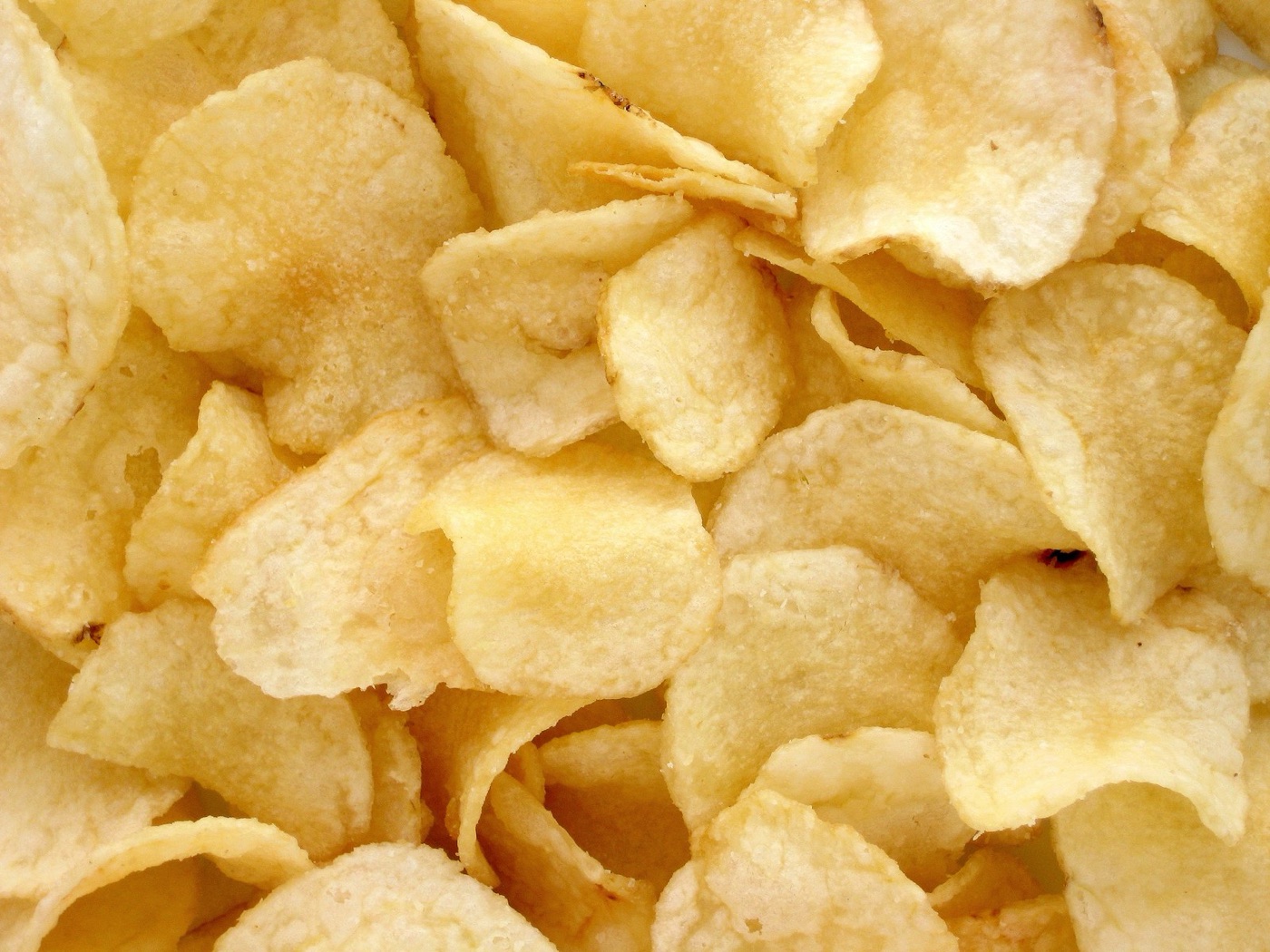
The potato is eaten fresh less every year and processed more, and the processing is where the footprint changes shape. A kilogram of crisps is about four kilograms of potatoes, because frying takes the water out of the slice and leaves the starch, the oil and the salt, and the footprint of the crisps is the footprint of the four potatoes plus the factory's water, which comes to about a thousand litres a kilogram. A kilogram of frozen chips is about two kilograms of potato, blanched and part fried, at around six hundred. Dried potato flakes are ten to one.
The factory itself uses water at every step: to wash the soil off, to peel, in most plants with steam, to slice, and above all to rinse the starch off the cut slices so that they fry evenly and do not stick. The starch water is the plant's effluent, and it is a rich one, a milky stream of dissolved and suspended starch with a chemical oxygen demand in the thousands of milligrams per litre. The larger plants recover the starch from it, by settling and centrifuge, and sell it, which pays for the recovery; they reuse the wash water in cascades from the cleanest stage to the dirtiest; and they treat the rest in a biological plant of the kind the food and beverage article describes, often anaerobically, because the load is high and the methane is worth capturing. A modern crisp plant uses a few cubic metres of water per tonne of product; an old one uses ten.
| The potato, processed | Potatoes per kilogram of product | Water, roughly |
|---|---|---|
| Fresh | 1 | About 290 litres |
| Frozen chips | About 2 | About 600 |
| Crisps | About 4 | About 1,000 |
| Dried flakes | About 10 | Several thousand |
| Factory water, on top | A few cubic metres per tonne at a good plant |
The Andes, and the varieties
The potato's home is the high Andes of Peru and Bolivia, where it was domesticated some eight thousand years ago and where farmers still grow several thousand varieties, in every colour from white to purple, on terraces at altitudes where no grain will ripen. Those varieties are the crop's insurance. The potato that Europe took in the sixteenth century was a handful of them, and the near identity of the crop that resulted is what the blight found in Ireland in 1845: a single kind, on every field, with no resistance. The collection in Lima holds the rest, and the breeders who draw on it have found, in the wild and farmed potatoes of the altiplano, the genes for drought, frost, blight and heat that the crop needs in the places it is spreading to. The water arithmetic of the potato, in other words, is being extended to climates the crop never grew in, by way of the mountain farmers who kept the variety alive on the least water of all: the rain of a hillside at four thousand metres, with no irrigation and no other option.
The crop the world is turning to
China and India, which grew almost no potatoes a century ago, are now the first and second producers, and the crop is spreading across the dry regions of Asia and Africa for the reason the table above gives: it feeds more people per hectare and per litre than the grains those regions have always grown, in a shorter season, on land that a cereal would leave idle in the cool months. The International Potato Center in Lima, which holds the world's collection of the crop's Andean varieties, has spent fifty years breeding potatoes for heat, drought and blight, and the new varieties are in the fields of Ethiopia, Bangladesh and the Punjab. The FAO has called the potato the crop of the century for food security, and the water arithmetic is most of why.
There is a caveat, and it is the beef article's in reverse. The potato's advantage is per kilogram of food, and it holds on any land that can grow it. A potato grown in a desert on irrigation is still a potato: 290 litres a kilogram, most of them now blue, from a well or a canal that has other claimants. It is a better use of that water than wheat would be, and it is still water spent.
What it teaches
The potato is the answer on this site to the question of what to grow when water is short. It gives more food per litre than any staple, most of its water is rain where it is grown well, and its factories, which use the water a river notices, have learned to recover the starch and treat the rest. The number on the bag of crisps is four potatoes and a fryer, which is a different thing from the number on the potato, and the difference is the water that was in the potato before it was taken out.
287 litres a kilogram, a third of wheat per calorie, and the crop that a drying world is planting.
Sources
- Mekonnen, M.M. and Hoekstra, A.Y. (2011). The green, blue and grey water footprint of crops and derived crop products. Value of Water Research Report 47. Potatoes 287 litres per kilogram; crisps about 1,040.
- FAOSTAT, potato production by country: China, India, Ukraine, Russia, the United States.
- International Potato Center (CIP), Lima: yield, water productivity and the potato's role in food security.
- PepsiCo and McCain sustainability reports: water use per tonne in crisp and frozen chip plants, and starch recovery.
- Renault, D. and Wallender, W.W. (2000). Nutritional water productivity and diets. Agricultural Water Management 45. Calories and protein per cubic metre of water by crop.
- Photographs: opener: -2018-09-04 Flowering potato plant, Trimingham, Norfolk by Kolforn (CC BY-SA) via Wikimedia Commons; inline: Potato Harvest in Armenia 2456764 by Narek75 (CC BY-SA) via Wikimedia Commons; inline: Potato-Chips by Evan-Amos (Public domain) via Wikimedia Commons.