Thirsty: Sugar
A kilogram of cane sugar carries about 1,782 litres of water, and beet sugar about half that. The difference is the plant and the place: a tropical grass that drinks all year, grown on rain in Brazil and on pumped water in India, where one crop takes more irrigation than any other on a fraction of the land.
Sugar is one of the few foods that comes in two agricultural forms that end as the same molecule. About four fifths of the world's sugar is made from sugar cane, a tall tropical grass, and the rest from sugar beet, a fat white root grown in temperate fields. The sucrose in the bag is identical. The water behind it is not, and the reason is the whole story of this article: a plant, a climate, and the difference between rain and a pump.
Seventeen hundred litres
By the Water Footprint Network's method, refined cane sugar comes to about 1,782 litres of water per kilogram in the global average, counting the rain the cane took up, the irrigation applied to it, and the clean water it would take to dilute the pollution from the field and the mill. Beet sugar comes to about 920.
| Sugar | Litres per kilogram |
|---|---|
| Cane sugar | About 1,782 |
| Beet sugar | About 920 |
| For comparison, wheat flour | About 1,800 |
A kilogram of sugar carries about as much water as a kilogram of flour, which surprises people who think of sugar as a luxury and bread as a staple. In a bar of chocolate, described in its own article, the sugar is the second largest line after the cocoa. In a can of soft drink, thirty five grams of sugar carry about 60 litres, which is most of the drink's footprint, the water in the can being a rounding error.
A grass that drinks all year
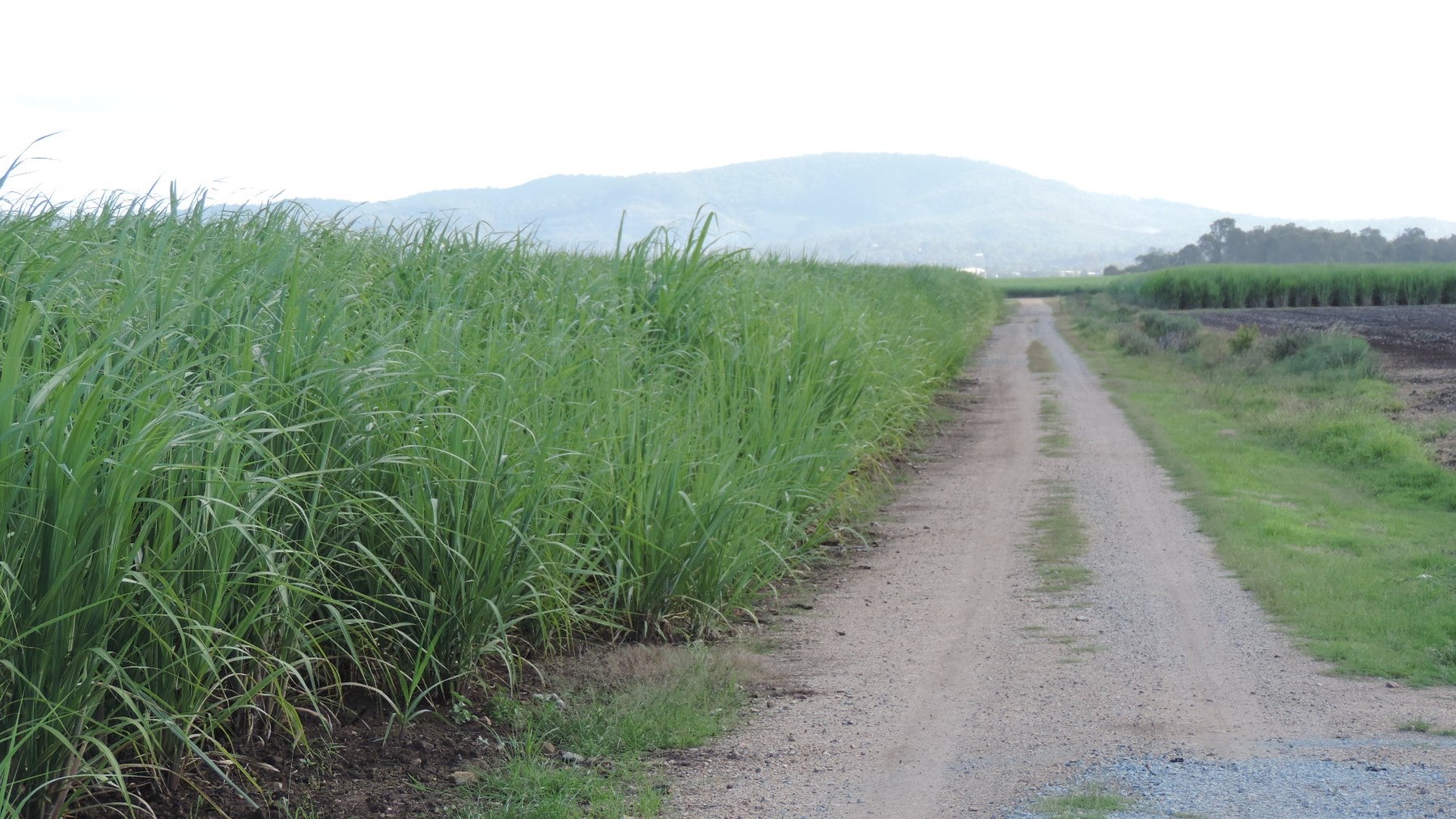
Sugar cane is a giant tropical grass, related to maize and sorghum, that grows three or four metres tall over twelve to eighteen months and is cut, crushed for its juice, and left to regrow from the stubble for several years before replanting. It grows in the wet tropics and subtropics, in Brazil, India, Thailand, China, Pakistan, Mexico and Australia, and for the whole of its long season it does what every crop does: pumps water from the soil into the air through a very large canopy of leaves.
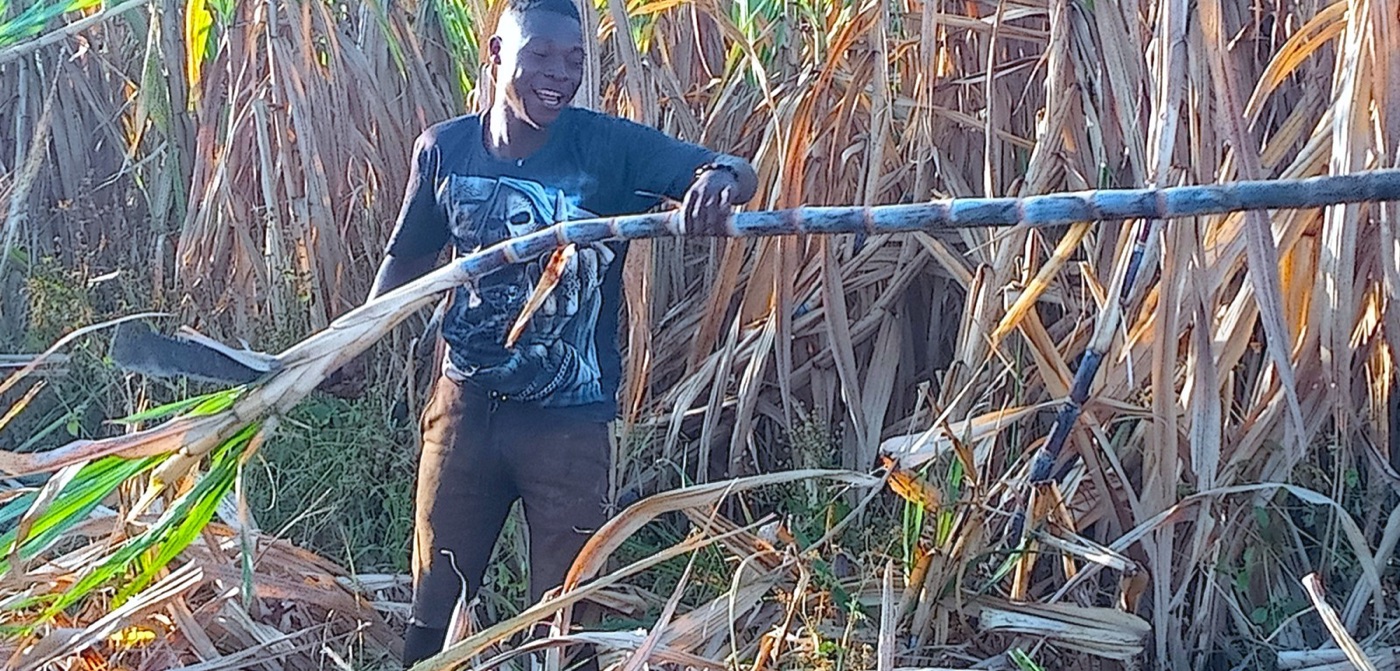
The yield is large, sixty to a hundred tonnes of cane per hectare, but the sugar is a tenth of that weight, and the water of a year's growth is charged to the sugar rather than the cane. Beet, by contrast, is a temperate crop that grows for a single summer, in northern Europe, Russia and the American Midwest, on rain, with a large root that is a fifth sugar. It uses less water because it grows for less time in a cooler place, and its footprint is nearly all green.
| Sugar cane | Sugar beet | |
|---|---|---|
| Plant | A tropical grass, three to four metres tall | A temperate root |
| Season | Twelve to eighteen months, regrown for several years | One summer |
| Where | The tropics and subtropics | Northern Europe, Russia, North America |
| Water | Rain where it rains, irrigation where it does not | Almost all rain |
| Share of world sugar | About four fifths | About a fifth |
Brazil and India
The two largest producers of cane grow it in almost opposite ways, and the contrast is the cleanest example on this site of the same crop carrying different water.
Brazil grows more cane than any country, most of it in São Paulo state and the centre south, on rain. The climate delivers a wet season that the crop grows through and a dry one in which it is harvested, and irrigation is rare. Brazilian cane's footprint is green almost to the last litre, and it is water that fell on farmland in a wet region.
India grows nearly as much, and most of it is irrigated. The cane belt of Uttar Pradesh sits on the monsoon and on canals from the Ganges; the belt of Maharashtra sits in a dry region where the crop would not survive without pumped water. In Maharashtra, sugar cane occupies around four percent of the cultivated land and takes well over half of the state's irrigation water, drawn from reservoirs and from wells in an aquifer that has been falling for decades. In drought years the state's cane is watered while its villages receive water by tanker, which is Petorca's story from the avocado article told in a different crop. The cane grows because a political and cooperative structure built around sugar mills has made it the crop that pays, and the water follows the crop.
| Where cane grows | What it grows on |
|---|---|
| Brazil, the centre south | Rain, almost entirely |
| India, Uttar Pradesh | Monsoon and canals from the Ganges |
| India, Maharashtra | Pumped water, in a dry region, on a fraction of the land |
| Australia, Queensland | Mostly rain, with irrigation in the dry south |
| Thailand, Pakistan, Egypt | Largely irrigated |
Beet, the temperate alternative
Sugar beet is a footnote in most of the world and the whole story in Europe, and it is there because of a naval blockade. When Britain cut continental Europe off from Caribbean cane sugar in the Napoleonic wars, Napoleon ordered the planting of beet, whose sugar a German chemist had isolated half a century earlier, and by the time the blockade lifted the industry existed. It has never left. France, Germany, Poland and Russia are among the largest beet producers, the crop is grown on rain in rotation with wheat, and the mills, which run for a few months each autumn while the beet is fresh, are a feature of the northern European countryside.
Beet's water footprint is about half of cane's, and nearly all of it green, and the reason is time and climate: a single cool summer of growth against a year or more in the tropics. A bag of European sugar is one of the gentler things in the cupboard, in water terms, and a bag of cane sugar may be the same or may be Maharashtra's, and the difference is the address of the plant.
The mill
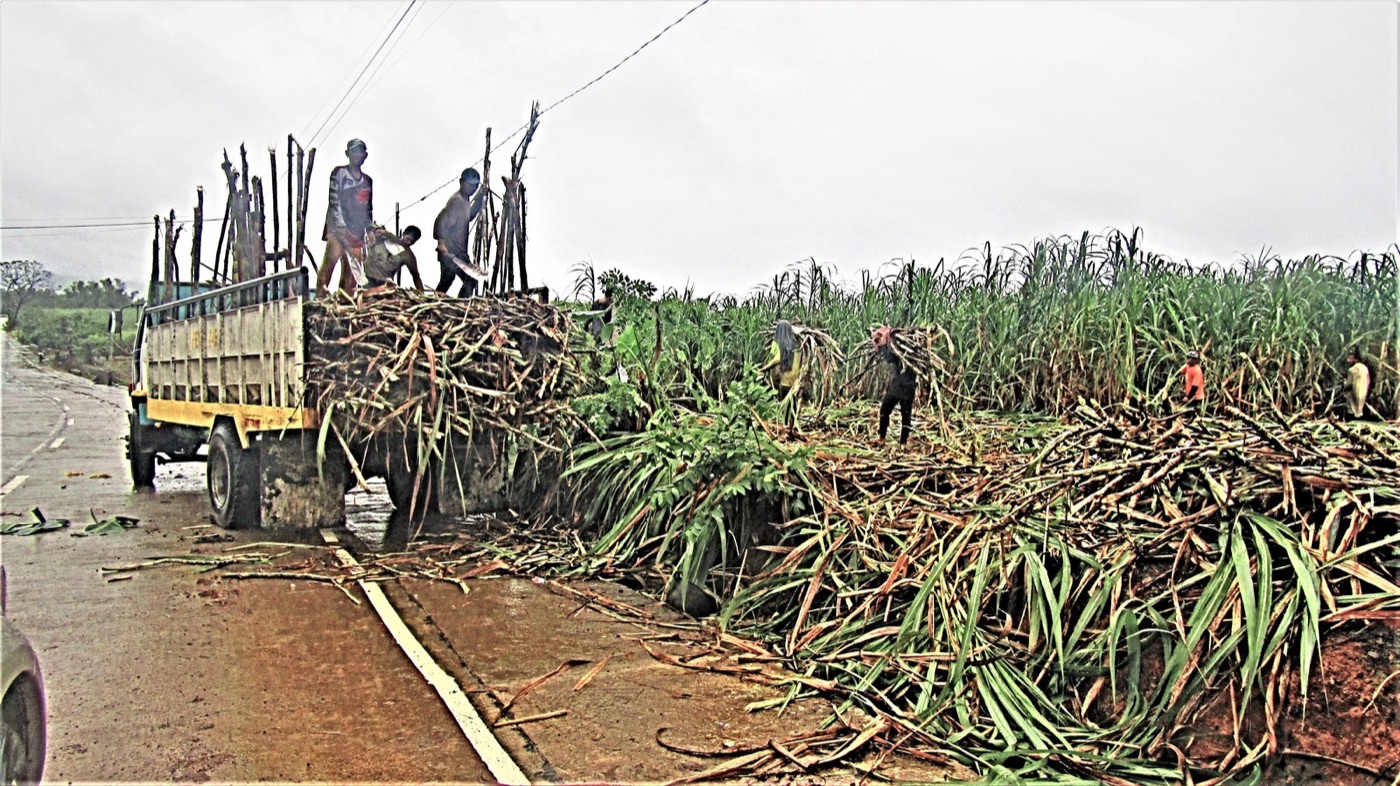
A sugar mill crushes cane within a day of cutting, because the sugar begins to break down as soon as the stalk is cut, and it is a wet, hot, fast process. The juice is pressed out, clarified with lime, boiled down under vacuum in a chain of evaporators of the kind the ZLD article describes, crystallised, and spun in centrifuges to separate the sugar from the thick brown syrup left over, which is molasses. The crushed fibre, bagasse, is burned in the mill's boilers, so that a cane mill runs on its own waste and often exports electricity.
The mill's own water is modest, because cane arrives seven tenths water and the mill has more than it needs; the footprint's grey share, at the field, from fertiliser, is larger than the mill's blue share. What makes the industry interesting to a treatment engineer is the distillery. Molasses is fermented and distilled into ethanol, in Brazil as fuel for cars and in India and elsewhere as spirit, and what is left after the alcohol is boiled off is spent wash, or vinasse: a dark, acidic, sugary liquid, ten or fifteen litres of it for every litre of ethanol, with a chemical oxygen demand of up to 100,000 milligrams per litre. It is the strongest common effluent the water industry knows, two hundred times raw sewage, and a distillery that discharged it to a river would kill the river for kilometres. The industry's answers are digestion for biogas, evaporation, and, in Brazil, spreading it back on the cane fields as fertiliser, which returns its potassium and its water to the crop and is the reason the country's cane fields smell faintly of rum.
The soft drink can
The product where sugar's water is most concentrated, per swallow, is the one nobody thinks of as agricultural. A can of soft drink contains about 35 grams of sugar, which is 60 or 70 litres of water by the cane figure, against a third of a litre of water in the can itself and, as the food industry article described, about two litres used at the bottling plant. The drink's footprint is, to within a rounding error, the footprint of a sugar plantation, and a person who drinks a can a day drinks, in hidden water, a bath a week. The bottlers report their water ratios diligently and they are right to; the number they report is the two litres, and the sixty are in a cane field on another continent.
The grey share
Cane's footprint carries a grey share worth a sentence, because it comes from two places. The field, fertilised heavily and often burned before harvest in the older systems, sends nitrogen to the rivers and ash to the air. And the mill's distillery, where the spent wash is not returned to the fields, sends the strongest organic load in the industry to the nearest water, and the method counts the clean water it would take to dilute it. Cane grown in Brazil and returned its own vinasse as fertiliser carries a small grey share; cane processed in a district where the distillery discharges to a river carries a large one, and the river carries the rest.
Reading the number
Sugar is a crop where the address decides everything, and where the two forms in the bag hide two agricultures. A spoonful of Brazilian cane sugar or European beet sugar carries rain on farmland, and there is little more to say. A spoonful from Maharashtra carries water from a falling well in a dry state, and the villages beside the cane fields would have had a use for it. The bag does not say which, and the sugar in a chocolate bar, a soft drink or a jar of jam has usually been traded and blended past any hope of finding out. Cane is, in the end, a grass that drinks all year, and the only question that matters is what it was drinking.
Sources
- Mekonnen, M.M. and Hoekstra, A.Y. (2011). The green, blue and grey water footprint of crops and derived crop products. Hydrology and Earth System Sciences 15. Cane sugar about 1,782 L/kg, beet sugar about 920 L/kg, global averages.
- FAO, FAOSTAT. Brazil and India the largest producers of sugar cane; cane the source of about four fifths of the world's sugar.
- Reporting and state data on Maharashtra, India: sugar cane on roughly 4 percent of cultivated land using well over half of the state's irrigation water.
- Typical effluent characterisation: distillery spent wash COD up to 100,000 mg/L.
- Photographs: opener, Private road through sugar cane fields, Gilberton, 2014 by Kerry Raymond (CC BY) via Wikimedia Commons; inline: Harvesting sugarcane 1 by Danjuma Anthony (CC BY-SA) via Wikimedia Commons; inline: Sugarcane harvesting in Batad by Dandy1022 (CC BY-SA) via Wikimedia Commons.