Thirsty: Wool
A wool jumper carries more water per kilogram than almost any garment, and nearly all of it fell as rain on a hillside that could grow nothing else. Where a sheep's water goes, why the number is large and the burden is small, what the scouring plant does with the grease, and why the choice between wool and its synthetic rival is the cotton argument told in a colder climate.
A wool jumper of four hundred grams carries, in the global averages this site uses, about seven thousand litres of water, which is more than two and a half cotton t-shirts and about half a kilogram of beef. Per kilogram, clean wool is among the most water intensive materials on this site. It is also, once the number is taken apart, among the least troubling, and the reason it belongs here is that it is the clearest example of a large footprint that is mostly rain on land nothing else could use.
This article is about where a sheep's water goes, why the number and the burden point in different directions, and where the water in wool actually does harm, which is not on the hill.
Where sheep live
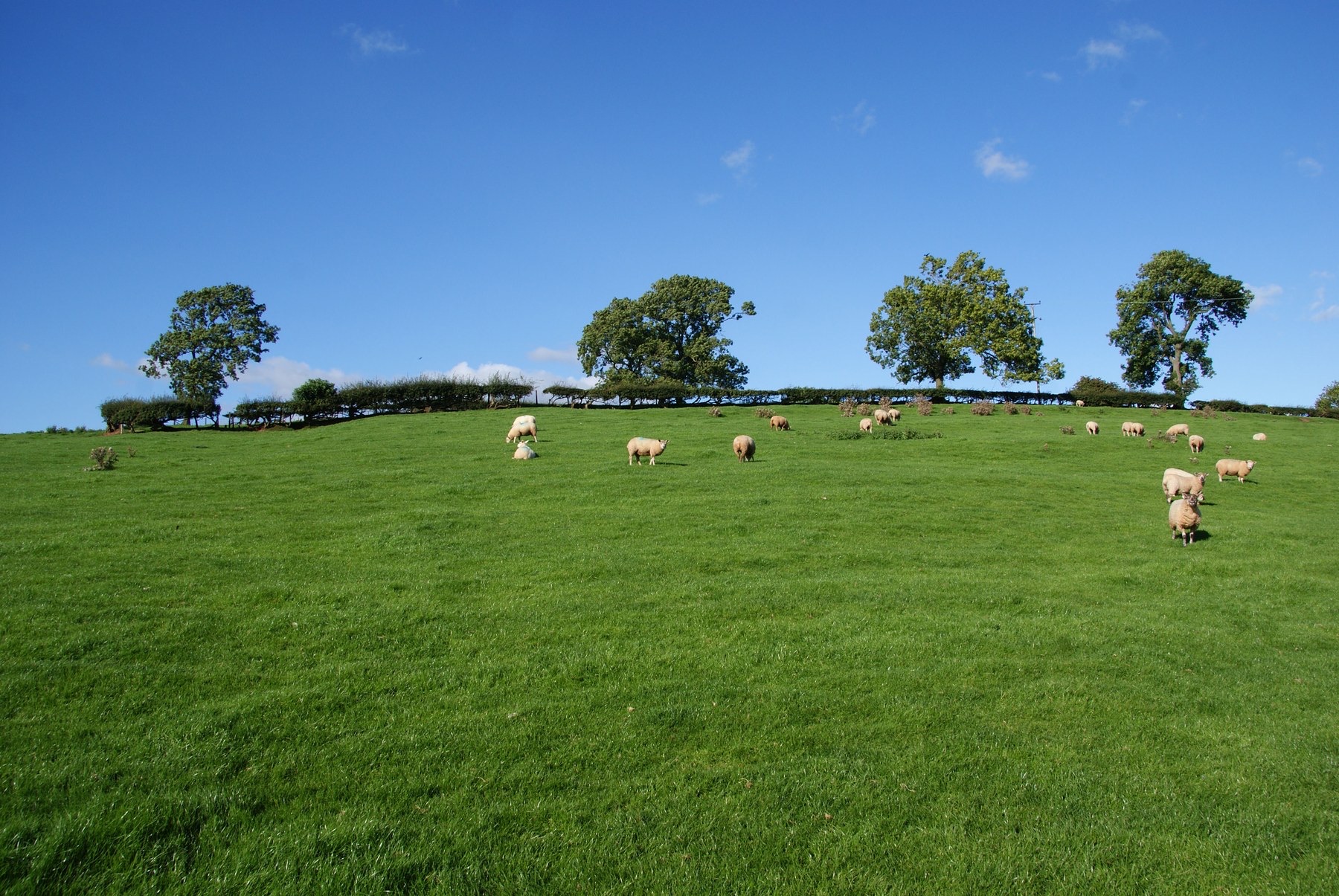
Wool is about one percent of the world's fibre and it comes from around a billion sheep, most of them in Australia, China, New Zealand, Britain, South Africa, Argentina and the countries of Central Asia. The sheep that give the fine wool of a jumper, the merino above all, are kept on land that is, almost by definition, poor: the dry rangelands of inland Australia and the Karoo, the high tussock of New Zealand's South Island, the uplands of Wales, Scotland and the Pennines, the steppe of Patagonia. It is land where the rain is too little or the ground too steep or thin for a crop, and grazing is what it can do.
A sheep on that land eats grass, and the grass grew on rain, and the footprint method counts that rain, the green water, as part of the wool. A merino ewe eats a kilogram or two of dry pasture a day and produces four or five kilograms of fleece a year, and the grass that fed her through the year took, on the rangelands, something like a hundred thousand litres of rain to grow. Divided across the fleece, after the share that goes to the lambs and the meat, it comes to the number at the top of this article.
| Water in a kilogram of clean wool, global average | Litres |
|---|---|
| Green water, rain on pasture | About 16,000 |
| Blue water, drinking water, dips and irrigation of fodder | A few hundred |
| Grey water, diluting the dung and the scouring effluent | A few hundred |
| Total | About 17,000 |
| A 400 gram jumper | About 7,000 |
Why the number does not mean what it seems to
The footprint method, described in the article on the water you cannot see, counts all three waters and adds them up, and it is honest about what each means. Green water is rain that fell on a field and was taken up by a plant and given back to the air; on a wheat field it is water that could have grown something else, and on a hillside of tussock at eight hundred metres in a Scottish winter it is water that could not. The rangelands of Australia and the uplands of Britain would receive their rain and transpire it through grass whether or not a sheep ate the grass, and the alternative use of that water, in most of the places wool is grown, is no use at all.
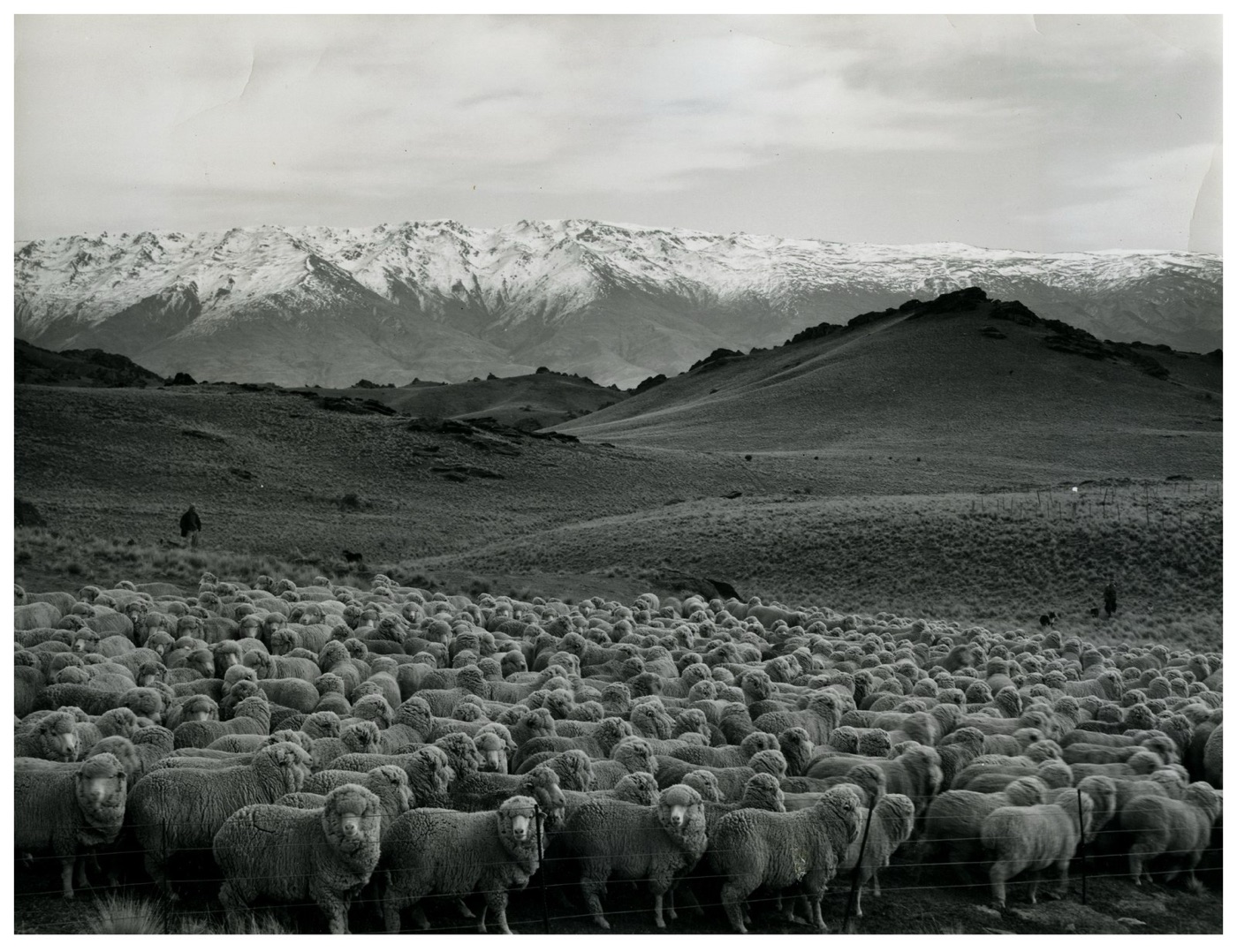
The Australian wool industry, which has argued this point for a decade, has published a second accounting that counts only the water a sheep actually draws from a river, a dam or a bore: the water it drinks, the water in the dip that keeps the flies off, and any irrigation on the fodder crops that feed it through a drought. That figure is a few hundred litres per kilogram of greasy wool, which is a fortieth of the footprint total and less than cotton's blue water alone. Both numbers are true. The first says how much water passed through the wool; the second says how much of it anyone else could have had.
The beef article on this site makes the same argument for rain fed cattle and stops short of accepting it, because cattle also eat grain grown on land that could grow food. Sheep on rangeland eat almost nothing that anyone would otherwise grow, and the argument holds for them more cleanly than for any other animal here.
Where the water does harm
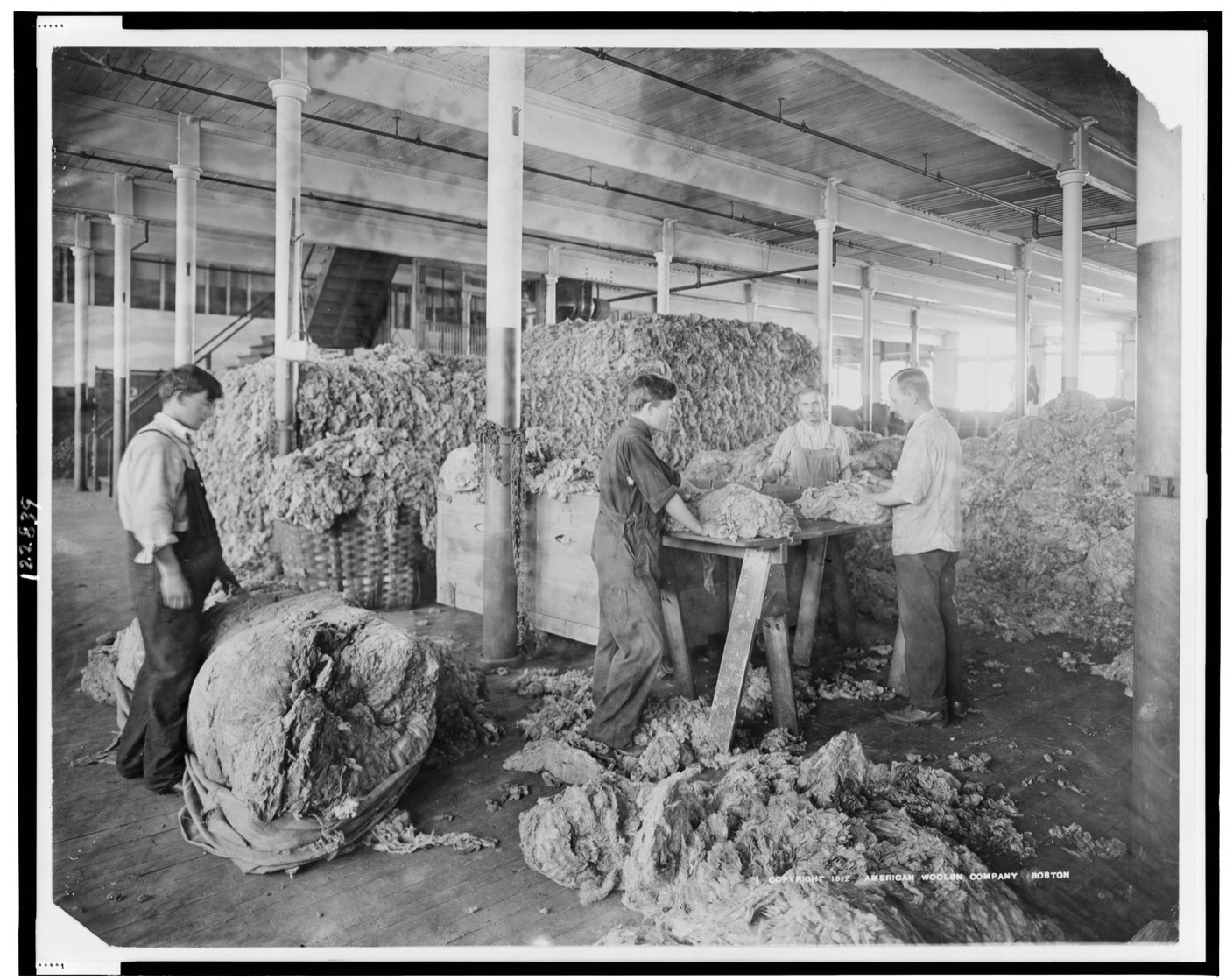
The water in wool that a river notices is at the scouring plant. Raw fleece is about half wool by weight; the rest is grease, called lanolin, the sweat salts of the sheep, dirt, sand, seeds and dung. Before it can be spun it is washed, in a line of long tanks of hot water and detergent through which the fleece is carried on rakes, and the effluent that leaves the scour is among the strongest in the textile industry: warm, grey, thick with grease and soil, with a chemical oxygen demand that can run to tens of thousands of milligrams per litre, ten to twenty times a dye house's. A scouring plant uses on the order of ten to twenty litres of water for every kilogram of greasy wool, which is a small share of the footprint and the whole of the discharge.
The plants that work have learned to treat it. The grease is recovered by centrifuge and sold as lanolin, which goes into cosmetics and ointments and is worth more than the effort. The dirt is settled and the water is reused in the earlier tanks. What remains goes to a biological plant of the kind the effluent treatment article describes, with a long retention because the load is heavy. The plants that do not, in the scouring districts of China, which now washes most of the world's wool, and in the older mills elsewhere, send a grey river out of the gate.
| Wool's water, by stage | |
|---|---|
| The pasture | Nearly all of the footprint; rain that had no other use on that land |
| The sheep | A few litres a day to drink; dips against flies and lice |
| The scour | 10 to 20 litres per kilogram; the strongest effluent in the chain |
| Dyeing and finishing | A dye house's water, as for any fibre |
The sheep in a drought
The rangeland argument has a limit, and the limit is a drought. A merino station in western New South Wales or the Karoo runs its sheep on pasture that grows when it rains and stops when it does not, and in a dry year the grass runs out before the sheep do. The station then feeds them: grain and hay trucked in from the cropping districts, grown on rain or irrigation elsewhere, and the sheep's footprint, in that year, becomes a crop's. Australia's wool industry has been through three long droughts since the 1990s, and in each the flock was cut, by selling or by slaughter, because feeding it was the alternative and the water for the feed was the same water the wheat farms and the towns were short of. The green water of a hillside is free until the hillside is bare, and the sheep, unlike the grass, has to be fed through the gap. The blue water in the footprint tables, small in an average year, is the drought year's feed, and in the driest regions it is why the number is a range rather than a figure.
Wool against acrylic
The alternative to a wool jumper is an acrylic one, and the comparison is the cotton and polyester article again, in a colder climate. Acrylic is a plastic fibre made from oil, spun with a few tens of litres of water per kilogram, warm, cheap, and the material of most of the knitwear on the high street. Its footprint is a hundredth of wool's. It sheds plastic fibres in every wash, at rates the microplastics article describes, it lasts for centuries in a landfill, and it pills and loses its shape in a few seasons, where a wool jumper worn carefully lasts for decades.
The honest comparison is the one made for cotton. On water alone, acrylic wins by a factor that looks absurd and is, because wool's water is rain on a hill. On plastic, oil and lifespan, wool wins. And on wears, which is the measure that decides, a wool jumper kept for twenty years carries a fraction of the footprint per wear of an acrylic one kept for two.
| Wool against acrylic | Wool | Acrylic |
|---|---|---|
| Water per kilogram | About 17,000 litres, mostly rain on rangeland | A few tens of litres, at a refinery |
| Water that anyone else could have used | A few hundred litres | Most of the few tens |
| What washing sheds | Protein fibres, which rot | Plastic fibres, which do not |
| Lifespan | Decades, with care | A few seasons |
| Raw material | A sheep on poor land | Oil |
What it teaches
Wool is the clearest lesson on this site about reading a footprint rather than ranking by it. The number is among the largest here and the water it describes fell on land that could do nothing else with it; the water that matters is the ten litres a kilogram at the scour, and whether the plant that used them treated what left. A large number made of rain in a place with no other use is a small burden. A small number made of oil and shed as plastic is a different kind of large. The footprint tells the first part; the reader has to bring the second.
17,000 litres a kilogram, rain on a hillside, and ten of them at the scour that the river sees.
Sources
- Mekonnen, M.M. and Hoekstra, A.Y. (2012). A global assessment of the water footprint of farm animal products. Ecosystems 15. Sheep and wool, with the green, blue and grey split.
- Wiedemann, S.G. et al. (2016). Resource use and greenhouse gas emissions from three wool production regions in Australia. Journal of Cleaner Production 122. Freshwater consumption of about 200 to 800 litres per kilogram of greasy wool, excluding rain on pasture.
- International Wool Textile Organisation, Wool LCA guidelines and the scouring effluent characteristics.
- Textile Exchange, Preferred Fiber and Materials Market Report 2023: wool about 1 percent of global fibre.
- Australian Wool Innovation, the wool scouring process and effluent treatment.
- Photographs: opener: Sheep grazing on a hillside - geograph.org.uk - 2047049 by Bill Boaden (CC BY-SA) via Wikimedia Commons; inline: Sheep Mustering at Bendigo Station, Otago (1965) (18028005390) by Archives New Zealand (CC BY-SA) via Wikimedia Commons; inline: Four men sorting and grading raw wool fleeces, American Woolen Company, Boston LCCN99404225 by Library of Congress (Public domain) via Wikimedia Commons.