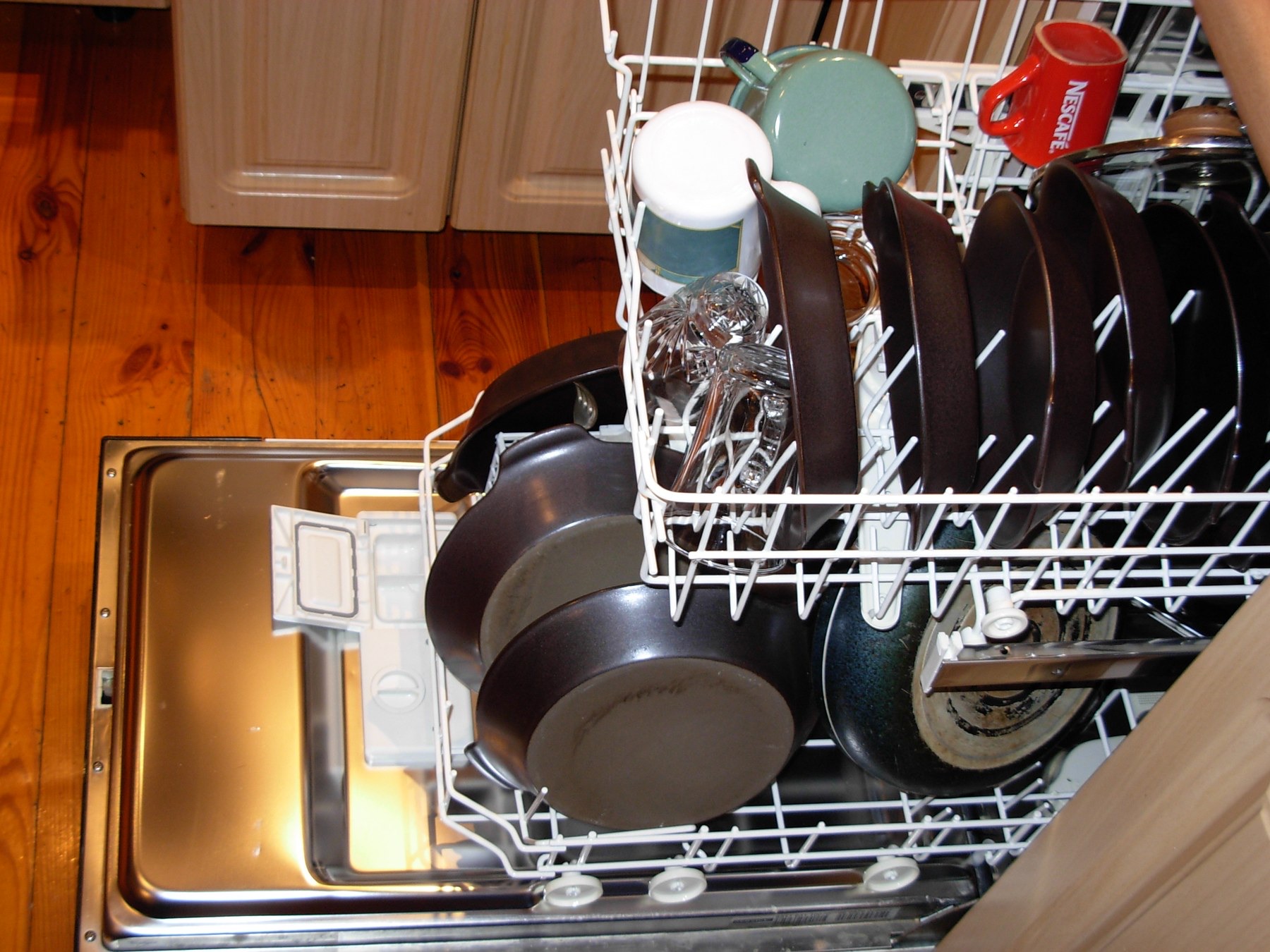
Myth: Washing Up by Hand Saves Water
Everyone knows a dishwasher is a luxury that wastes water, and the numbers say the opposite: a full modern machine uses about ten litres a load, and a person at the sink with the tap running uses several times that. Where the kitchen's water goes, why the machine wins and when it does not, what the tap and the bowl have to do with it, and why the answer is the same as for the shower and the bath.
Everyone knows that a dishwasher is a luxury and that washing up by hand is the frugal choice, in water as in money. The numbers say the reverse, and by a wide margin. A modern dishwasher uses about ten litres of water for a full load of twelve place settings. The same dishes washed by hand, in the way most people actually wash them, use several times that, and the largest study of real people at real sinks found an average of over a hundred. The myth is worth taking apart, because the reason the machine wins is the same reason the shower article on this site gives for the shower, and it is the reason for most of the water wasted in a house.
What the machine does
A dishwasher is a box with a pump. It takes in a few litres of water, three or four in the newest machines, heats them, and sprays them round the cabinet through rotating arms for twenty minutes or more, collecting the water at the bottom, filtering the food out of it, and spraying it again. Then it drains, takes in a few litres more, and rinses the same way. A full cycle uses two or three fills, and the total, on the European energy label that has printed the figure on every machine since 2019, is between about six and fourteen litres, with ten typical. The eco cycle uses less water and less heat over a longer time. The machine's trick is that it recycles: every litre is sprayed over the dishes dozens of times before it goes down the drain.
It also heats the water to sixty degrees or more, hotter than a hand can bear, which is why it cleans with less of it, and why its energy use, about one kilowatt hour a cycle, is the larger part of its footprint. The water is small; the electricity to heat it is what a household pays for.
| Water to wash twelve place settings | Litres |
|---|---|
| Modern dishwasher, full load, standard cycle | About 10, range 6 to 14 |
| Modern dishwasher, eco cycle | About 8 to 10 |
| Dishwasher of the 1990s | 20 to 30 |
| By hand, two bowls, tap off | About 15 to 25 |
| By hand, under a running tap | 40 to 100, and more |
| Bonn study, hand washing, measured average | About 103 |
What the sink does
A tap does not recycle. A kitchen tap runs at six to ten litres a minute, and every litre that comes out of it goes over the plate once and into the drain. A person who washes each item under the running tap, or who fills the bowl, washes, and then rinses every plate and glass under the tap, is using the tap's full flow for as long as the tap is on, and the washing up after a meal for four takes ten minutes or more. That arithmetic gives the numbers in the table, and it gives the wide range: the Bonn study, which watched people from seven European countries wash a standard set of twelve place settings, measured between fifteen and four hundred and forty seven litres, and the difference was almost entirely the tap.
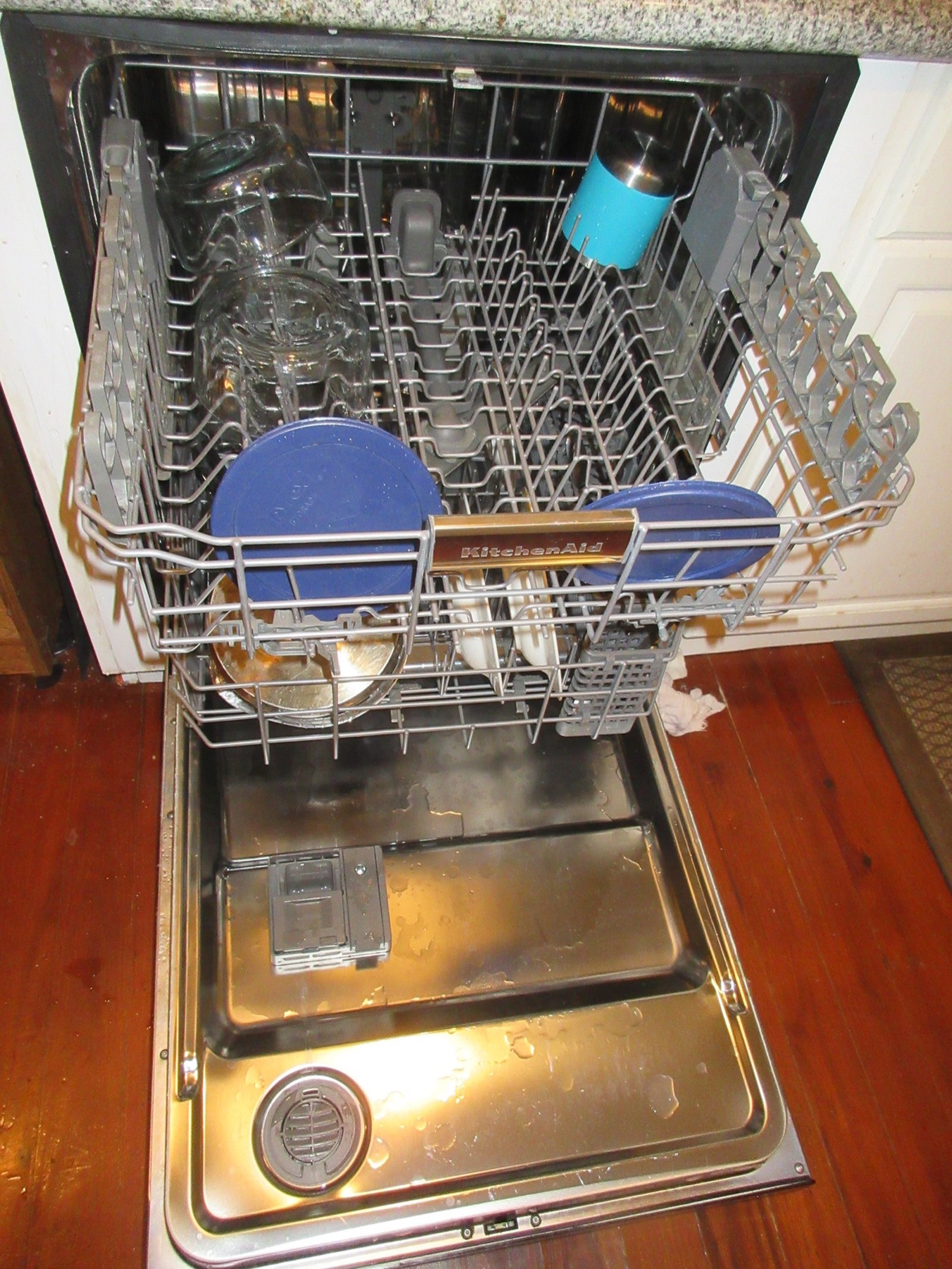
The frugal hand washer, who fills one bowl with hot soapy water and a second with clean water to rinse in, and leaves the tap off, uses fifteen to twenty five litres, which is close to the machine and, with an old machine, less. That is the method most people's grandparents used, in the days when hot water was carried, and it is the method almost nobody uses now, because the tap is there.
When the machine does not win
Three cases turn the answer, and they are worth knowing.
The half load. A dishwasher uses nearly the same water whether it is full or half full, so a machine run twice a day half empty uses twice the water per plate. The gain is in the full load, and the habit that captures it is to wait.
The pre rinse. A large share of dishwasher owners rinse every plate under the tap before loading it, out of a habit formed with machines of the 1980s that needed it. Modern machines do not, and their instructions say so; a pre rinse of a full load under a running tap can use more water than the cycle itself, and it is the commonest way to lose the machine's advantage.
The small household. One person eating one meal a day at home may take three days to fill a machine, and the dishes wait. The water still favours the machine, run full, and the argument against it is hygiene and convenience rather than litres. A bowl and a turned off tap is the honest alternative, and it is close.
| How to lose the machine's advantage | |
|---|---|
| Run it half full | Doubles the water per plate |
| Rinse everything under the tap first | Can exceed the cycle's own water |
| Use the intensive cycle by default | More water and much more heat than eco |
| Use an old machine | 20 to 30 litres a cycle, still better than a running tap |
The rest of the kitchen
The dishwasher is the largest water use in the kitchen and the sink is the largest waste, and the rest is worth a paragraph because it is where the tap runs unnoticed. Washing vegetables under a running tap uses several litres a minute for water that goes straight down the drain; a bowl does the same job with two. Running the tap until it is cold to fill a glass wastes what was in the pipe; a jug in the fridge does not. Thawing food under running water, which the food safety advice recommends over the counter, uses tens of litres; the fridge overnight uses none. And the kettle, filled to the top for one cup, boils water that is poured away, which is an energy cost more than a water one and adds up over a year. None of these is large on its own. Together they are the reason the kitchen tap, in the studies that meter it, runs for longer each day than any other outlet in the house except the shower, and most of that time nobody is holding a plate under it.
The pattern
The dishwasher myth is the bath and shower myth again, and the lawn myth, and the tap article's whole argument: the water a household wastes is the water that runs while nobody is using it. A shower head at ten litres a minute for ten minutes, a tap left running while the teeth are brushed or the plates are rinsed, a hose on a lawn in the evening, a sprinkler on a road median. The machine wins because it cannot leave the tap on; it takes what it needs and stops. The person at the sink wins only by doing the same thing on purpose, and most do not, because the tap is easier than the bowl.

The energy is the other half, and it points the same way with a caveat. The machine's kilowatt hour is more than a bowl of hot water uses, and a hand washer with a bowl and the tap off may beat the machine on electricity while losing on nothing else. Heating water is, in most homes, the largest energy use after the heating itself, and the litres that matter for the bill are the hot ones. A machine's ten litres at sixty degrees cost less than a tap's sixty litres at forty.
What it teaches
The dishwasher is the appliance on this site that does the thing every plain water article recommends, which is to reuse a small volume many times and discard it once. The sink, with the tap running, does the opposite, and the difference is the factor of four to ten at the top of this article. The frugal choice in the kitchen is the full machine on the eco cycle with no pre rinse, and the second choice is two bowls and a tap turned off, and the wasteful choice, which most people believe is the careful one, is the running tap.
Ten litres in the machine, a hundred at the tap, and the myth is the one that feels like virtue.
Sources
- Stamminger, R. et al. (2007). A European comparison of cleaning dishes by hand. University of Bonn. Hand washing of 12 place settings: mean about 103 litres, range 15 to 447.
- Energy Saving Trust (UK), At Home with Water (2013): dishwashers about 10 to 15 litres per cycle; hand washing about 6 to 8 litres a minute under a running tap.
- US Department of Energy, ENERGY STAR dishwasher criteria: standard size machines at or below 3.2 gallons (12 litres) per cycle.
- European Commission, Ecodesign and energy labelling regulations for household dishwashers (2019): water consumption per cycle on the label.
- Berkholz, P. et al. (2010). Manual dishwashing habits: an empirical analysis of UK consumers. International Journal of Consumer Studies 34.
- Photographs: opener: Dishwasher with dishes by Piotrus (CC BY-SA) via Wikimedia Commons; inline: KitchenAid home dishwasher - Open by Infrogmation (CC BY-SA) via Wikimedia Commons; inline: Woman washing dishes in kitchen by Shixart1985 (CC BY) via Wikimedia Commons.