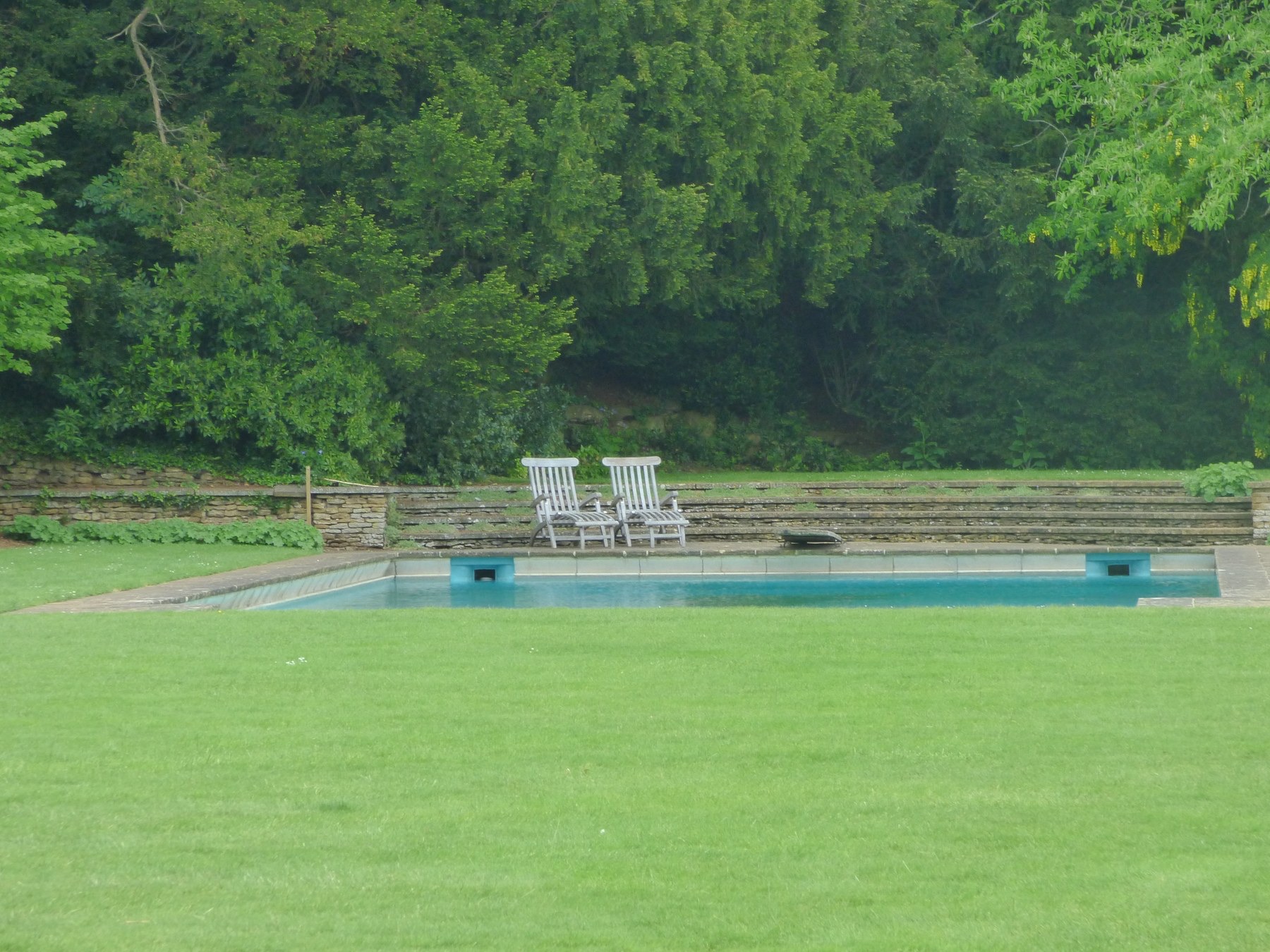
Myth: A Swimming Pool Wastes More Water Than a Lawn
The pool is the first thing a neighbour points at in a drought, and in the dry cities where both are common the lawn it replaced uses more. What a pool loses to evaporation and what a lawn loses to the same sun, why the fill is a one time cost and the sprinkler is not, what a cover changes, what the Phoenix and Perth studies found when they measured both, what a pool sends to the drain, and why the honest comparison is not pool against lawn but either against gravel.
In a drought the swimming pool is the thing the neighbours point at. It is a tank of drinking water in a back garden, it evaporates all summer, the children splash it out, and it looks like exactly what a city short of water should not have. The lawn beside it, which is usually what the pool replaced, looks like nothing at all, and in the dry cities of the world where pools and lawns are both common, it uses more water. The arithmetic is plain, it has been measured in the cities where it matters, and the myth survives because a pool can be seen and a sprinkler runs at dawn.
This article is about what a pool loses and what a lawn loses to the same sun, why the fill is a one time cost and the sprinkler is not, what a cover changes, what the studies in Phoenix and Perth found, what a pool sends to the drain, and what the honest comparison is.
What a pool loses
A pool loses water three ways. Evaporation is the largest: an open surface of water in a hot dry climate loses, to the sun and the wind, about a metre and a half of depth a year, more in Phoenix and less in a cooler or more humid place, and a pool of fifty square metres therefore loses about seventy five cubic metres a year, roughly two hundred litres a day in summer and a fraction of that in winter. Splash and carry out, on the swimmers, is a smaller share. And backwashing, the cleaning of the sand filter by running water backwards through it, sends a few hundred litres to the drain each time it is done, which is once a week or two in the season. The fill, which is the number that looks largest, is fifty to seventy cubic metres for a pool of that size, once, when it is built, and a pool that is looked after is not emptied again for a decade.
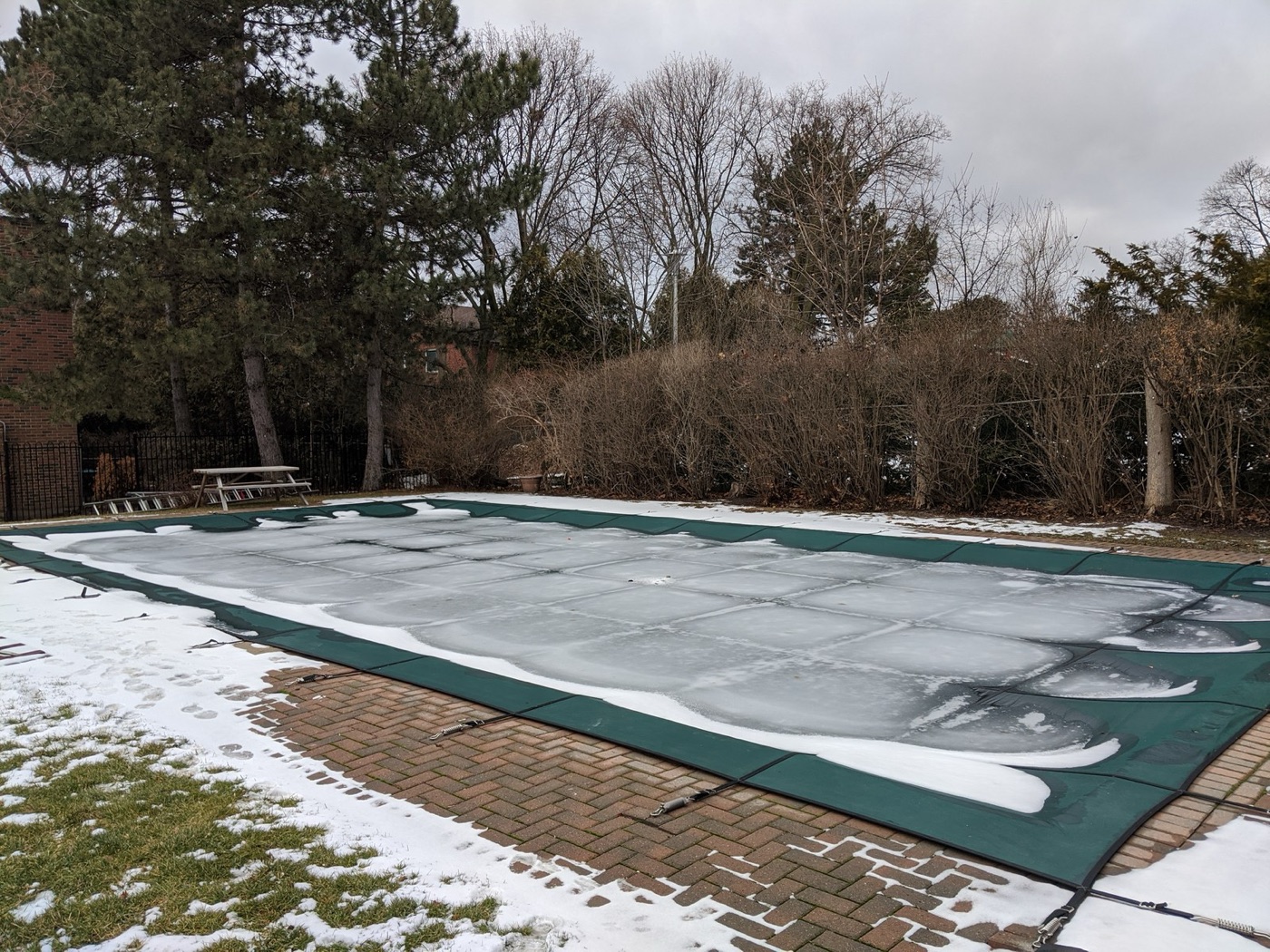
A cover changes the first number. A floating cover, the bubble wrap kind or a rigid one, cuts evaporation by half to seventy percent, and a covered pool in Phoenix loses about half a metre a year rather than a metre and a half. It also keeps the heat in and the leaves out, which is why the energy agencies recommend it before the water agencies do.
| A 50 square metre pool in a hot dry climate | Cubic metres a year |
|---|---|
| Evaporation, uncovered | About 75 |
| Evaporation, covered | About 25 to 35 |
| Backwash and splash | About 5 to 10 |
| Fill, once | 50 to 70, when built |
| Total, uncovered, in an ordinary year | About 80 to 85 |
| Total, covered | About 30 to 45 |
What a lawn loses
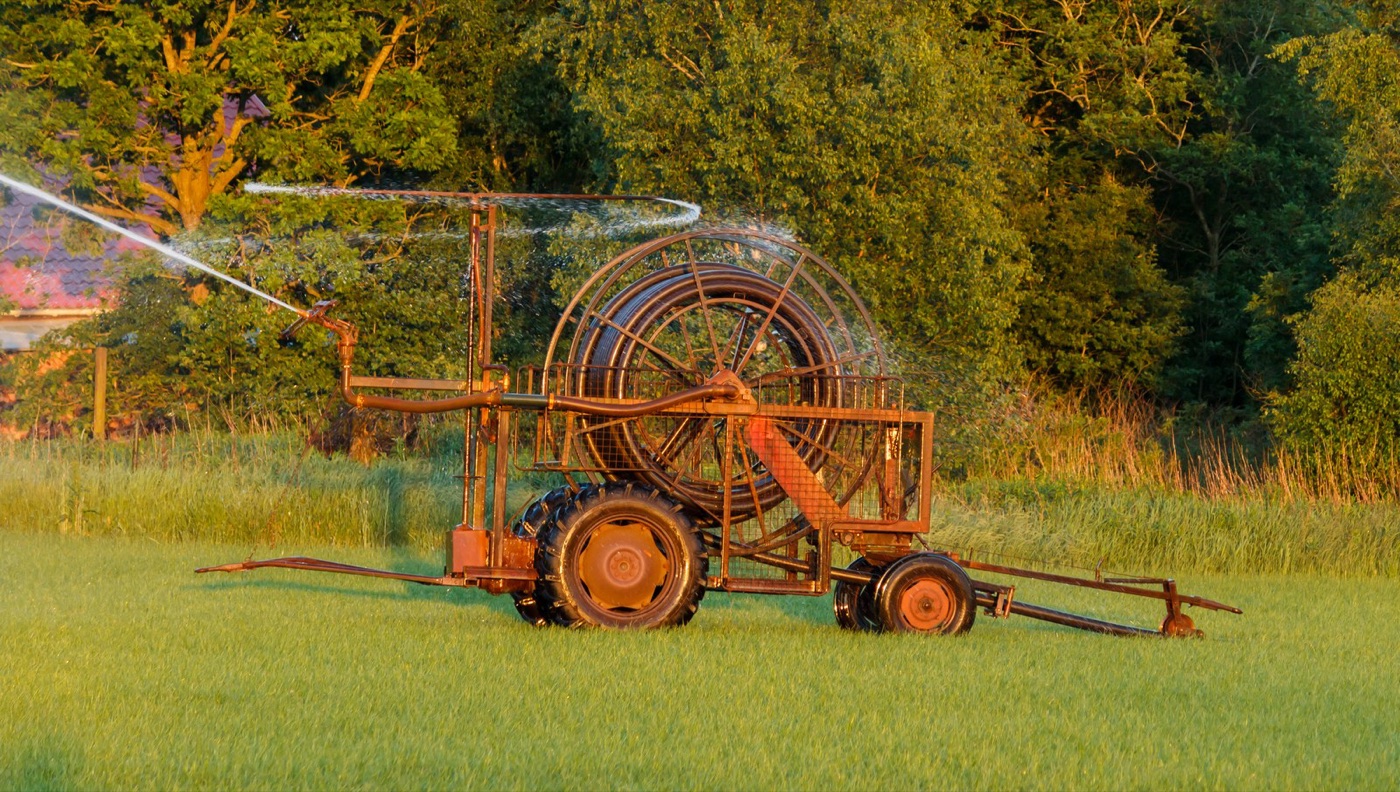
A lawn in the same climate loses water through the grass, by the evaporation and transpiration that the lawn article on this site describes, at the rate the sun and the wind set, which in Phoenix, Perth or Las Vegas is about a metre and a half to two metres a year for a lawn kept green, and it loses it every year, because the sprinkler that replaces it is the household's largest single use of water and runs from spring to autumn. A lawn of fifty square metres therefore takes about seventy five to a hundred cubic metres of sprinkler water a year, and the studies of how people actually water find that most lawns get more than they need, because the timer is set for the hottest week and left, and because the sprinkler waters the pavement.
The comparison is direct. A pool and a lawn of the same size, in the same garden, in the same summer, lose water to the same sun at about the same rate, because an open water surface and a well watered grass surface evaporate at nearly the same rate per square metre. The pool loses a little less, because it has no leaves pumping water into the air, and it can be covered, which a lawn cannot.
| 50 square metres, hot dry climate | Pool, uncovered | Pool, covered | Lawn |
|---|---|---|---|
| Water a year | About 80 cubic metres | About 35 | About 75 to 100 |
| Fill or establishment | 50 to 70 once | 50 to 70 once | Sod and soaking once |
| What the water becomes | Vapour | Vapour | Vapour and runoff |
| Can it be reduced | Yes, by a cover | Already reduced | Yes, by removing it |
What the cities measured
The two cities that have metered this most carefully are the two with the most pools per household in the dry world. Perth's water utility, in its residential use studies, found pools at about four percent of a household's water and irrigated lawns and gardens at more than forty, and found that a household that built a pool on its lawn used, on average, no more water than before, because the grass had gone. Phoenix's studies found pool evaporation at about a metre and a half a year and turf irrigation at nearly two, and the analysis of the city's household data found lot size and turf area, not pool ownership, to be the drivers of outdoor use; a pool on a small paved lot used less than a lawn on a large one. Los Angeles, in the drought rules of 2015 and 2022, restricted lawn sprinklers to two days a week and then one and left pools alone, on the arithmetic above, and paid households to replace turf with gravel and native plants at a rate per square metre, and it did not pay them to fill in pools.
The myth persists in those cities regardless, because the pool is visible and the sprinkler runs at five in the morning, and because a pool is a luxury and a lawn is a default, and a city rationing water rations by what looks like a luxury.
What a pool sends to the drain
The pool's other cost is the chemistry. A pool is chlorinated, at levels the chlorine byproducts article on this site describes as making the compounds that give an indoor pool its smell, and the backwash and the occasional drain send that water, with its chlorine, its salt if the pool is a saltwater one, and the sweat and sunscreen of the summer, to the sewer or, in the worse cases, the storm drain and the creek. It is a small volume and the utilities' rules say where it should go. The lawn's cost is the fertiliser and the weedkiller, which the lawns article describes running off into the same creek in larger quantities from more gardens, and it is the sprinkler that carries them.
The honest comparison
The honest comparison is neither of them against the other. A pool uses the water of a lawn, and a covered pool uses less than half of it; a lawn uses the water of a pool, and a lawn in a dry city is the largest thing a household could stop watering. The garden that uses no water is the one with neither: gravel, native planting, a tree for shade and a patio, which is what Las Vegas and Los Angeles are paying households to build and what Perth's newer suburbs are built with. A household that wants a pool in a dry city should cover it, keep it full rather than refilling, and run the backwash to the sewer, and it will have a pool that uses less water than the lawn its neighbour is running a sprinkler on while pointing at it.
The public pool
The pool that uses least water per swimmer is the one with the most swimmers. A municipal pool of five hundred square metres loses to evaporation what ten back garden pools do and serves a thousand people a day, and the water per swim, counted that way, is a few litres, which is the dishwasher article's arithmetic on this site: the shared machine beats the private one because it is full. The cities that have restricted private pool filling in droughts, Cape Town and the towns of southern France in 2023 among them, have mostly kept the public pools open for the same reason, and the argument in France, where the mayors of a few dry communes banned new private pools outright, was about the two hundred thousand private pools built in a decade in a region that has one long dry summer a year. A pool per household is a lawn per household by another name. A pool per town is a different thing. The lido that a town fills in May and drains in September, with a thousand people in it on a hot Saturday, is the most water efficient swimming there is, and it is the one that the drought rules never need to close.
What it teaches
The pool myth is the one on this site that is about what water looks like. A tank of water in the sun looks like waste and a lawn looks like a garden, and the meter says they are the same, or that the lawn is worse, in every dry city that has measured them. The pool can be covered and the lawn can be removed, and the city that rations by what it can see bans the pool fill and lets the sprinkler run. The water was never in the pool. It was in the air above both.
A metre and a half a year off the pool, two metres onto the lawn, and a cover that halves the one thing the neighbours can see.
Sources
- Water Corporation of Western Australia, Perth Residential Water Use Study: swimming pools about 4 percent of household use; irrigated lawn the largest outdoor use; pool evaporation about 1.5 metres a year uncovered.
- Arizona Municipal Water Users Association, Residential Pool Water Use studies (Phoenix): about 1.5 metres a year evaporation; comparison with turf at about 1.7 to 2 metres of irrigation a year.
- Wentz, E.A. and Gober, P. (2007). Determinants of small area water consumption for the city of Phoenix. Water Resources Management 21. Pools, turf and lot size as drivers of household use.
- Los Angeles Department of Water and Power, turf replacement rebates and outdoor water use estimates: irrigation about half of single family household use.
- US Department of Energy, Swimming Pool Covers: evaporation reduction of 50 to 70 percent with a cover.
- Photographs: opener: Upton House and Gardens - swimming pool (27370979195) by Elliott Brown (CC BY-SA) via Wikimedia Commons; inline: Swimming pool cover by Sikander Iqbal (CC BY-SA) via Wikimedia Commons; inline: Travelling irrigation sprinkler 2 2014-05-29 by Slaunger (CC BY-SA) via Wikimedia Commons.