Plain Water: Phosphorus
The other fertiliser arrives at every sewage works too, and unlike nitrogen it cannot be sent back to the air, because it never came from there. It came from rock, in a handful of countries, and it is not unlimited. What phosphorus does in a lake, how a plant takes it out, and why the pile at the back of the plant is starting to look like a mine.
Every living thing needs phosphorus, for its DNA, its bones and the molecule that carries energy inside every cell, and there is no substitute for it. Plants take it from the soil, animals take it from plants, and for ten thousand years of farming it went round in a small loop: manure to field to crop to animal and back. Modern farming broke the loop open with phosphate rock, dug from the ground and spread on fields by the hundred million tonnes, and the phosphorus now runs in a line rather than a circle, from a mine to a field to a city to a sewage works to the sea. This article is about the sewage works' part of that line, and about why the pile at the back of the plant is starting to look like a mine.
Where it comes from
Phosphorus arrives at a treatment plant from two sources, and one of them has largely been switched off.
The first is people. Food contains phosphorus, the body takes what it needs and excretes the rest, and raw sewage carries around 5 to 10 milligrams of phosphorus per litre, most of it dissolved as phosphate. The second, until recently, was detergent. Phosphates were the workhorse of laundry powders for fifty years, softening the water and lifting the dirt, and in the 1960s and 1970s they made up half or more of the phosphorus in a city's sewage. Bans and reformulation have removed most of that: Europe restricted phosphates in laundry detergents from 2013 and in dishwasher detergents from 2017, decades after Canada, Switzerland and several American states led the way.
Farmland is the third source, and the largest for rivers as a whole. Fertiliser and manure that the crop does not take up wash off into streams, attached to soil particles, and a river through arable country carries phosphorus that no treatment plant will see.
| Phosphorus in water | Source | Form |
|---|---|---|
| Sewage, from people | Food | Dissolved phosphate, and some organic |
| Sewage, from detergents | Laundry and dishwashers | Dissolved, and now largely removed by regulation |
| Runoff from farmland | Fertiliser and manure | Attached to soil, and dissolved |
| Industry | Food processing, some chemical plants | Varies |
What it does in a lake
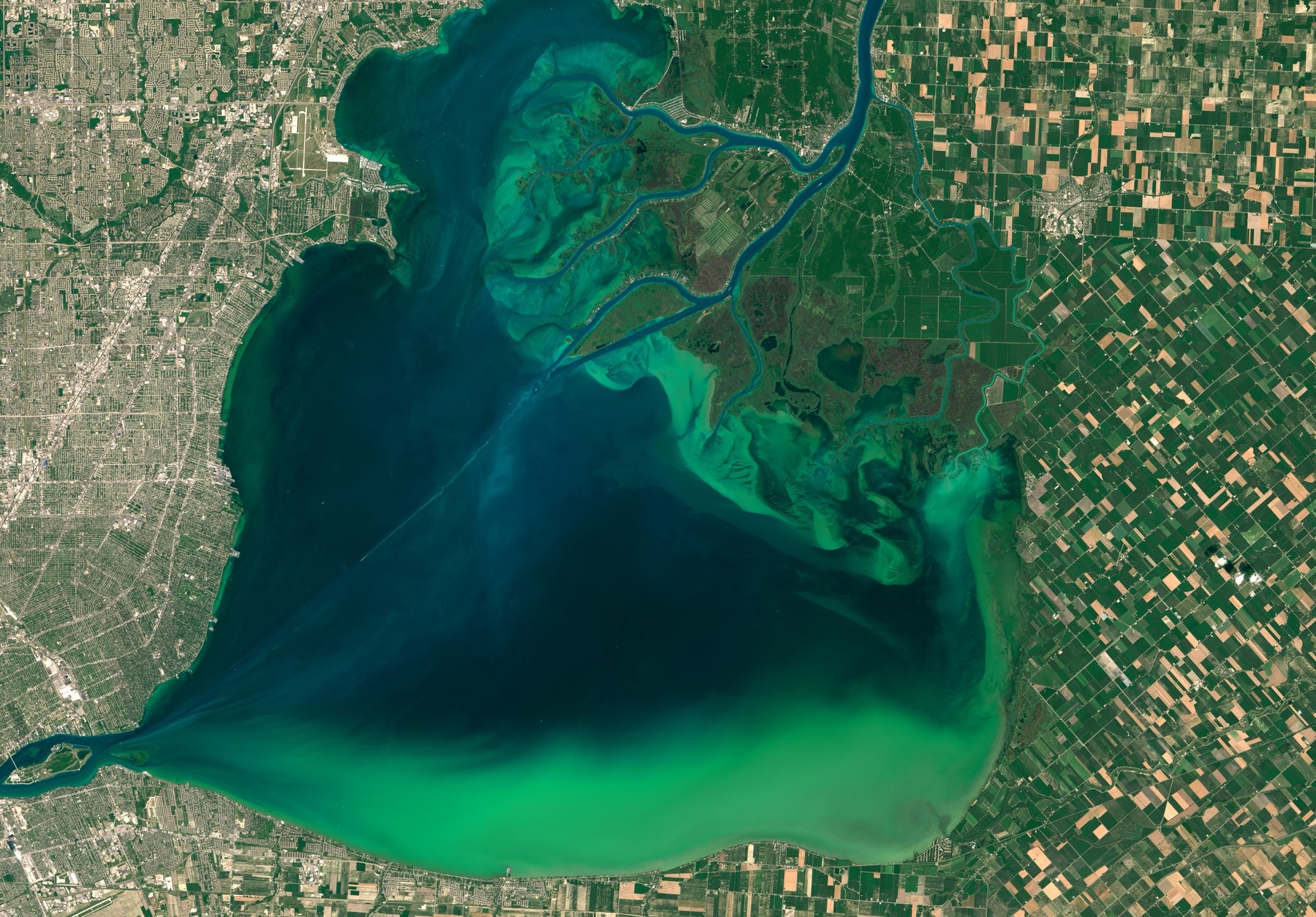
The nitrogen article described eutrophication: nutrients grow algae, the algae die and rot, and the rotting takes the oxygen from the water. In estuaries and the sea, nitrogen is usually the nutrient that decides how much algae grows. In freshwater, in lakes and slow rivers, it is usually phosphorus, because freshwater algae can draw nitrogen from the air and cannot draw phosphorus from anywhere but the water. Add phosphorus to a lake and it turns green; withhold it and it clears.
Lake Erie is the case that taught the industry. In the 1960s the shallowest of the Great Lakes turned green every summer on the phosphorus of Detroit, Cleveland and Toledo's sewage and their detergents, its beaches closed under mats of rotting algae, and its bottom water lost its oxygen. The 1972 agreement between the United States and Canada set phosphorus targets, the cities built phosphorus removal into their plants, the detergents were reformulated, and by the 1980s the lake was clear. It has since turned green again, on phosphorus from farmland that no plant treats, which is the harder half of the problem.
How a plant takes it out
There are two ways, and most modern plants use one and keep the other in reserve.
Precipitation is the coagulation of the earlier article turned to a nutrient. Iron or aluminium salts are dosed into the water, phosphate binds to the metal as an insoluble phosphate, the precipitate is settled out with the sludge, and the effluent leaves with a fraction of a milligram per litre. It is simple, reliable, and it costs chemicals and makes more sludge, with the phosphorus locked into a metal compound from which it is hard to recover.
Biology is stranger and the industry's preferred method where it can be made to work. Certain bacteria, given a period without oxygen followed by a period with it, hoard phosphate inside their cells far beyond what they need, as a store of energy for the next lean period. A plant that alternates its tanks between the two conditions selects for those bacteria, and when the sludge is settled out and removed, the phosphorus goes with it, at several times the concentration of ordinary sludge. The process is called enhanced biological phosphorus removal, it uses no chemicals, and the phosphorus in its sludge is in a form that can be got back.
| Method | How | Removes to | Cost |
|---|---|---|---|
| Chemical precipitation | Iron or aluminium salts bind phosphate; it settles with the sludge | Well below 1 mg/L | Chemicals, extra sludge, phosphorus locked up |
| Biological removal | Bacteria hoard phosphate under alternating conditions | Around 1 mg/L | Tank volume and operating skill, no chemicals |
| Both, in combination | Biology first, chemical polish | The lowest limits | The usual arrangement at strict plants |
European rules require plants discharging to sensitive waters to reach 2 milligrams per litre of phosphorus, or 1 for the largest, and lakes and slow rivers across Europe and North America are now protected by limits well below that. From the 8 milligrams that arrives, a modern plant removes more than nine tenths.
The rock, and where it is
Here is what makes phosphorus different from nitrogen, and it is the reason the sludge article on this site described the pile as a resource. Nitrogen came from the air and can go back to it. Phosphorus came from rock, and there is no air to send it back to.
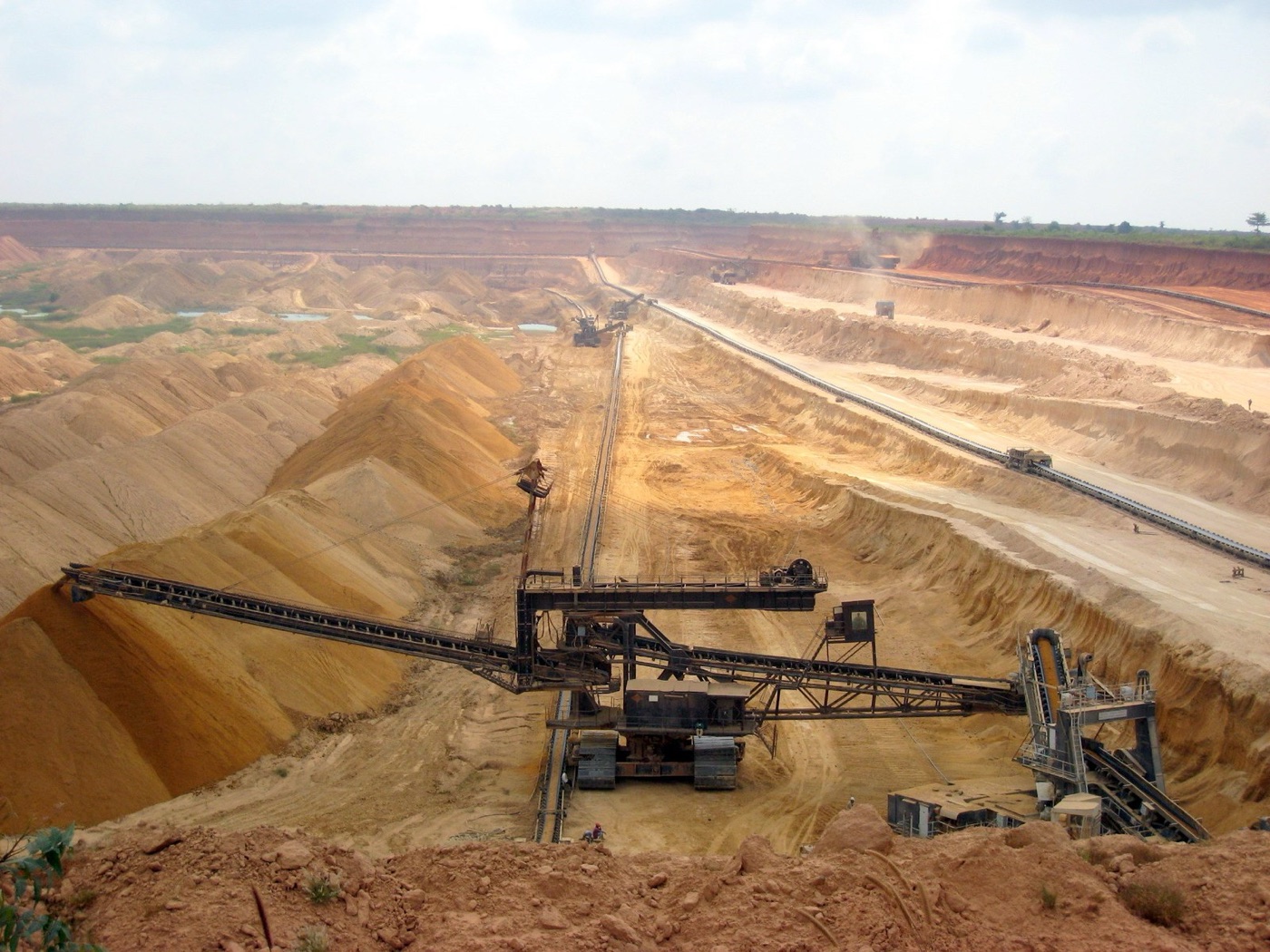
The world's fertiliser phosphorus is mined as phosphate rock, and the rock is concentrated: Morocco and Western Sahara hold around seventy percent of known reserves, with China, Algeria and a few others holding most of the rest. The reserves are large, and they are finite, and the phosphorus that leaves them is spread thinly on the fields of every country on Earth, eaten, excreted, treated, and delivered by rivers to the sea, where it settles into sediment that will become rock again in a few million years. The line from mine to sea is one way, and it runs through every city's sewage works.
The argument about the rock
How long the rock will last is a live argument. Around 2008 a series of papers warned of peak phosphorus, a production peak within decades on the analogy of oil, and the alarm was real enough to move governments. A few years later the United States Geological Survey revised its estimate of the world's reserves sharply upward, largely on new figures for Morocco, and the peak receded to centuries. Both sides of the argument agree on the things that matter for this article: that the reserves are finite, that they are concentrated in a very small number of countries, that the price of phosphate rock has been volatile, and that a city's sewage carries phosphorus that will otherwise go to the sea. Whether the rock runs short in fifty years or five hundred, the phosphorus in the sludge is worth catching, and the countries that have made it law are not waiting for the argument to end.
The plant as a mine
A city's sewage carries a large share of the phosphorus its food arrived with, and a plant that removes it holds that phosphorus in its sludge. For decades the sludge went to farmland, as the sludge article described, and the phosphorus went round at least once more. Where sludge can no longer be spread, because of the metals and the forever chemicals it also carries, the phosphorus in it is lost to incineration or landfill, unless it is taken out first.
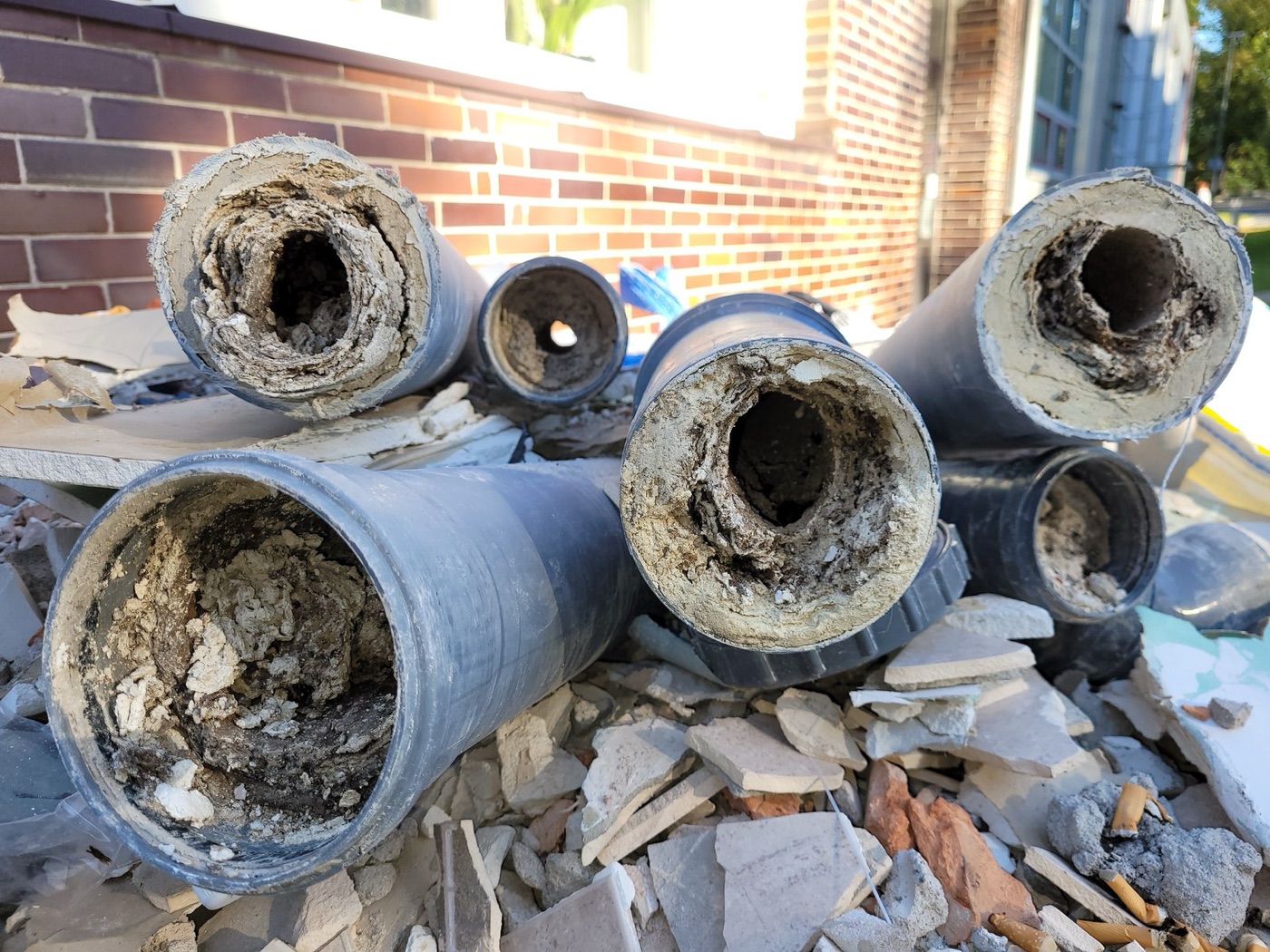
That is what a growing number of plants do. In the sludge digester, phosphorus released from the bacteria's stores combines with ammonia and magnesium to form a crystal called struvite, which for years was a nuisance that blocked pipes, and which can be grown deliberately in a reactor, harvested as clean pellets, and sold as a slow release fertiliser. Other plants recover phosphorus from the ash of incinerated sludge, where it is concentrated to levels rivalling the rock. Germany and Switzerland now require phosphorus recovery from sewage sludge by law, and the industry that sends its nitrogen back to the air has begun, in a small way, to send its phosphorus back to the field.
| Where a plant's phosphorus goes | |
|---|---|
| To farmland, in sludge | The traditional route, closing the loop once |
| To struvite pellets, from the digester | Recovered as fertiliser |
| To the ash, then extracted | Recovered after incineration |
| To landfill or the sea | Lost |
Where the reader meets it
Phosphorus is the nutrient behind the green film on a garden pond, the algae on a summer lake, and the warning sign at a bathing beach in August, and it is worth knowing which sources a household controls. The detergent phosphates are gone from the shelf, in Europe at least, and a modern washing powder adds none. Garden fertiliser and lawn feed add a good deal, and what the grass does not take up washes into the drain and the stream. And the largest share, food, is fixed by the body, which excretes what it does not need whatever is eaten. A city's phosphorus is decided by its diet and caught, or not, by its plant, and the beach sign is the measure of the plant.
The loop, half closed
Nitrogen's loop can be closed by biology, in a tank, with the gas returning to the sky it came from. Phosphorus's loop can only be closed by carrying the element physically back to a field, from a plant that has caught it, and that is a harder and slower thing to organise. The sewage works is where most of a city's phosphorus can be caught, the pile at the back of the plant is where it waits, and the countries that have started to mine that pile are the ones that have done the sums on the rock. It is the element the world cannot make and cannot do without, and a large share of it, every day, is on its way down a drain.
Sources
- Metcalf and Eddy, Wastewater Engineering, Treatment and Resource Recovery (5th edition). Phosphorus in raw sewage; chemical precipitation; enhanced biological phosphorus removal; struvite recovery.
- Council Directive 91/271/EEC, Annex I: total phosphorus limits of 2 mg/L (1 mg/L for larger plants) for discharges to sensitive areas.
- Regulation (EU) 259/2012 restricting phosphates in consumer laundry detergents from 2013 and dishwasher detergents from 2017.
- US Geological Survey, Mineral Commodity Summaries: phosphate rock reserves, with Morocco and Western Sahara holding around 70 percent.
- International Joint Commission, Great Lakes Water Quality Agreement (1972) and the Lake Erie phosphorus targets.
- Photographs: Cesar Chu Ortega, from treatment plants in India; opener: Algae Boom in Lake Erie by NASA Goddard Photo and Video (CC BY) via Wikimedia Commons; inline: Togo phosphates mining by Александра Пугачевская (Alexandra Pugachevsky) (CC BY-SA) via Wikimedia Commons; inline: Struvite. Clogged sewer pipes by LukaszKatlewa (CC BY-SA) via Wikimedia Commons.