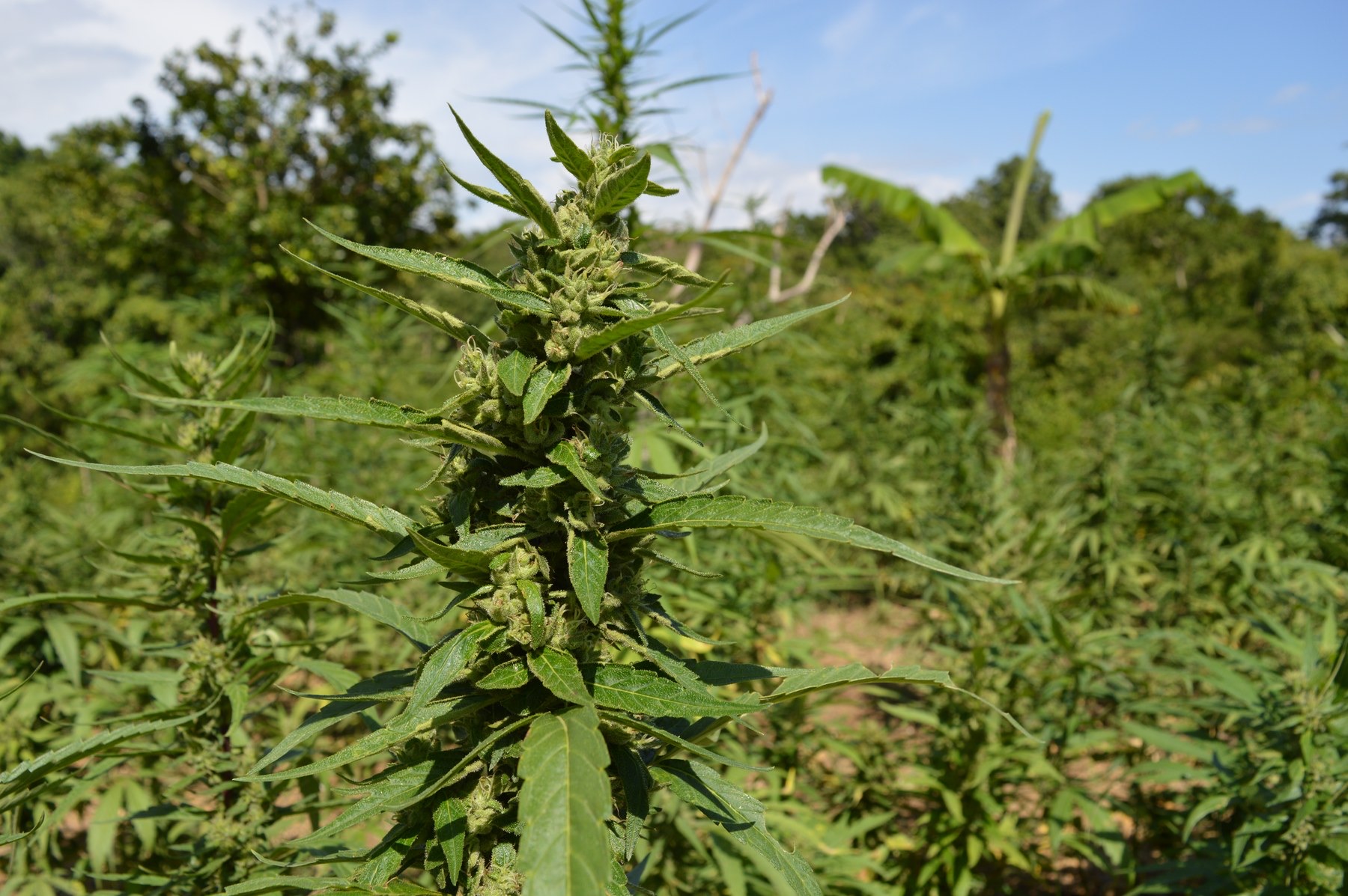
Thirsty: Cannabis
A cannabis plant grown outdoors in a California summer drinks about twenty two litres a day, roughly twice a grapevine, and in the years before it was legal the grows in the hills of the north took more water from some streams in August than the streams had. What a cannabis plant uses, why the number is high per plant and small per crop, what the illegal grows did to salmon streams, why indoor growing swaps water for electricity, and what legalisation changed.
A cannabis plant grown outdoors in the hills of northern California drinks, at the height of summer, about twenty two litres of water a day. That figure comes from a study the state's wildlife agency did in 2015, when the plant was still illegal to grow and the grows were hidden in the forests of Humboldt and Mendocino counties, and it made the crop, per plant, one of the thirstiest in the state: about twice a grapevine, and, over a season, thousands of litres for a plant that yields about half a kilogram to a kilogram of dried flower. The total, for a crop grown on a few thousand hectares, was small. The timing and the place were the problem, and they are the reason the crop is on this site.
This article is about what a cannabis plant uses, why the number per kilogram is high and the number per crop is not, what the hidden grows did to the streams they drew from, why indoor growing trades water for electricity, and what legalisation changed.
The plant
Cannabis is a large, fast growing annual, planted in spring and harvested in October, that in a hot dry summer puts on a metre of height a month and a canopy that transpires like a small tree. Outdoors in California it is grown in beds or large pots, watered by drip or by hand, and its need rises through the summer to the twenty two litres a day the study measured, roughly six millimetres a day over the area a plant covers, which is what a tomato or a maize plant uses in the same heat. The number is a plant's, and a plant is large. Per hectare, at a few thousand plants, cannabis uses about what a vineyard or an orchard uses, and less than an alfalfa field.
Per kilogram of product it is high, because the product is a small part of the plant, a few hundred grams of dried flower from a plant that weighed several kilograms wet, and the arithmetic is the one the wine article does for grapes: thousands of litres per kilogram of a crop sold by the gram.
| Cannabis and water | |
|---|---|
| Outdoor plant, summer peak | About 22 litres a day |
| Season, outdoors | About 150 days; 2,000 to 3,500 litres a plant |
| Yield | About half a kilogram to a kilogram of dried flower a plant |
| Per kilogram of dried flower | Several thousand litres |
| Per hectare | Similar to a vineyard or orchard; below alfalfa |
| Indoor | Less water; about one percent of US electricity |
The streams
The grows of the illegal years were in the hills of the Emerald Triangle, the three counties of northern California where the redwood and Douglas fir forest is cut by small steep streams that run high in the winter rains and fall, by August, to a trickle. Those streams are where the coho salmon and the steelhead spawn, and they were already in trouble from logging and roads. The grows were on cleared patches in the forest, out of sight, and their water came from the nearest stream through a pump and a black plastic pipe, in August, when the plants needed most and the stream had least.
The 2015 study mapped the grows from aerial photographs in four watersheds, counted the plants, multiplied by the daily need, and compared the result with the streams' measured summer flow. In three of the four the grows' demand exceeded the entire flow of the stream in the low months, and the study's authors had found, in the field, stretches of stream that had been pumped dry with dead fish in the pools. The grows also left fertiliser, rodent poison and diesel from the generators, and the streams carried those too. A later study of the same region found that groundwater pumping for cannabis and for the houses that came with it was lowering the summer flow of streams that had never had a pump in them.
| What the hidden grows did | |
|---|---|
| Where | Small forest streams in Humboldt, Mendocino and Trinity counties |
| When | Pumping peaked in August and September, at the streams' lowest flow |
| How much | Demand above total summer flow in three of four watersheds studied |
| What else | Fertiliser, rodenticide and fuel in the water; roads and clearing |
| Who it hurt | Coho salmon and steelhead, already listed as threatened |
Indoors
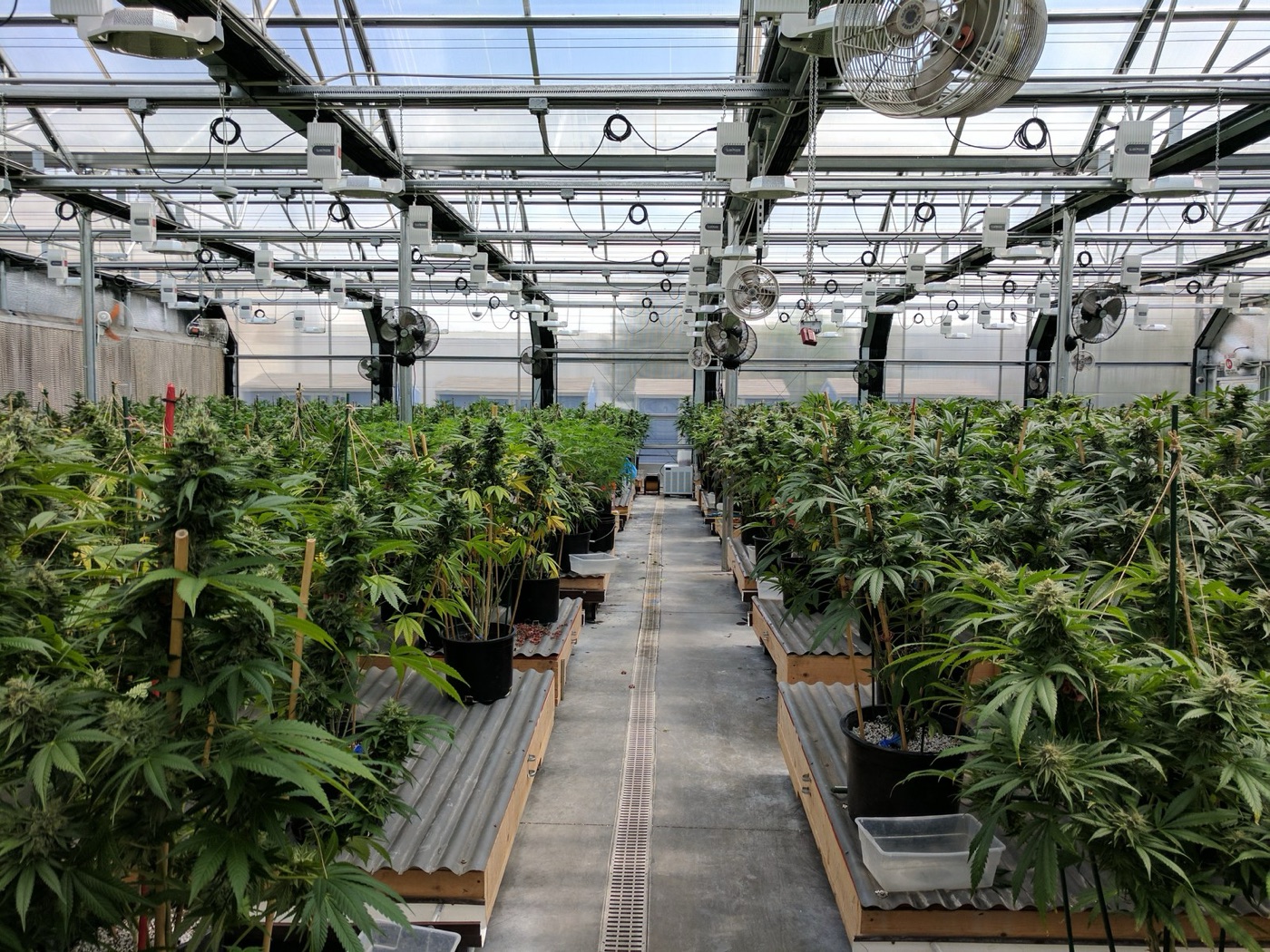
The other way to grow the plant is under lights, in a warehouse or a basement, where the water use is lower because the climate is controlled and the runoff is caught, and the electricity use is enormous. A study in 2012 put indoor cannabis at about one percent of the electricity used in the United States, for the lamps, the air conditioning that removes their heat, and the dehumidifiers that remove the water the plants transpire, which is then, in the best set ups, collected and reused. A kilogram of indoor flower carries a small water footprint and a carbon footprint of a few tonnes, which is the trade that the data centre article on this site describes in another form: evaporate the water outdoors or burn the fuel to keep it in.
What legalisation changed
California legalised cannabis for adult use in 2016 and the water rules came with the licences. A grower now needs a permit that specifies the water source, and a stream diversion is allowed only in the winter months, when the flow is high, with the water stored in tanks or ponds on the property for the summer; pumping from a stream in the dry season is forbidden. The rules pushed the crop out of the forest and onto farmland in the valleys, where the water comes from a well or a district with a right to it, and where the grows are metered and inspected. The hidden grows did not vanish, because the illegal market did not, and the enforcement raids of each summer still find pumps in the streams. But the licensed crop, which is most of what is sold, now draws on stored winter water or on farmland rights, and the salmon streams have one fewer pump in them.
The same pattern has followed legalisation elsewhere. Colorado, Oregon and Washington wrote water rules into their licences; Canada's crop is mostly indoors and its footprint is electric. The countries that grow cannabis illegally on a large scale, Morocco's Rif above all, grow it on rain in the hills and, increasingly, on wells in the plains, and the wells are falling.
The Rif
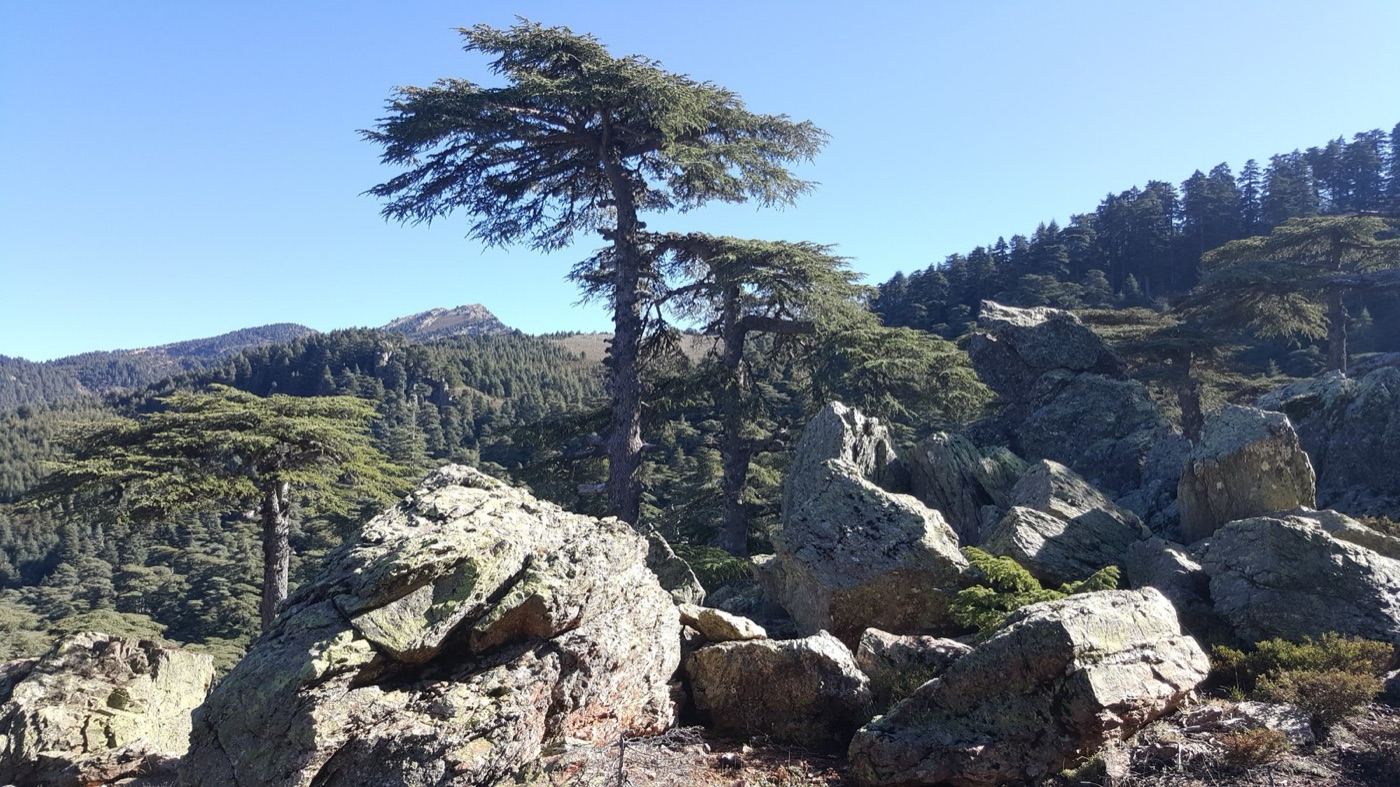
The largest cannabis growing region in the world is the Rif, the mountains of northern Morocco, where the crop has been grown for centuries on rain in the hills and where it is, since 2021, legal for medical and industrial use and still mostly illegal for the rest. The traditional crop, a small local variety sown in spring and cut in late summer, was grown on terraces on the winter rain alone, and it fitted the mountain: a low yield, a long season, no pump. The hybrid varieties that arrived from Europe in the 2000s yield several times as much and need water through the summer, and the growers who planted them dug wells and ran pumps, so that the streams of the Rif, which fed the coastal towns and the orchards below, now run low in August the way the streams of Humboldt did. The government's legalisation law favours the local variety for its lower water need, and the market, which pays for the hybrid, does not. It is the pattern this site sees in every crop that moves from rain to a well: the yield goes up, the season gets longer, and the water that was falling on the hillside for free is replaced by water that somebody downstream was counting on.
The number per gram
A gram of dried cannabis flower, on the outdoor figures above, carries three to five litres of water, about what a gram of coffee carries and a fraction of what a gram of beef does. Sold by the gram, it is a crop whose water hardly registers against its price, which is why the growers who could pay for water never economised on it and why the ones who stole it from a stream had no reason to stop. The tomato article on this site makes the point in reverse: a product cheap by the kilogram, grown on the same water, gets a greenhouse and a recycling system because the water is a visible share of the cost. Cannabis got a pump and a pipe because it was not. The legal price has since fallen by more than half in California, and the licensed growers who now count every cost have moved, as the tomato growers did, toward drip lines, moisture sensors and stored winter water, because the water is now a line on a spreadsheet rather than a stream behind the trees.
What it teaches
Cannabis is the crop on this site that shows the difference between a footprint and a harm. Its water per plant is high and its water per crop is small, and neither number is the reason the fish died. The reason was a pump in a shrinking stream in August, in a place chosen for being hidden, and the fix was a permit that moved the pumping to winter and the crop to farmland. The footprint did not change much. The harm did.
Twenty two litres a day for a plant, and a stream pumped dry in the month the salmon needed it.
Sources
- Bauer, S. et al. (2015). Impacts of surface water diversions for marijuana cultivation on aquatic habitat in four northwestern California watersheds. PLOS ONE 10. About 22.7 litres per plant per day; demand exceeding streamflow in three of four watersheds.
- Zipper, S.C. et al. (2019). Cannabis and residential groundwater pumping impacts on streamflow and ecosystems in northern California. Environmental Research Communications 1.
- Mills, E. (2012). The carbon footprint of indoor cannabis production. Energy Policy 46. About 1 percent of US electricity.
- California State Water Resources Control Board, Cannabis Cultivation Policy (2017, updated 2019): forbearance periods, storage requirements, stream diversion rules.
- Wilson, H. et al. (2019). First known survey of cannabis production practices in California. California Agriculture 73.
- Photographs: opener: Cannabis Ganja Farm (18456071382) by Cannabis Pictures (CC BY) via Wikimedia Commons; inline: Commercial Cannabis Greenhouse Facility by Cannabis Tours (CC BY-SA) via Wikimedia Commons; inline: Yebel Tidighine, Ketama, Rif central, Marruecos by Jesús Ruiz Villena (CC BY) via Wikimedia Commons.