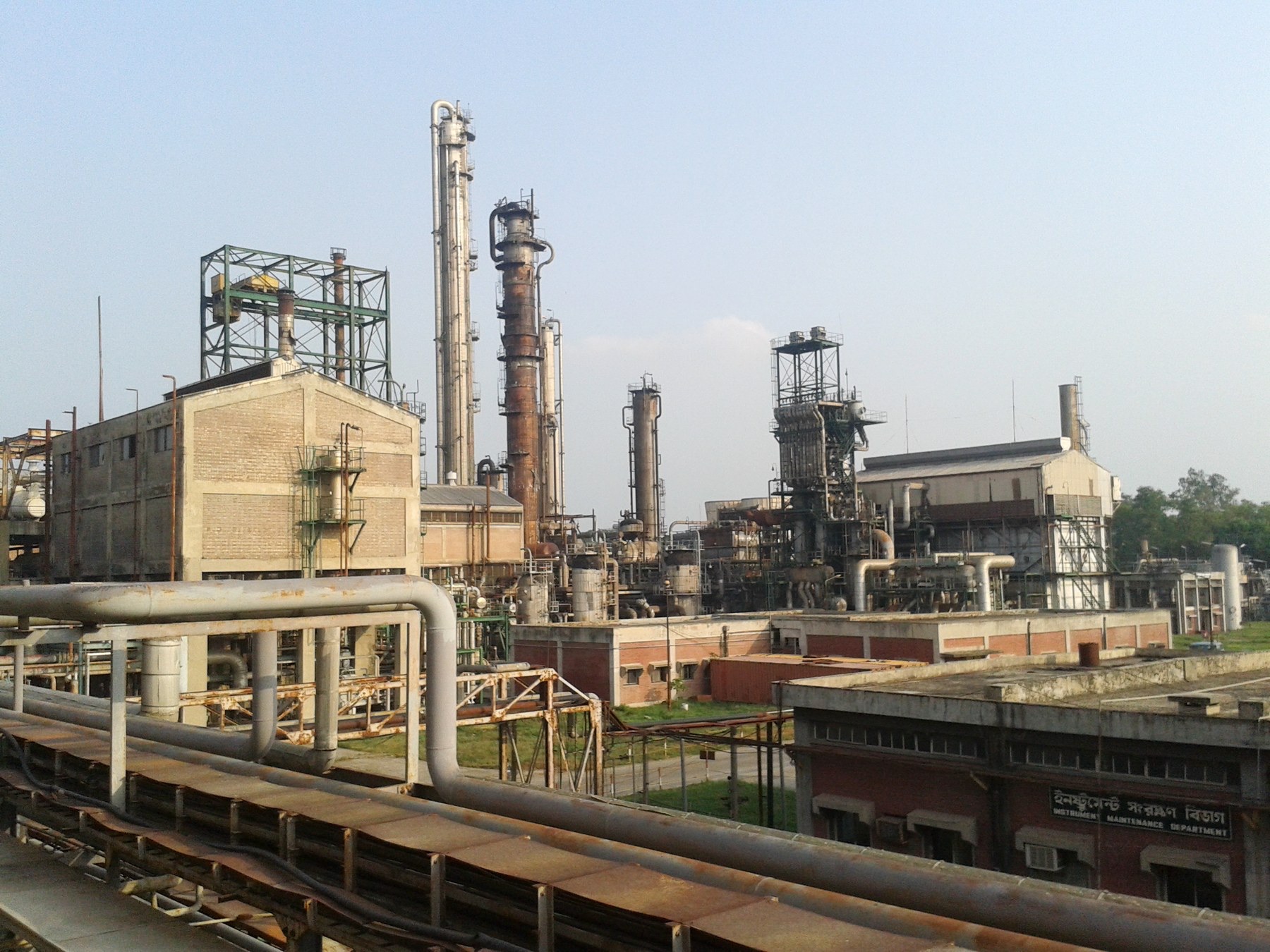
Thirsty Industries: Ammonia
Half the nitrogen in the world's food began as ammonia made in a plant that splits natural gas and water at high pressure, and the water is an ingredient as much as a coolant. What ammonia is for, where the water in the Haber Bosch process goes, why a fertiliser plant sits on a river or a coast, what green ammonia made from electrolysis would change, and why the water that matters most is the water the fertiliser ends up in.
About half of the nitrogen in the protein in a human body came through an ammonia plant. The nitrogen in the air is inert, three quarters of every breath and useless to a plant, and until 1913 the only ways of turning it into the form a crop can use were bacteria, lightning and the mining of guano and nitrate beds. Then Fritz Haber and Carl Bosch found how to join it to hydrogen at high pressure over an iron catalyst, and the fertiliser that resulted, spread on the world's fields through the twentieth century, is the reason the world's population could quadruple. The world now makes about 180 million tonnes of ammonia a year, and it uses water twice to do it: once as an ingredient, and then, in far larger quantities, as a coolant.
This article is about the water in an ammonia plant, why the plants are where they are, what changes if the hydrogen comes from water instead of gas, and why the water that ammonia affects most is the water it ends up in.
The recipe
Ammonia is one nitrogen atom with three hydrogens. The nitrogen is taken from the air, which is free. The hydrogen has to be made, and at almost every plant in the world it is made by steam reforming: natural gas, which is mostly methane, is mixed with steam at high temperature over a catalyst, and the methane and the water are both broken up, the carbon leaving as carbon dioxide and the hydrogen from both molecules going forward to the synthesis loop. The arithmetic of the reaction is that about half of the hydrogen in the ammonia came from the methane and about half from the water. In round numbers, a tonne of ammonia contains the hydrogen of about a tonne of water.
That water has to be pure, because it becomes steam in a boiler and passes over a catalyst that scale would ruin, so the plant makes it by the demineralisation the power station article describes, and it makes rather more than it uses because the steam also drives the compressors that push the gas to two hundred atmospheres. The boiler feed water is the one stream in the plant that is treated to a standard, and the plant's water chemist spends most of the day on it, because a boiler tube that scales or corrodes at those pressures fails without warning. Everything else the plant does with water is cooling, and cooling water needs only to be wet and cheap. A plant making a million tonnes a year, which is a large one, makes a few thousand tonnes of demineralised water a day.
| Water in a tonne of ammonia | |
|---|---|
| As an ingredient, split in the reformer | About a tonne, as boiler quality water |
| As steam for compressors and heat | A few tonnes, mostly recovered as condensate |
| Cooling, once through | Tens to a few hundred tonnes, warmed and returned |
| Cooling, with towers | Five to fifteen tonnes evaporated |
| Effluent | Blowdown, condensate with traces of ammonia and methanol |
The heat
The larger water use is heat. Making ammonia is a sequence of hot and cold steps: the reformer runs at nine hundred degrees, the shift and carbon dioxide removal steps at a few hundred, the synthesis at four hundred and fifty, and between each the gas has to be cooled, and the ammonia itself is condensed out of the loop by chilling. All of that heat, after what can be recovered as steam, is carried away by water, and the quantity is large enough that every ammonia plant in the world is on a river, an estuary or a coast, or has a cooling tower field beside it that evaporates five to fifteen tonnes of water for every tonne of product.
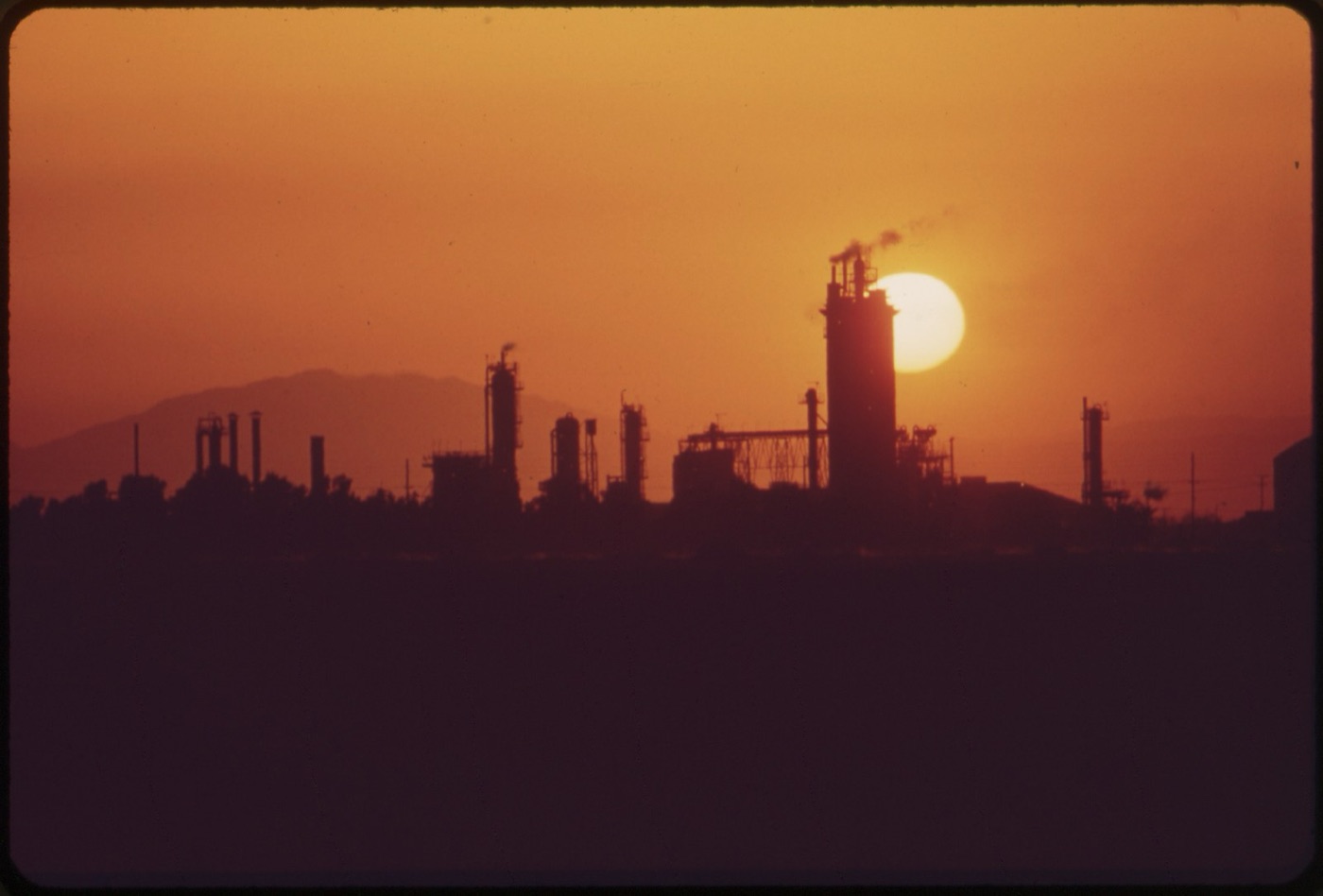
Once through cooling takes river water in, warms it, and returns it, and the water is not consumed; the effect is on the river's temperature, which the power station article discusses. Towers consume the water and return nothing. The plants in dry places, in the Gulf, in the American plains and in western India, use towers, and the water they evaporate is water drawn from the same aquifers the fertiliser they make will later reach.
Where the plants are
Ammonia is made where gas is cheap. The largest producer is China, which makes a third of the world's supply, much of it from coal rather than gas, by a process that uses more water and far more carbon; then Russia, the United States, whose plants were built on the shale gas of the last fifteen years, India, and the Gulf, where gas that would otherwise be flared is turned into ammonia and urea for export. The plants are large, a million tonnes a year and more, and they sit at the junction of a gas pipeline, a source of cooling water and a port or a railway.
The effluent is small and specific. The condensate from the process carries ammonia and a little methanol and is stripped and reused; the cooling tower blowdown carries the salts the tower concentrated; and an accidental release of ammonia itself, which is toxic to fish at a fraction of a milligram per litre, is the risk the plants are regulated for. A well run ammonia plant discharges little, and what it discharges is warm. The plants that are not well run are a different matter. Ammonia complexes in the older industrial districts of China, India and the former Soviet Union have been the source of some of the largest fish kills on record, when a leak or a flood sent a few tonnes of ammonia into a river, and the storage of ammonium nitrate, the fertiliser made from ammonia, is the reason for the explosions at West in Texas in 2013 and at the port of Beirut in 2020. The water in the plant is a small story. The chemistry the plant makes is a large one.
| Where ammonia is made | Share, roughly |
|---|---|
| China, mostly from coal | About a third |
| Russia | About a tenth |
| United States, from shale gas | About a tenth |
| India | About a tenth |
| Middle East, for export | A growing tenth |
Green ammonia
The industry's carbon problem, which is about two percent of the world's emissions, has produced a plan to make the hydrogen from water alone. Electrolysis splits water into hydrogen and oxygen with electricity, and the hydrogen article on this site gives the arithmetic: nine litres of water for every kilogram of hydrogen, so about a tonne and a half of water in every tonne of ammonia, as an ingredient, with no methane and no carbon dioxide. The projects announced for the 2020s, in Saudi Arabia, Oman, Australia, Chile and Namibia, are all in deserts, because that is where the solar power is, and they will make their water by desalination, which adds the brine problem and a little energy to a process that is mostly electricity anyway.
Green ammonia would use more water as an ingredient than the gas route and about the same in cooling, and it would be made in places with none, from the sea. The water is a small part of the cost and the desalination plant is a small part of the project, and neither is the obstacle; the electricity is. The interesting question is what the plants will be for. Half of the projects are designed to make ammonia as a way of shipping hydrogen, to be cracked back into hydrogen at the other end for fuel, and the other half to make fertiliser, and the fertiliser will do what fertiliser has always done.
The water it ends up in
The water that ammonia affects most is the water it ends up in. Most of the world's ammonia becomes urea and ammonium nitrate, and most of that is spread on fields, and about half of what is spread is taken up by the crop. The rest goes into the air as ammonia and nitrous oxide, and into the soil as nitrate, which the rain carries down into aquifers and sideways into rivers, at the rates and with the consequences the nitrate and nitrogen articles on this site describe: wells above the drinking limit across every intensive farming region, rivers feeding the algae and the dead zones at their mouths, and a limit set by the blue baby cases of the 1940s that the fertiliser of the 1970s made ordinary. A tonne of ammonia has a tonne of water in it and a few tonnes more in the cooling; the nitrate it becomes can push the concentration in a cubic kilometre of groundwater past the limit.
What it teaches
Ammonia is the industry on this site whose water use is almost a technicality and whose water effect is among the largest of any. The plant splits water to make it, cools with a river to condense it, and discharges little; the fertiliser it becomes is in the wells of every farming district on Earth. The green version would take its water from the sea and put no carbon in the air, and it would make the same fertiliser. The nitrogen cycle, once opened, does not close at the plant gate.
180 million tonnes a year, a tonne of water in each, and nitrate in the wells where it lands.
Sources
- International Fertilizer Association, ammonia production statistics: about 180 to 185 million tonnes a year; China, Russia, the United States, India and the Middle East the largest producers.
- IEA (2021). Ammonia Technology Roadmap: energy use, emissions, and the water and electricity needs of electrolytic ammonia.
- Erisman, J.W. et al. (2008). How a century of ammonia synthesis changed the world. Nature Geoscience 1. About half of the nitrogen in human protein from Haber Bosch.
- US Geological Survey, Nitrogen (fixed) Ammonia, Mineral Commodity Summaries.
- European Commission, Best Available Techniques reference document for the manufacture of large volume inorganic chemicals: ammonia plant water use and effluent.
- Photographs: opener: Urea process plant UFFL 01 by Mar11 (CC BY-SA) via Wikimedia Commons; inline: FERTILIZER PLANT NEAR EL CENTRO - NARA - 548851 by Charles O'Rear (Public domain) via Wikimedia Commons; inline: Urea process plant UFFL 02 by Mar11 (CC BY-SA) via Wikimedia Commons.