Thirsty Places: Manila
A city of fourteen million that drinks almost entirely from one dam in the mountains, was the largest water privatisation in the world in 1997, cut its leaks from two thirds to a tenth, and still ran dry in 2019 because the dam was low and the second source was a decade late. Where Manila's water comes from, what the two concessions did and did not do, what happened in March 2019, why the next dam is in a forest and the forest's people oppose it, and what a typhoon city does with too much water and too little.
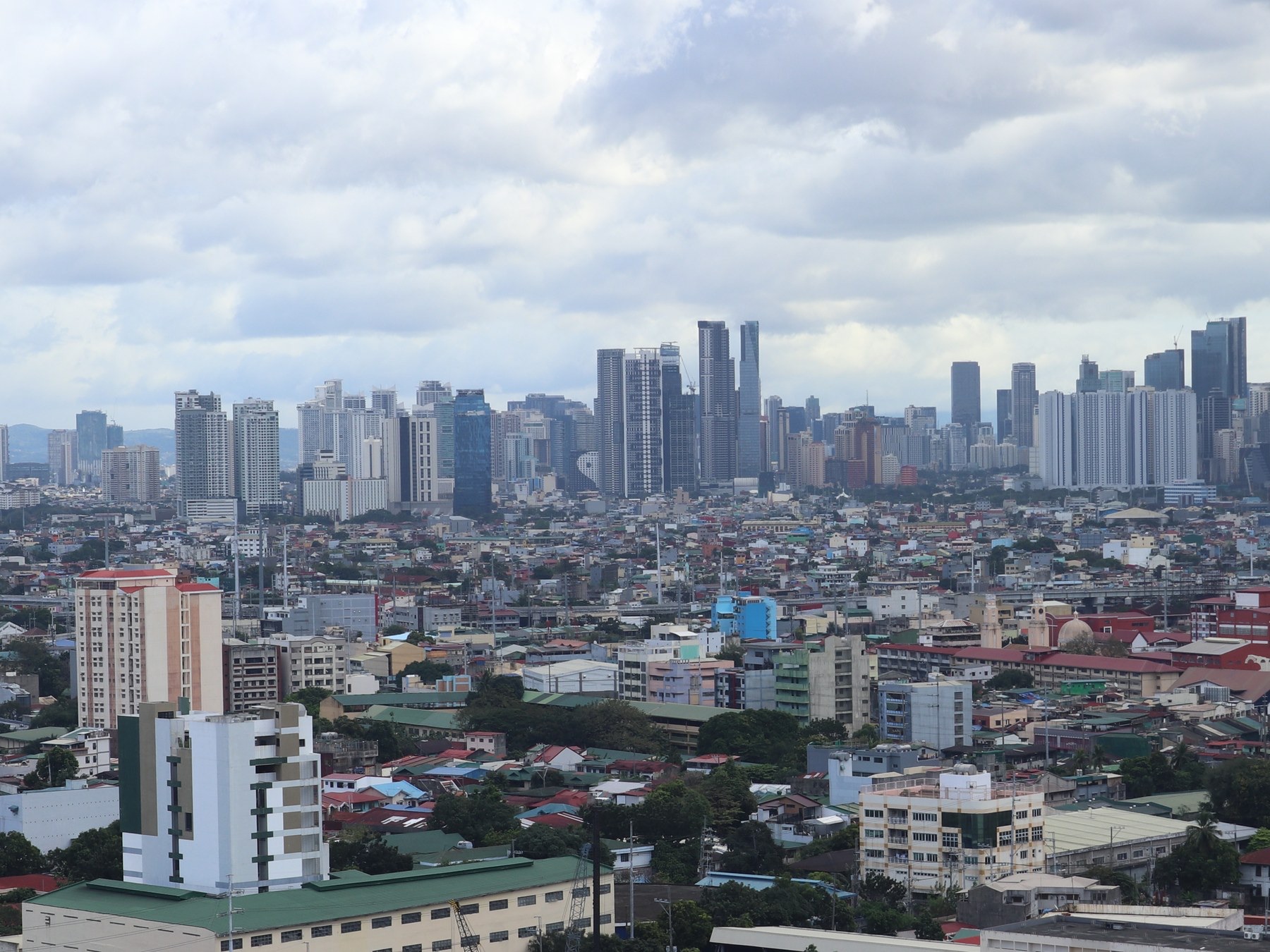
Metro Manila is fourteen million people on a bay at the mouth of a river, in a country that gets two and a half metres of rain a year and a typhoon every few weeks in season, and it drinks almost entirely from one reservoir in the mountains. The Angat dam, sixty kilometres north east of the city, supplies about ninety seven percent of the raw water that the city's two water companies treat and pipe, and when the rains fail and the reservoir falls below the level the regulator sets, the companies turn districts off by rota. The city has known this for forty years, and the second source has been planned for most of them.
This article is about where Manila's water comes from, what the largest water privatisation in the world did to the pipes, what happened in March 2019, why the next dam is contested, and what it means to have too much rain and too little water in the same year.
One dam
Angat was built in 1967 across a river in the Sierra Madre foothills, to supply the city, to irrigate the rice of the plain below, and to make electricity, in that order of priority when the reservoir is low and the reverse when it is full. The water is drawn off through a tunnel to a smaller reservoir at Ipo, then by aqueduct to the La Mesa reservoir on the city's edge, where the two companies' treatment works take it, and the arrangement has not changed since the city had three million people. The allocation is four billion litres a day, and the city's demand has grown to the allocation and past it, so that the reserve the dam provides in a dry year is what the rice farmers give up.
The reservoir is filled by the typhoons of the second half of the year and drawn down through the dry season, and in a year when the typhoons pass elsewhere, as in the El Niño years of 1998, 2010, 2016 and 2019, it goes into the dry season low and reaches, by March or April, the level at which the regulator cuts the city's allocation. The city has been rationed by rota in each of those years.
| Manila's water | |
|---|---|
| People | About 14 million in Metro Manila; more in the concession areas |
| Source | Angat dam, about 97 percent; the rest from wells and Laguna lake |
| Allocation | About 4,000 million litres a day |
| Concessions | Two, since 1997: the east zone and the west zone |
| Non revenue water, 1997 | About 63 to 66 percent |
| Non revenue water now | Under 10 percent in the east; about 25 percent in the west |
| Next source | Kaliwa dam in the Sierra Madre, 600 million litres a day |
The concessions
In 1997 the state utility served about two thirds of the city, for a few hours a day in most of it, and lost about two thirds of its water to leaks and illegal connections, and the government, at the urging of the development banks, split it into two zones and sold twenty five year concessions to private companies. The east zone went to a consortium led by a Filipino conglomerate, and it became, over the following decade, the case study that the industry cites: leakage cut from sixty three percent to under ten, supply extended to twenty four hours across the zone, and, most cited of all, the connection of the informal settlements, through community schemes in which a single meter served a cluster of houses and the residents ran the distribution, at a price below the vendors' and above the utility's standard tariff. The west zone, which had the older pipes and the poorer districts, went to a consortium that struggled, went through a bankruptcy and a change of owners, and reached similar results a decade later.
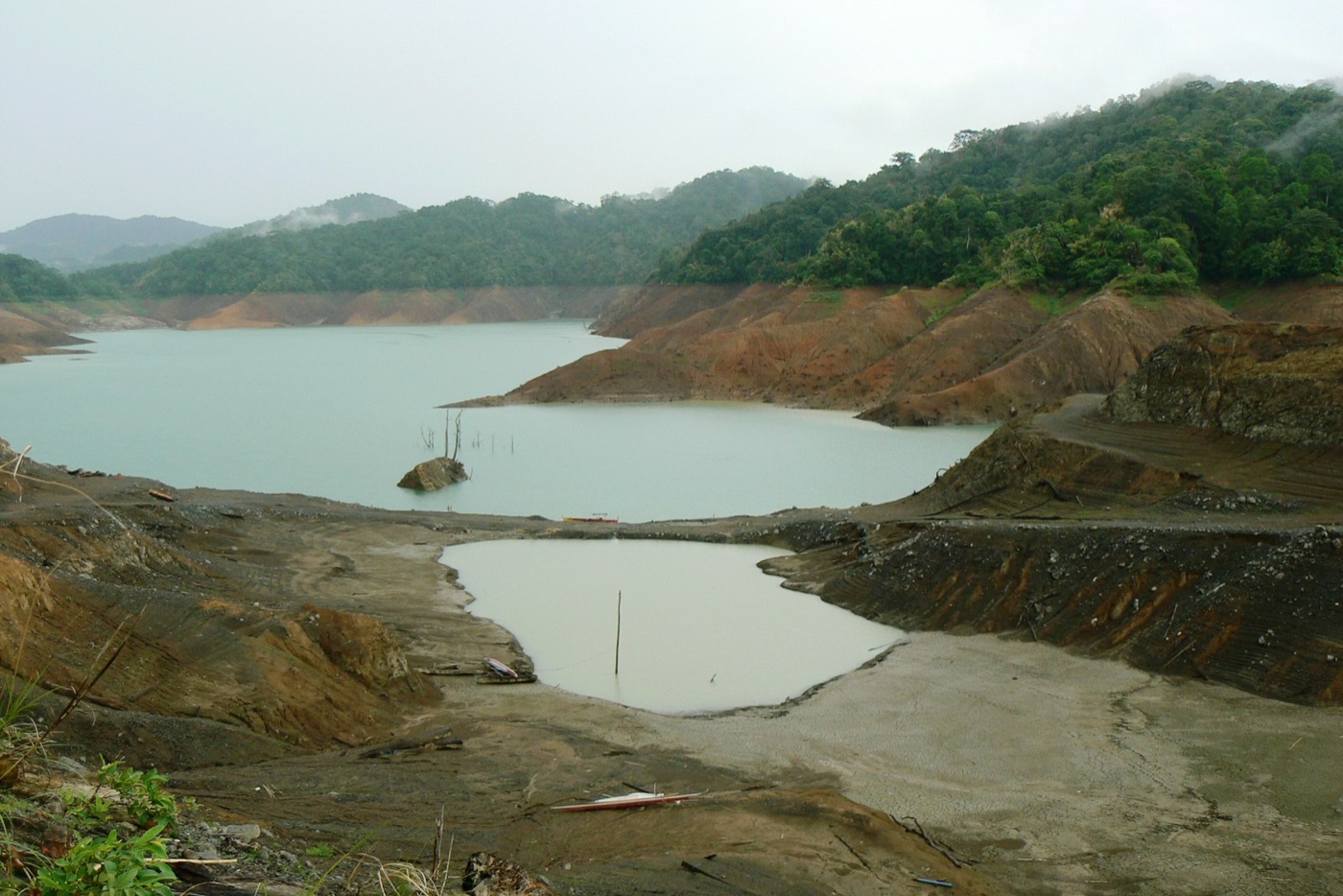
The concessions fixed the pipes. They did not, and could not, build a dam, because the raw water was the state's, and the state's second source, planned from the 2000s under one name and another, was not built. The companies and the regulator argued for fifteen years about who should pay for it, and in the meantime the city's demand grew into the allocation and the margin went.
March 2019
In the first week of March 2019 the La Mesa reservoir, the small lake at the end of the aqueduct from which the east zone's works draw, fell below the level of the works' intake, and the east zone company began turning off districts, at first for hours and then for most of the day, across the eastern half of the city. It went on for weeks. Queues formed at the fire hydrants the company opened; hospitals ran on tankers; the malls, which have their own wells, became the places people went to use a toilet; and the Senate held hearings at which the company, the regulator and the dam's operator blamed each other. The immediate cause was a dry year and a demand that had reached the allocation with no margin, and the deeper one was the second source: a treatment plant on Laguna lake, which the company had been building to add a tenth to its supply, was a year late, and the dam that would have added a sixth had been in the planning stage for fifteen years.
The company was fined and its concession renegotiated. The rain came in June. The reservoir fell again in the dry season of 2020, and the city was rationed again, more quietly, during the pandemic.
| Manila's dry years | |
|---|---|
| 1998 | El Niño; Angat near its lowest; rationing |
| 2010 | Angat below the critical level; rice allocation cut |
| 2016 | Rotational supply across the west zone |
| 2019 | La Mesa below the intake; the east zone off for weeks; Senate hearings |
| 2020 and 2024 | Rationing again in the dry season |
The dam in the forest
The second source is the Kaliwa dam, on a river in the Sierra Madre east of the city, and it has been on the plans since the 1970s under one name or another. It was finally contracted in 2018, with a loan from China and a Chinese contractor, to deliver six hundred million litres a day, a seventh of the city's use, through a tunnel to the existing aqueducts, and the tunnelling began in 2022. The dam floods land that the Dumagat and Remontado peoples hold under ancestral title, and their opposition, and that of the environmental groups who argue that the Sierra Madre's forest is the barrier that protects the city from the typhoons, has slowed it and taken it to the human rights commission and the courts. The government's answer is the one every government in this position gives: the city needs the water, and the alternative, a larger dam further out, floods more.
The dam will add a seventh. The city grows by that much in a decade, and the plan beyond Kaliwa is a larger dam beyond it, in the same mountains, with the same objections.
Too much water
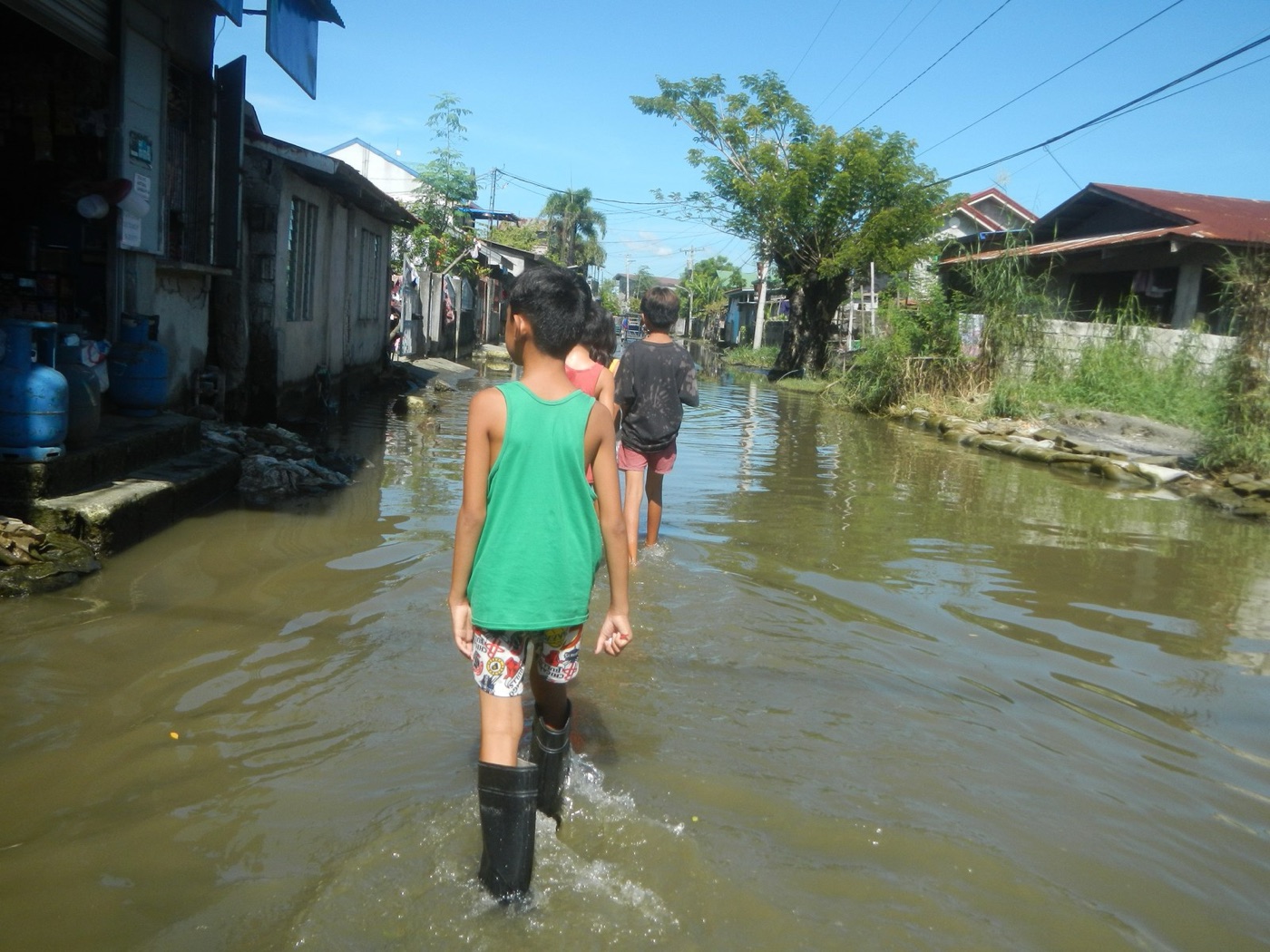
Manila's other water problem is the opposite one. The city floods every year, in the typhoons and the monsoon, and in September 2009 a typhoon called Ondoy dropped a month's rain in a day and put a third of the metropolis under water, killing hundreds. The drainage was built for a smaller city and is choked with the settlements built along the creeks and the plastic in the channels, the bay is rising, and the city is sinking, as the Jakarta and Bangkok articles on this site describe, where the groundwater has been pumped. The wells that the malls and the factories run, outside the concessions' control, are the reason the city's northern districts have subsided by several centimetres a year. A city that floods in September and is rationed in March has the water. What it lacks is the storage and the pipes between the two, which is the story of every monsoon city on this site.
The wells and the malls
Outside the two concessions there is a third supply that nobody regulates well: the deep wells that the malls, the factories, the hospitals and the subdivisions sank through the decades when the utility could not be relied on, and that they kept when it could. The water agency licenses them and has tried, since the 2000s, to close them, because the aquifer under the city is falling and, near the bay, filling with seawater, and because a mall on its own well pays the utility nothing. The malls resist, the licences are renewed, and in the rationing of 2019 the malls were where the city went to wash. The pattern is the Jakarta and Bangkok one, where the ground sinks under the pumping, and Manila's northern districts, on the soft sediment of the delta, are subsiding by several centimetres a year, which the tide, on the days of a high water and a typhoon surge, has begun to exploit.
What it teaches
Manila is the city on this site that fixed its pipes and not its source. The privatisation of 1997, whatever its politics, cut the losses of the east zone from two thirds to a tenth and connected the districts the state had written off, and it could not build a dam, because a dam is a decision that only a state can make and this one took forty years to make it. The reservoir that supplies ninety seven percent of the city falls in every dry year, the rota follows, and the second source is being built in a forest whose people did not agree to it. The rain is not the problem. It never is.
Ninety seven percent from one dam, leaks cut from two thirds to a tenth, and a city turned off by rota in the month the reservoir ran low.
Sources
- Metropolitan Waterworks and Sewerage System (MWSS), annual reports: Angat dam about 97 percent of raw water; allocation 4,000 million litres a day; Kaliwa dam project 600 million litres a day.
- Manila Water and Maynilad, annual and sustainability reports: non revenue water from 63 percent in 1997 to under 10 percent (Manila Water, east zone); Maynilad from 66 percent to about 25 percent.
- Asian Development Bank (2008). Manila Water concession: a case study; and World Bank Water and Sanitation Program reviews of the 1997 privatisation.
- Philippine Senate and House hearings on the March 2019 water shortage; Manila Water reports on the La Mesa reservoir level and the Cardona treatment plant delay.
- Commission on Human Rights of the Philippines and the Dumagat Remontado communities, statements on the Kaliwa dam; New Centennial Water Source project documents.
- Photographs: opener: Makati Guadalupe-Poblacion skyline with Paco, Quirino (Manila; 12-23-2023) by Patrickroque01 (CC BY-SA) via Wikimedia Commons; inline: Angat Dam reservoir 05-2010 - Flickr by Albert Lozada (CC BY) via Wikimedia Commons; inline: 9848Effects floods of Typhoon Goni Telacsan Tacasan Macabebe 67 by Judgefloro (CC0) via Wikimedia Commons.