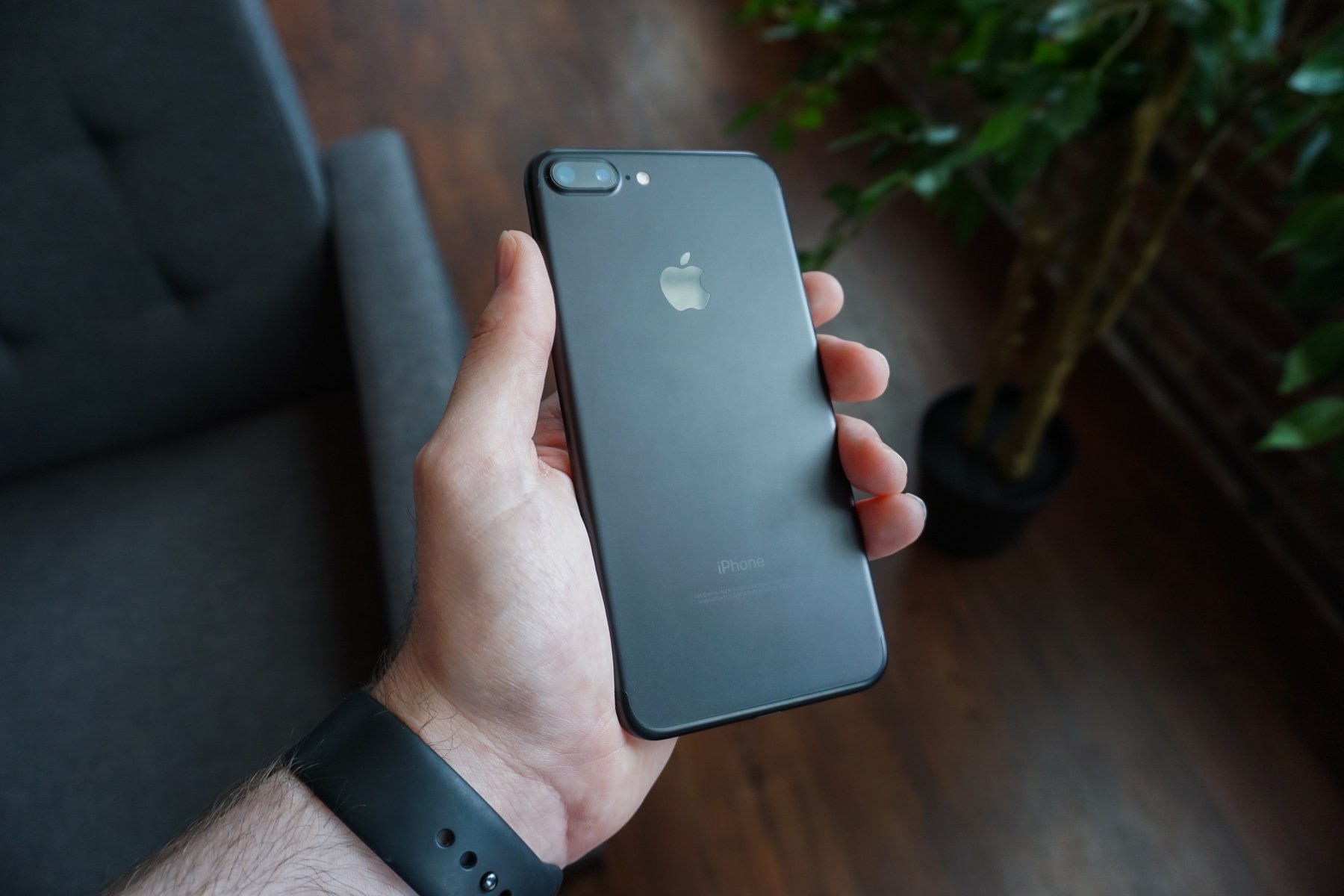
Thirsty: Smartphone
A phone weighs less than a glass of water and took about twelve thousand litres to make. Almost none of that water is in the mine. It is in the factory that made the chip, where water has to be cleaner than anything a person will ever drink, and where the cleaning is the thirstiest thing in the building.
Hold a phone in your hand and it weighs about the same as a small glass of water. By one of the few estimates that has been published in full, it took about twelve thousand litres to make, which is more than the water in a pair of jeans and around eighty times the water in a cup of coffee. Nobody who buys a phone thinks of it as a wet product. It has no field, no cow and no fibre. It is glass, metal and plastic, and it arrives in a dry box.
This article is about where the water is. Most of it is in a kind of factory that very few people have seen from the inside, in a handful of places in East Asia, and the water that flows through it is unlike any other water in this series. It is water so clean that it is corrosive.
The number, and where it comes from
Footprints for food and clothing are well established, because the method, described in the article on the water you cannot see, was built for crops and the animals that eat them. Electronics are harder. A phone has more than a thousand components from hundreds of suppliers, and few of those suppliers publish their water use. The figure of 12,760 litres comes from a study by Friends of the Earth in 2015 that traced the main materials and manufacturing steps and added them up, and it is quoted here because it shows its working. Other estimates run from a few thousand litres to more than that, and the honest summary is that a smartphone sits somewhere in the low tens of thousands of litres, most of it in manufacturing.
| Where a phone's water goes | Share, roughly |
|---|---|
| Semiconductor chips, including ultrapure water and cleaning | The largest share, well over half |
| Display glass and the touch layer | A smaller share |
| Circuit board, plating and solder | A smaller share |
| Battery, including lithium and cobalt processing | A small share |
| Mining and refining the other metals | A small share |
| Assembly, packaging and transport | Small |
The pattern is what matters more than the decimals. Mining, which is what most people picture, is a minor part. The chip is the thirsty part.
The cleanest water in the world
A modern phone processor is built on a disc of silicon about the size of a dinner plate, and the building of it takes several hundred steps, in which layers thinner than a virus are laid down, patterned with light, etched, and laid down again. Between nearly every one of those steps the wafer is rinsed, because a single particle of dust, a single ion of sodium, a single fingerprint's worth of oil, will ruin the circuit it lands on. The rinsing is done with ultrapure water, described in its own article on this site, and the point of that water is that it contains nothing at all.
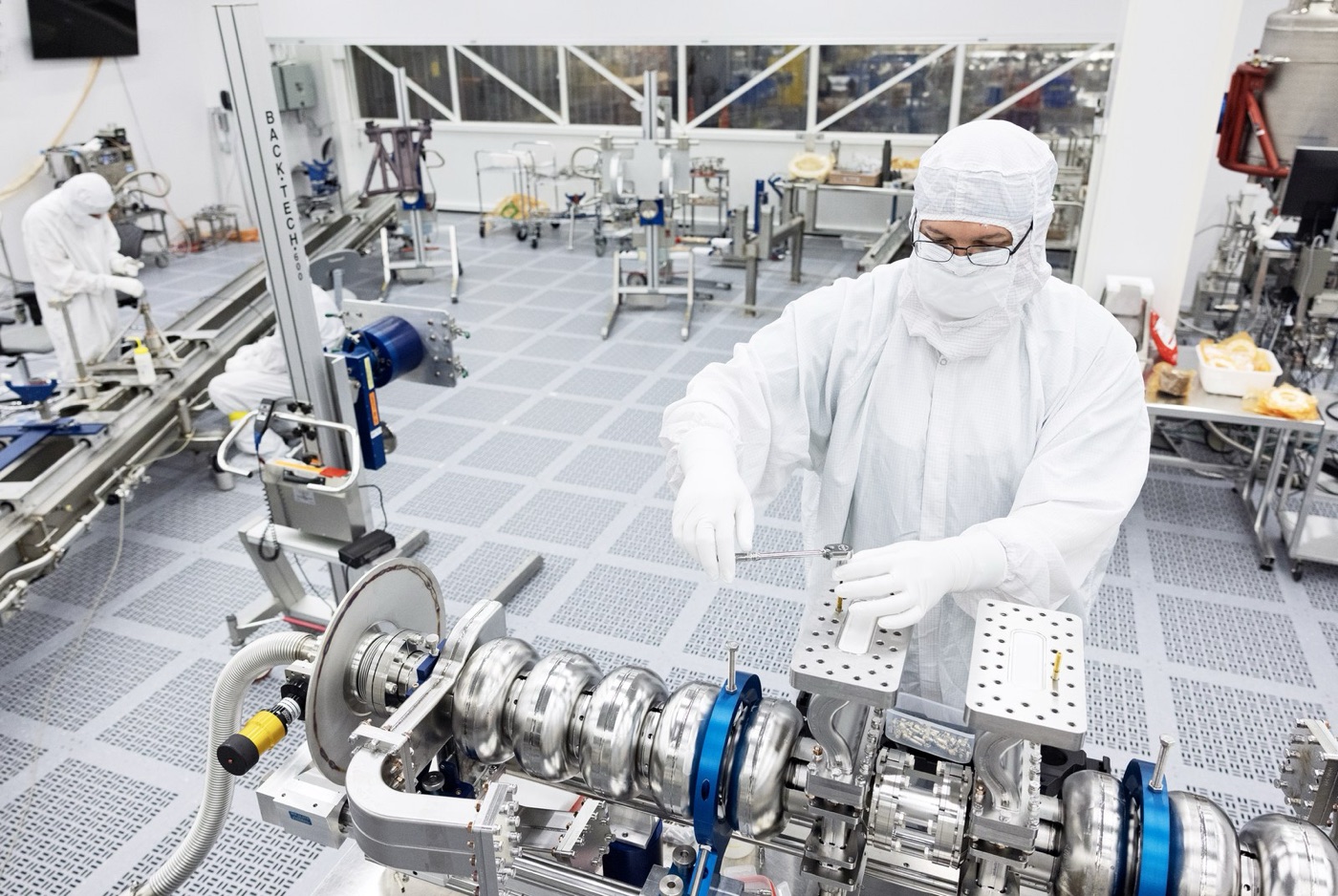
Nothing at all is difficult. Tap water carries a few hundred milligrams of minerals in every litre. Ultrapure water carries a few parts per trillion. Getting from the first to the second takes a chain of treatment that reads like the table of contents of this site: filtration, softening, reverse osmosis, often twice, then ion exchange, degassing, ultraviolet light to break down the last organic molecules, and a final filter so fine it removes particles a thousand times smaller than a bacterium. The water that comes out of the end of that chain is so free of dissolved matter that it will dissolve almost anything it touches. It is stored in special plastics and piped in special pipes. Drunk in quantity, it would pull the minerals out of the body.
A single wafer takes somewhere between two thousand and eight thousand litres of this water on its way through the plant, depending on the process, and a large chip factory processes tens of thousands of wafers a month. The plant's water intake, before recycling, is that of a small city. The largest chip maker in the world, TSMC, reports its water use in its sustainability reports, and its fabs in Taiwan draw on the order of a hundred thousand cubic metres a day. In the drought of 2021, when Taiwan's reservoirs fell to a fraction of their capacity, the company trucked water to its plants to keep them running, and the trucks made the news, because a fab that stops cannot simply be restarted.
Making it, and unmaking it
The interesting fact about a chip factory's water, and the reason it belongs in this series, is that the water is not consumed in any ordinary sense. Very little evaporates. Almost all of what goes in comes out again, and it comes out carrying the acids, solvents, metals and fine particles that were rinsed off the wafers. A fab has, at its back, a wastewater plant as elaborate as the ultrapure plant at its front, and the two are increasingly connected.
The industry has learned to recycle. The rinse water from the last, cleanest rinses is barely dirty, and it can be sent back to the ultrapure plant and cleaned again more cheaply than fresh water can be cleaned the first time. TSMC reports reclaiming most of its process water, and the plants built in the last decade in Taiwan, Arizona and Japan have been designed with reuse rates that would have seemed fanciful twenty years ago. The reason is the same as everywhere on this site. Water is the cheapest thing in the building until it stops, and then it is the most expensive.
| Water in a chip factory | |
|---|---|
| Ultrapure water per 300 mm wafer | Roughly 2,000 to 8,000 litres |
| Intake of a large fab | Tens of thousands of cubic metres a day |
| Share reclaimed at the newest plants | The majority, in some cases well over 80 percent |
| What leaves | A treated effluent, and a small sludge of metals and fluoride |
The rest of the phone
The chip is the largest item, and the others are smaller versions of the same story. The glass of the screen is made from a melt and then chemically strengthened in a bath of molten salt, and rinsed. The circuit board is copper on fibreglass, etched in acid and plated in metal, each step followed by a rinse, and the plating shops that do this work are, in the industrial districts of southern China, among the largest small sources of metal in the local rivers. The battery's lithium was, as the brine article on this site described, concentrated in evaporation ponds in Chile or Argentina, or leached from rock in Australia and refined in China, with water at every stage. The cobalt, the tin, the tungsten and the gold each have a mine and a refinery, and each refinery has a rinse.
Add it all up, and the phone is a product of perhaps a hundred water using processes, none of them enormous, spread across a supply chain that spans the Pacific. What makes it different from the coffee or the t-shirt is that all of that water is industrial. There is almost no rain in a phone. It is pumped, treated, used, treated again, and discharged, in places where the rivers and aquifers are already busy.
The mine, for completeness
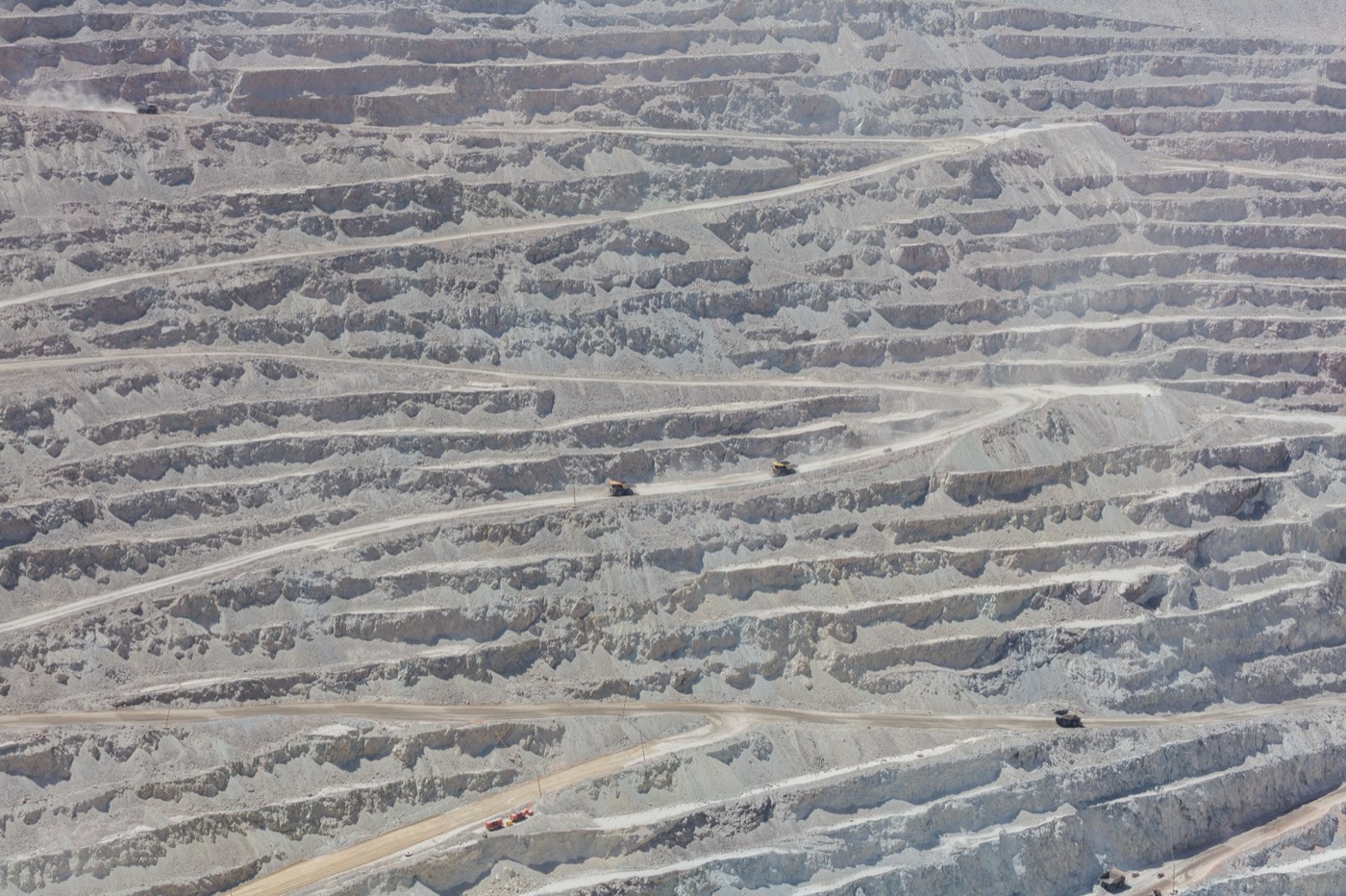
The mine deserves its paragraph, because it is where most people's picture of a phone's water begins. A phone contains a few grams of copper, a fraction of a gram of gold, and traces of tin, tungsten, tantalum, cobalt and the rare earths in the speaker and the vibration motor. Every one of those was dug from rock, crushed, and separated from the rock with water, and the copper and gold in particular are recovered from ore so lean that a tonne of rock yields a few grams of metal and several tonnes of wet waste. A copper mine uses on the order of a hundred litres of water for every kilogram of metal it produces, much of it in the flotation tanks where the ore is separated, and it produces a slurry of ground rock, the tailings, that is stored behind dams for as long as anyone can foresee. The water in a phone's metals, spread over a few grams, comes to a few hundred litres, which is a small share of the total and a large share of the local trouble, because copper mines stand in some of the driest places on Earth, in northern Chile, in Arizona and in Peru, where a hundred litres per kilogram is drawn from an aquifer that a village also drinks. The lithium in the battery, concentrated in the brine ponds of the Atacama, is the same story with a different mineral. The mine is the small number in the footprint and the sharp one on the ground.
What the buyer decides
The footprint of a phone is set in the factory, and a person choosing between two phones on a shelf has almost no way of telling which was made with more water. What the buyer does decide is how many phones they buy. A phone replaced every two years carries its twelve thousand litres every two years. A phone kept for four, with a new battery at the halfway point, carries half that per year. The repairability of phones, which the European Union has begun to regulate and which a few makers have built their business on, is a water question as much as a waste one, and it is the only water question about a phone that a buyer can answer.
It is worth being clear, as the article on the turn was, about what this does and does not mean. Buying fewer phones does not return water to Taiwan. The factories run at the pace the market sets, the water is used where they stand, and the sensible reform is the one the industry is already making, which is to recycle more of it. But a product whose water is all in the factory is a product whose water is all in the demand, and demand is the one part of the chain that the person holding the phone controls.
The number to carry
A phone is a dry object with a wet history. About twelve thousand litres, most of it in the factory that made the chip, used to make water clean enough to be dangerous and to clean it again on the way out. It is a smaller number than a steak's and a larger number than a shirt's, and, unlike either of those, it is a number that falls when the product lasts longer.
Sources
- Friends of the Earth (2015). Mind your step: the land and water footprints of everyday products. Estimate of 12,760 litres per smartphone, with method.
- TSMC, Sustainability Report 2023: water consumption per wafer, recycling rates and the share of water reclaimed at its Taiwan fabs.
- Semiconductor Industry Association and SEMI, Ultrapure water use per 300 mm wafer, typical figures of 2,000 to 8,000 litres, and the chemical rinse sequence.
- Reuters reporting on TSMC's water trucking during the 2021 Taiwan drought.
- Restart Project and Fairphone, lifetime and replacement rates for smartphones, and repairability.
- Photographs: opener: Black smartphone in hand (Unsplash) by Dennis Cortés cortes (CC0) via Wikimedia Commons; inline: Semiconductor clean room by Aileen Devlin/Jefferson Lab from Newport (public domain) via Wikimedia Commons; inline: Mina de Chuquicamata, Calama, Chile, 2016-02-01, DD 126 by Diego Delso (CC BY-SA) via Wikimedia Commons.