Plain Water: Private Wells
About forty three million Americans, and a share of the population of every country, drink from a well in the garden that no utility treats and no regulator tests, and when the national survey looked, one well in five had something in it above the limit. What a private well is and why it sits outside the rules, what the surveys found in the water, why the owner is the only inspector, what a test costs and how rarely it is done, and why the water that people trust most is the water that nobody checks.
The plain water pillar of this site is a description of what stands between a river and a glass: the works, the chemistry, the tests, the pipes, the residual chlorine and the inspector. About forty three million Americans, one in eight, and a share of the population of every country, drink from a well in the yard to which none of it applies. The drinking water law of the United States, and of most countries, regulates the public supply, and a well serving one house is the owner's business: nobody treats it, nobody tests it unless the owner pays for a test, and nobody tells the owner what the test found unless the owner asks. The water tastes fine, as it has for years, which is what most of the things that are wrong with it taste like.
This article is about what a private well is and why it sits outside the rules, what the national surveys found when they looked, what the owner is expected to do and how rarely it is done, and why the water people trust most is the water nobody checks.
What a private well is
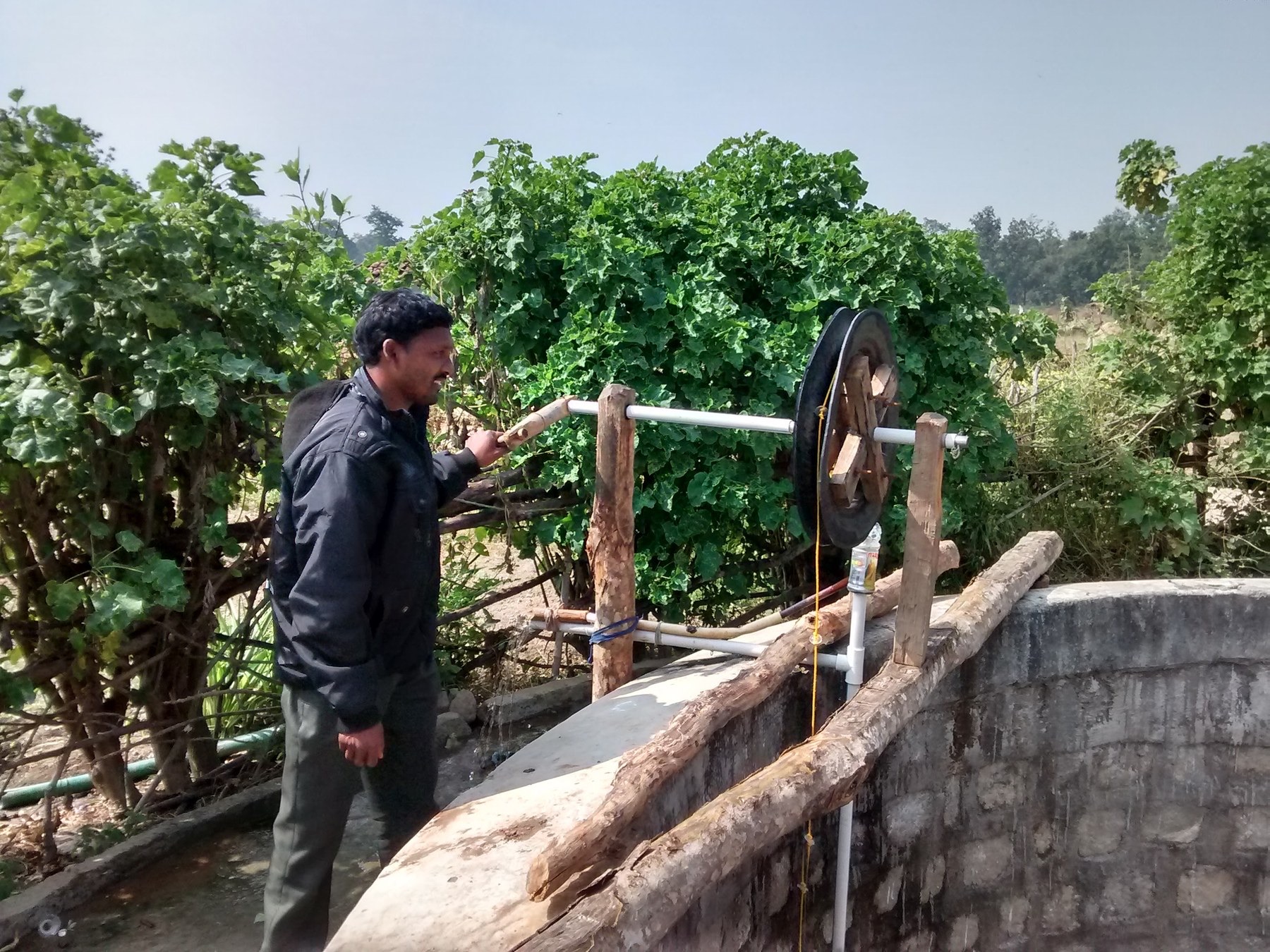
A private well is a hole drilled, dug or driven into an aquifer under a house, with a pump and a pipe to the taps, and it serves one household or a few. It is the water supply of the countryside everywhere: the farms and villages that the mains never reached, the houses on the edge of towns that were built before the pipe arrived, and, in the developing world, most rural households, with a hand pump on a tube well of the kind the arsenic and Dhaka articles on this site describe. The water is groundwater, and the groundwater article explains why that is, in most places, the cleanest water there is, filtered through metres of sand and needing no treatment, and also why it carries what the rock and the fields above it put in.
The rules stop at the property line. The American drinking water law of 1974 applies to systems serving more than twenty five people, and the rest, some fifteen million wells, are regulated by nobody at the federal level and by a patchwork at the state one, which usually amounts to a permit to drill and a test at the time of drilling, and nothing after. Britain regulates its private supplies through the councils, which are required to sample them every few years and mostly do; most of the world does not regulate them at all.
| Private wells | |
|---|---|
| United States | About 43 million people, one in eight; about 15 million wells |
| England | About 1 percent of the population on private supplies; councils sample larger ones |
| Rural India and Bangladesh | Most households, from tube wells with hand pumps |
| Regulation | A permit to drill; a test at drilling in some places; nothing after |
| Treatment | None, unless the owner installs it |
| Who tests | The owner, at their own expense, if at all |
What the surveys found
The national geological survey of the United States sampled about two thousand private wells across the country between 1991 and 2004 and published the results in 2009, and they are the best picture there is. About one well in five had at least one contaminant above a health limit. Nitrate, from the fertiliser and the manure of the fields above, was the commonest in the farming regions of the midwest and the plains; arsenic, from the rock, in the west and the northeast; uranium and radon, from granite and its cousins, in New England, the Rockies and the Piedmont; fluoride in a few districts; and manganese, which is a nuisance in most places and a concern in a few. Bacteria, which the survey tested separately, were in about a third of the wells at some level, and E. coli in a small share, most often where a septic tank drained too close to the well or the well's cap and casing had failed. The pesticides and the solvents that the survey looked for were found often and above a limit rarely.
The owners, when asked, had mostly never tested their water, and of those who had, most had tested once, at the time of drilling or the sale of the house, for bacteria alone. The survey's authors made the point that this site keeps making about groundwater: the water was clear, cold, and tasted of nothing, and had been drunk for decades, and arsenic at three times the limit tastes of nothing too.
| What the US survey found in 2,100 private wells | |
|---|---|
| Any contaminant above a health limit | About 23 percent of wells |
| Nitrate above the limit | About 4 percent overall; much higher under farmland |
| Arsenic above the limit | About 7 percent, concentrated in the west and northeast |
| Radon above the proposed limit | About two thirds of wells sampled for it |
| Coliform bacteria | About a third; E. coli in a few percent |
| Owners who had tested recently | A small minority |
The owner as inspector
The system depends on the owner, and the owner, in the studies of what owners do, tests the well when it is drilled, when the house is sold, when the water changes colour or smell, or when a neighbour finds something. The state health departments' advice is to test for bacteria and nitrate every year and for arsenic, radon and the rest at least once, at a cost of a few tens to a few hundred dollars, and the surveys of behaviour find that a small minority follow it. A state that tried to change this, New Jersey, passed a law in 2002 requiring a well to be tested at every sale of a house, and the results, in the study that followed, were both the discovery of arsenic and nitrate in tens of thousands of wells whose owners had not known and the finding that a share of those owners, told their water was over the limit, installed no treatment, because the treatment cost money and the water had always been fine.
The treatment, when installed, is the household version of the plain water pillar: a chlorinator or an ultraviolet lamp for bacteria, a reverse osmosis unit under the sink for arsenic and nitrate, an ion exchange bed for uranium, an aeration system for radon, and a softener for the hardness that makes most owners think about their water in the first place. The filter jug article on this site describes what does not work. A well owner with a test result has, for the first time, the information to buy the thing that does.
Rural Britain, rural India
England's private supplies, about a percent of the population on farms and in the remote villages, are sampled by the councils, and the failure rate of the samples is several times that of the public supply: around five to ten percent of samples fail, most for coliform bacteria and E. coli from a spring or a shallow well with livestock above it, some for nitrate, a few for lead from the house's own pipes. The council writes to the owner, and the owner may or may not act. In rural India and Bangladesh, where the arsenic article on this site began, the tube wells were dug by the million in the 1970s and 1980s to get people off the surface water that carried cholera, and it worked, and the wells carried arsenic that nobody tested for until the 1990s. The testing and marking of wells, red for unsafe and green for safe, has since covered most of Bangladesh, and the story is the private well's story at national scale: the water that was cleaner than the river, drunk for twenty years, and never checked.
The well and the septic tank
The private well's commonest companion is the private sewer, and the two are usually a few metres apart in the same garden. A septic tank takes the house's sewage, settles the solids and drains the liquid into a soakaway, from which it moves through the soil toward the nearest groundwater, which is the water the well draws. The rules that exist say the well must be a certain distance uphill of the soakaway, and the wells that fail for bacteria are, in most surveys, the ones where the rule was not followed or the soil was too thin or too cracked to filter what the tank sent. The nitrate in a well under a suburb of large gardens is, in the surveys that have traced it, as often from the neighbours' septic tanks as from any farm. A house on a well and a tank is a small water utility and a small sewage works with nothing between them but the ground, which is the arrangement that the plain water pillar of this site exists to replace, and it serves a hundred million people in the rich world alone.
What a test costs
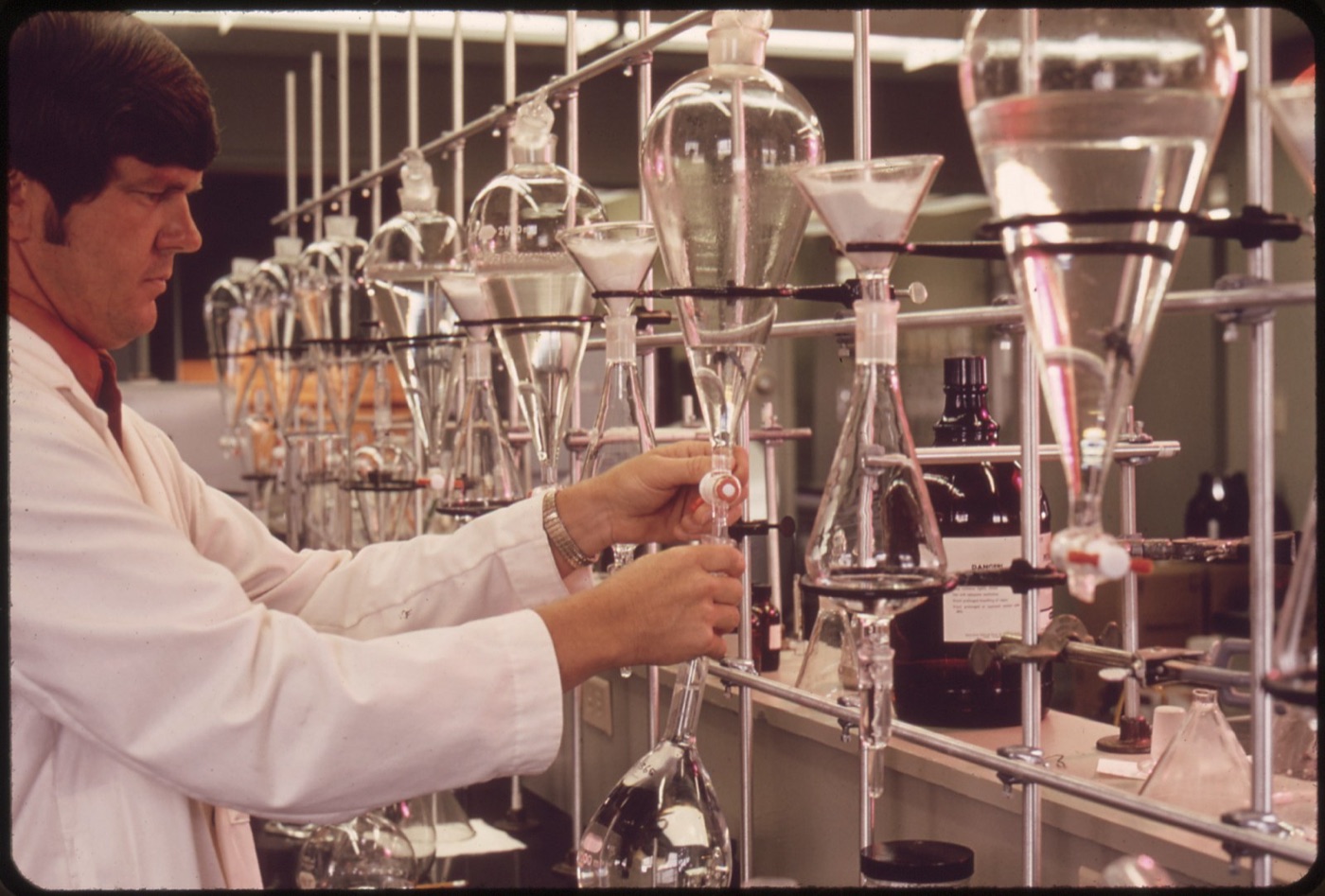
A basic test, for bacteria and nitrate, costs a few tens of dollars at a state laboratory, and the full panel that the survey ran, with arsenic, uranium, radon, fluoride, metals, pesticides and solvents, costs a few hundred. The treatment that a bad result calls for costs from a few hundred for an ultraviolet lamp to a few thousand for a reverse osmosis system with its own maintenance, and the studies of what owners do with a bad result find that the second cost, more than the first, is where the process stops. A state that wanted to change the outcome would pay for the test, as some now do, and for the treatment in the households that cannot, as almost none do, and would find, as New Jersey did, that the map of its private wells has more red on it than anyone had expected.
What it teaches
The private well is the plain water article about water with nothing between it and the glass. It is, most of the time and in most places, the cleanest water on this site, and one well in five, when a survey finally looked, was over a limit for something the owner could not taste. The rules stop at the property line, the owner is the inspector, and the inspector tests once, when the house is sold, for the one thing that can be smelled. The whole of the plain water pillar exists because a public supply is tested every day. Forty three million people are drinking from a supply that is tested when they remember.
Forty three million people, one in five wells over a limit, and water that tasted fine for twenty years.
Sources
- US Geological Survey (2009). Quality of water from domestic wells in principal aquifers of the United States, 1991 to 2004. Circular 1332. About 23 percent of 2,100 wells with at least one contaminant above a health benchmark.
- US EPA and CDC, private drinking water wells: about 43 million people; not regulated under the Safe Drinking Water Act; testing guidance.
- UK Drinking Water Inspectorate, Private water supplies in England, annual reports: about 1 percent of the population; failure rate of samples around 5 to 10 percent, mostly E. coli and coliforms.
- Ward, M.H. et al. (2018). Drinking water nitrate and human health: an updated review. International Journal of Environmental Research and Public Health 15. Private wells in agricultural areas.
- Flanagan, S.V. et al. (2016). Arsenic in private well water part 1 of 3: impact of the New Jersey Private Well Testing Act on household testing and mitigation behavior. Science of the Total Environment 562.
- Photographs: opener: Rural Hand Pump by Prasoon Panthayi (CC BY) via Wikimedia Commons; inline: Drilling for clean water (7534901370) by Oxfam East Africa (CC BY) via Wikimedia Commons; inline: EPA GULF BREEZE LABORATORY, CHEMISTRY LAB. THE CHEMIST IS TESTING WATER SAMPLES FOR PESTICIDES - NARA - 546277 by William C. Shrout (Public domain) via Wikimedia Commons.