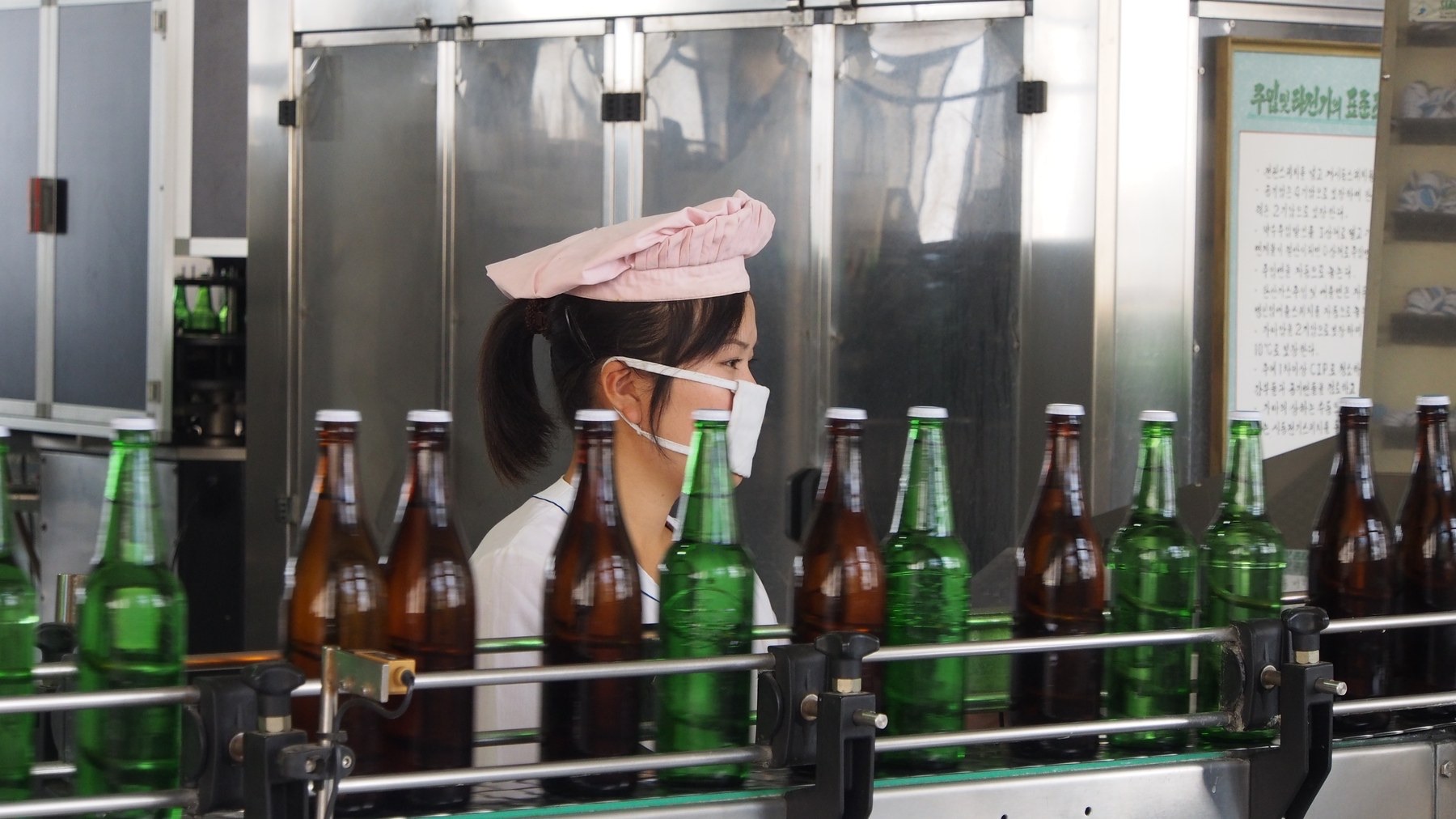
Thirsty Industries: Bottled Water Plants
The bottled water myth on this site is about the bottle. This is about the plant: a building over a spring or a well that pumps a few hundred million litres a year, filters and bottles it, and ships it away in a form the aquifer will never see again. What a bottling plant takes and pays, why the fights over them are fought in small towns, what a permit for a spring in Michigan cost, how the water of an island in the Pacific became a brand, and why the volume is small and the argument is not.
The bottled water article on this site is about the myth that the water in the bottle is better than the water in the tap, and about what the bottle costs. This article is about the building where the bottle is filled, which is a well with a filling line on top of it, and which is, by volume, one of the smallest industrial water users on this site and, by the fights it has caused, one of the largest. A bottling plant pumps a spring or an aquifer, filters it, fills it, and trucks it away, and the trucking is what makes it different from every other user in the town: the water leaves the watershed and does not come back.
What the plant does
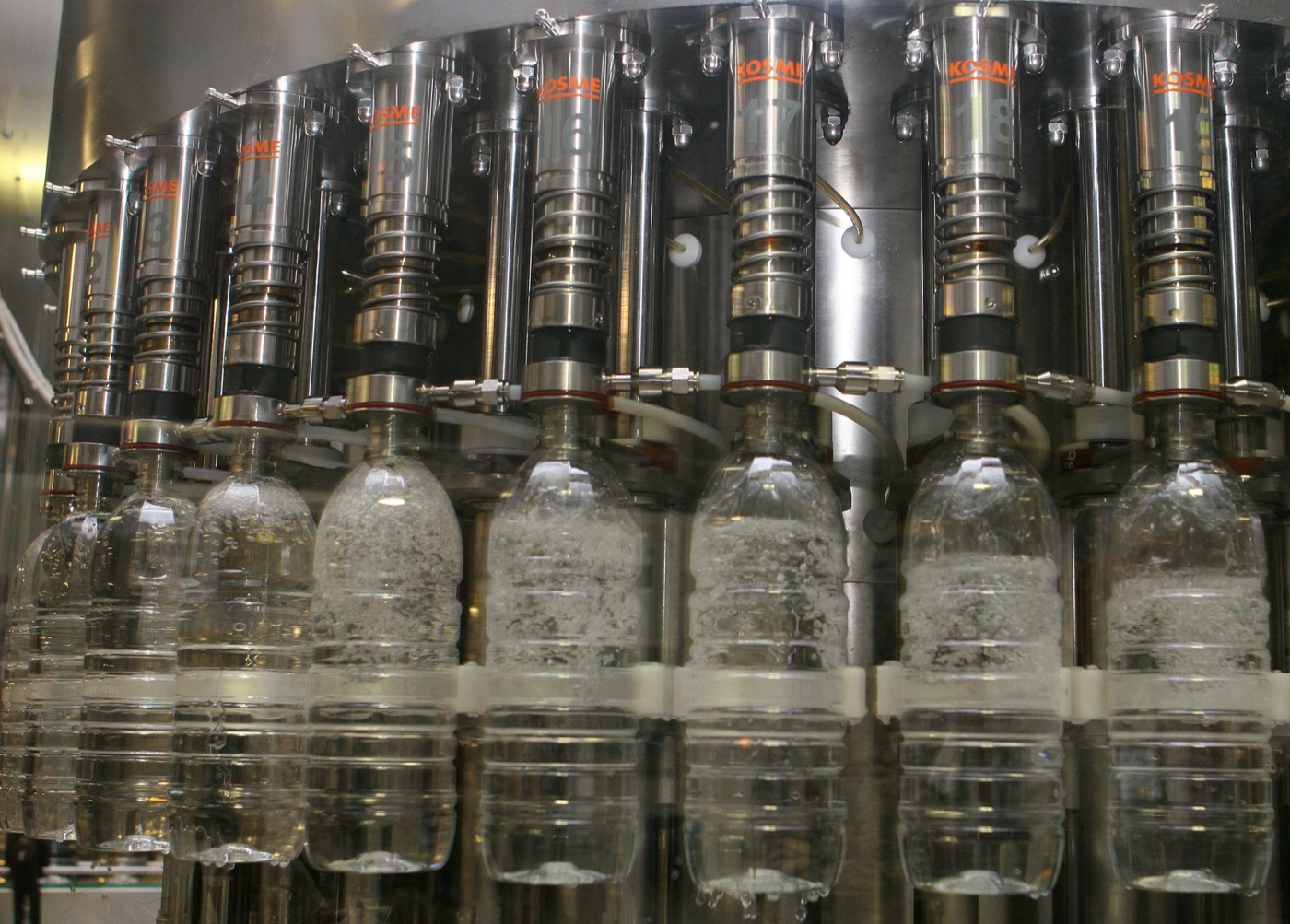
Water arrives at the plant from a borehole, a spring that has been tapped with a pipe, or, for the largest brands in the world, the municipal main, which is treated again and sold as purified water. It is filtered, usually through sand and carbon; it is passed under ultraviolet light or dosed with ozone to kill whatever it carries, because a sealed bottle of untreated water on a warm shelf grows things; and in the case of spring and mineral waters it is otherwise left as it came, because the label says so and the law in most countries requires it. The bottles are blown on site from small plastic preforms, filled, capped, labelled and stacked on pallets, and a large line does tens of thousands of bottles an hour.
The plant's own water use, beyond the product, is the rinsing of the bottles, the cleaning of the line and the cooling of the blow moulders, and the industry's own benchmark puts the total at about 1.3 litres of water for every litre sold. It is among the most efficient ratios of any beverage, because the product is the water and the process is short. The plastic is the other footprint, and the bottle's several litres of water and its carbon are counted in the bottled water article.
| A bottling plant | |
|---|---|
| Source | A spring, a borehole, or the municipal main |
| Treatment | Filtration; ultraviolet or ozone; nothing else for spring water |
| Water used per litre sold | About 1.3 litres, including the product |
| Output of a large plant | A few hundred million litres a year |
| World bottled water | About 500 billion litres a year |
| What comes back to the watershed | Almost nothing; the product leaves by truck |
Why the fights are in small towns
A few hundred million litres a year is the water of a town of a few thousand people, and it is drawn, in the case of a spring water brand, from a spring in the countryside, because that is where springs are, and the countryside is where the fight happens. The plant is usually the largest single water user in a rural township, its permit is usually granted by a state or provincial agency far away, the water leaves and the trucks stay, and the people who live over the spring see a stream fall in a dry summer and a lorry every ten minutes. Whether the stream fell because of the plant is the question every one of these disputes turns on, and it is, hydrologically, a hard one, because a spring's flow varies with the rain and a well's effect on it is a matter of modelling. The company's model says little effect. The township's says otherwise. The courts, in most cases, have found for the permit.
The same pattern has run in Ontario, in Oregon, in Florida, in the south of France, in the mountains of Pakistan and in the hills of Maharashtra, and the arguments are the same. The plant pays little or nothing for the water, because water in the ground, in most of the world's law, belongs to the landowner or to nobody. It pays for the permit, the land, the plant and the trucks. What it sells is the water.
Michigan
The case that became the emblem ran in the state that sits on the Great Lakes, a fifth of the world's fresh surface water, and it ran for twenty years. A Swiss company's American arm bought a spring in the sandy country of central Michigan in 2000, built a plant, and pumped it for a brand of spring water sold across the midwest, at a rate that a state permit set at a few hundred gallons a minute. A citizens' group sued over the effect on the stream and the wetland below the spring and won a reduction. In 2016 the company applied to raise the rate to four hundred gallons a minute, about two million litres a day, and the state granted it in 2018, over the objections of most of the eighty thousand people who wrote in, for an annual paperwork fee of two hundred dollars. The township whose zoning the company needed for a booster station refused it, the company sued, and the case went through the state's courts until 2020, when the company sold its American spring brands to a private equity firm that took the permit with them.
Two hundred dollars a year for two million litres a day became the figure the argument was about, and it was the right figure to argue about, because it named the thing the permit had done: converted a public resource into a private product at a price of nothing. The state's answer, that a farmer or a factory pumping the same water would pay the same nothing, was true and was not an answer. The farmer's water comes back. The lorry's does not.
| The Michigan case | |
|---|---|
| Source | A spring in the sandy uplands of central Michigan, tapped 2000 |
| Permit, 2018 | 400 gallons a minute, about 2 million litres a day |
| Annual fee | $200 |
| Public comments | About 80,000, almost all opposed |
| Result | Permit upheld; township zoning fought to 2020; brands sold on |
| What the water paid for | The permit paperwork |
Fiji
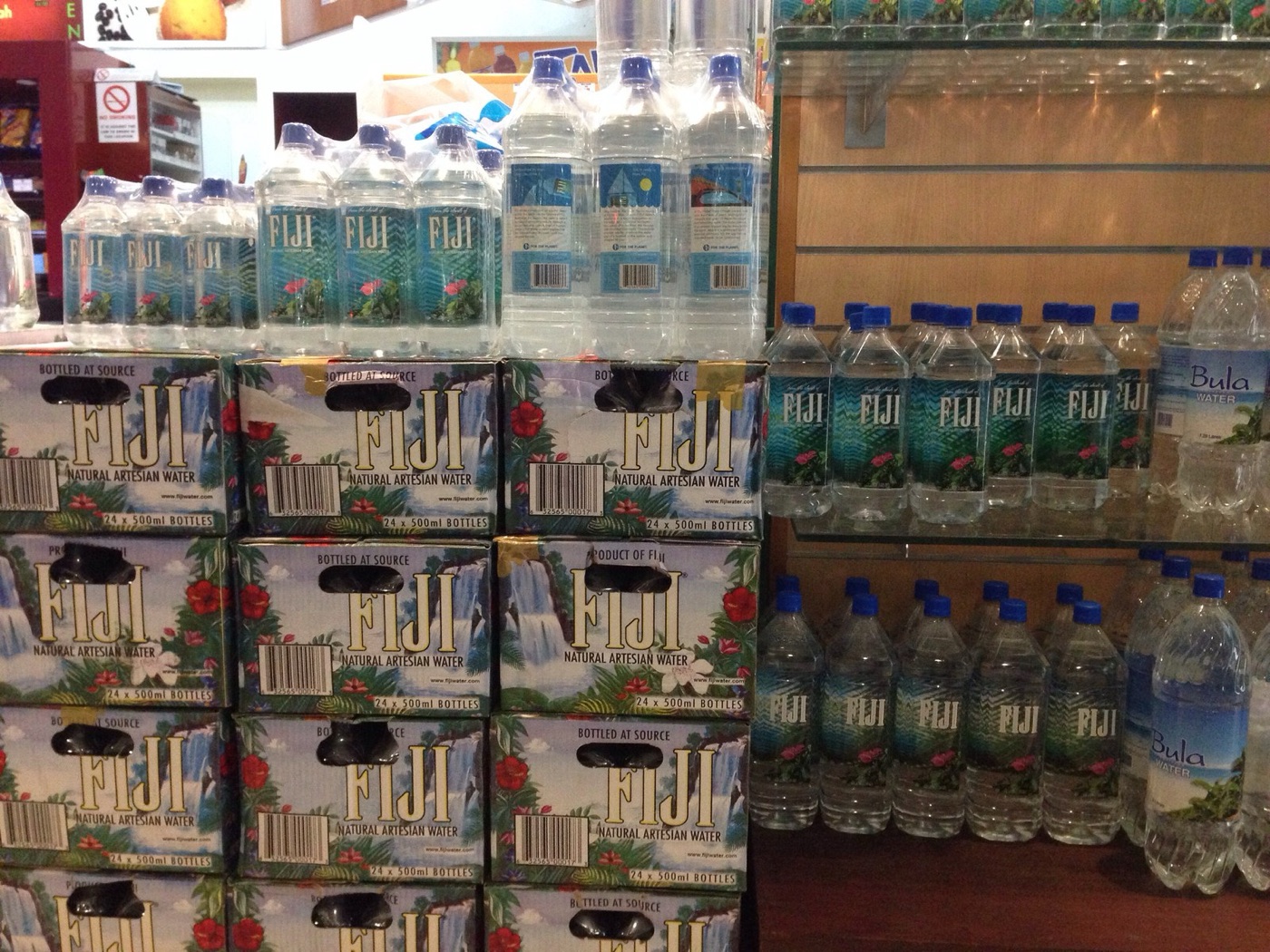
The bottle of water with the square shape and the flower on the label is pumped from an aquifer on the largest island of Fiji, at a plant owned by an American couple, and shipped nine thousand kilometres to the shelves of Los Angeles and London, which makes it the product on this site with the longest journey for the least reason. It is also the plant that showed what a country can do. In 2010 the Fijian government imposed a levy on water extracted for export, of a few cents a litre, aimed at the one company that extracted it; the company closed the plant and said it would leave; the government said the aquifer would be there when it did; and the company reopened within days and paid. The levy became a line in the country's budget. The island's villages, near the plant, drank from wells and standpipes that the plant's water, which was too valuable to sell locally, passed on its way to the port.
California
The other long case is in the mountains above San Bernardino, where a brand has been drawing spring water from a national forest since the 1920s under a federal permit that expired in 1988 and was renewed, without review, by the annual payment of the fee. The drought of 2015 put the arrangement in the newspapers, the state's water board investigated, and in 2023 it ordered the company to stop taking most of the water on the grounds that it had no right to it under state law. The company is appealing. The spring is in a forest that burned in 2020, and the creek below it, which the forest's fish and the town's wells depend on, has been the subject of the same modelling argument as the Michigan stream, with the same result: nobody can prove what the spring would do without the pipe, and the pipe has been there a century.
The purified brands
The two largest bottled water brands in the world, and most of the volume in the developing world, have no spring behind them. They are municipal water, bought from the town's main at the town's tariff, put through reverse osmosis and ozone at a plant in an industrial estate, dosed with a pinch of minerals for taste, and bottled, and their footprint is the plant's 1.3 litres plus the reverse osmosis reject, which puts them nearer two litres of town water per litre sold. In India, Indonesia, Mexico and Nigeria, where the tap is not trusted and the Lagos article on this site describes the sachet as the poor's supply, these brands and their thousands of local imitators are a parallel water utility run for profit from the public one, and the argument about them is the bottled water article's argument in its sharpest form: a city that cannot make its tap trusted pays a bottler to make the same water trusted at a hundred times the price.
The plant's other water
The plant's second product is the bottle, and the bottle is water too. A polyethylene terephthalate bottle is blown on site from a preform, and the preform was made from resin, and the resin from oil and gas at a petrochemical plant that used, for cooling and process, several litres of water for every kilogram of resin, so that the bottle carries a few litres of water of its own before it is filled. The bottled water article counts that. The plant that fills it counts only what passes through its meter, which is the industry's 1.3, and both numbers are true.
What it teaches
The bottling plant is the industry on this site with the least water and the largest argument, and the argument is the right one. Its volume is a town's, its ratio is among the best of any beverage, and its product leaves the watershed by road, paid for at the rate of the permit paperwork, which in Michigan was two hundred dollars a year. The bottled water article says the water in the bottle was never the point. The plant is where that becomes visible, one spring at a time.
Two hundred dollars a year for two million litres a day, and a lorry every ten minutes taking it away.
Sources
- Michigan Department of Environment, Great Lakes and Energy, Permit 1701 (2018): Nestlé Waters North America, White Pine Springs well, 400 gallons per minute; annual fee $200; Osceola Township litigation 2017 to 2020.
- International Bottled Water Association, Water and Energy Use Benchmarking Study (2013 onward): about 1.32 litres of water used per litre of bottled water, including the product.
- Beverage Marketing Corporation, global bottled water volumes: about 500 billion litres a year.
- Fiji Water and the Government of Fiji, 2010 export levy dispute; Yaqara aquifer, Viti Levu.
- California State Water Resources Control Board, Arrowhead (BlueTriton) Strawberry Canyon cease and desist order, 2023; US Forest Service permit review, San Bernardino National Forest.
- Photographs: opener: Kangso Yaksu Mineral Water Bottling Plant (11360552806) by Clay Gilliland (CC BY-SA) via Wikimedia Commons; inline: USMC-090428-M-2360J-002 by US Marine Corps (Public domain) via Wikimedia Commons; inline: Fiji Waters bottles at an airport by Jon Roig (CC BY) via Wikimedia Commons.