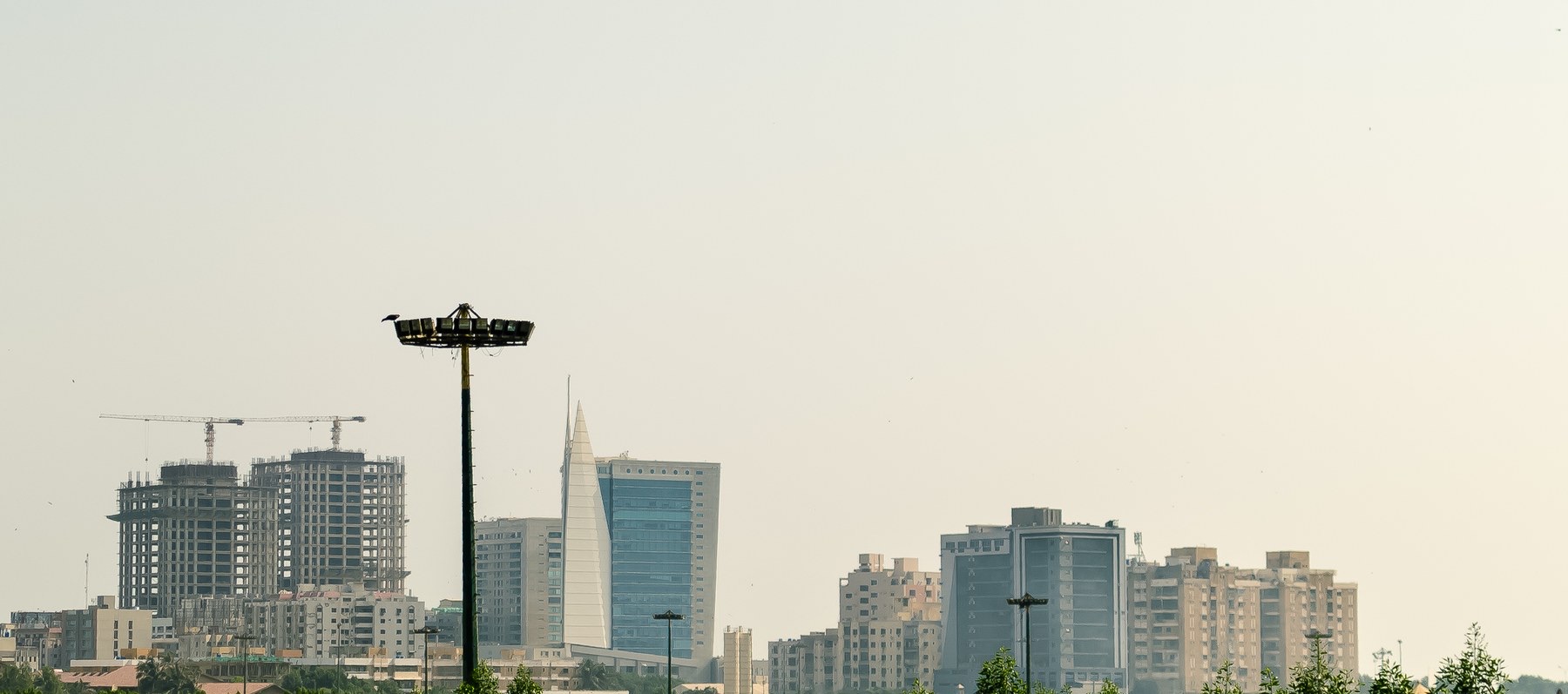
Thirsty Places: Karachi
The largest city in Pakistan gets about half the water it needs through pipes, and the other half through a business of tankers, some of them licensed and many of them not, that draws on the same supply and sells it back to the city at ten times the price. What Karachi's water is, why the pipes never caught up, how the tanker economy works, and why the fix that every engineer can draw has been on paper for thirty years.
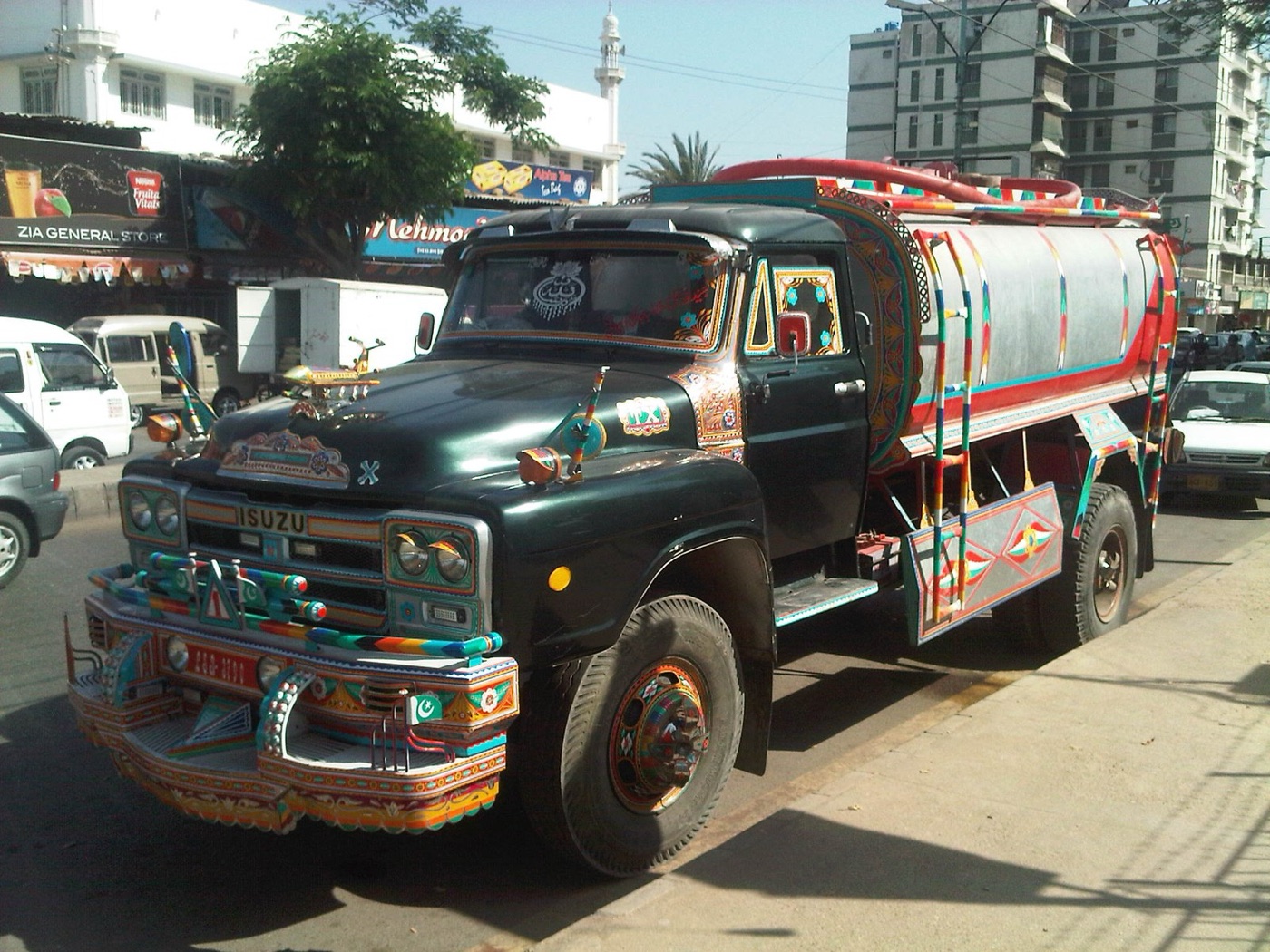
On the roads out of Karachi towards the Hub river, at any hour, the water tankers are queuing: several thousand trucks, each with a steel tank of a few thousand gallons on the back, waiting at filling points to draw water that they will drive into the city and sell. Some of the filling points are the utility's own hydrants, licensed and metered. Many are pipes tapped into the bulk mains by people who own no part of them, and the water they sell was already paid for by the city that is buying it back. Karachi's water arrives, for about half the city, this way.
This article is about the largest city in Pakistan, some twenty million people, and about a water system that has, for thirty years, delivered half of what the city needs through pipes and left the other half to a market that the city's own courts have called a mafia.
Where the water comes from
Karachi sits on the Arabian Sea at the western edge of the Indus delta, in a climate with about two hundred millimetres of rain a year, most of it in a few monsoon storms. It has no river of its own worth drinking. Its water comes from two places: the Indus, drawn from a canal system about a hundred and twenty kilometres to the east, at a point near the town of Kotri, and carried to the city through a chain of canals, pumping stations and pipes; and the Hub dam, on the river of that name to the north west, which fills in a good monsoon and runs low or dry in a poor one.
The bulk supply that reaches the city's treatment works is around 650 million gallons a day, about three million cubic metres, on the utility's own figures, against a demand it puts at 1,200 million. The gap is not new. The last large addition to the supply was completed in 2006; the city has added seven or eight million people since.
| Karachi's water | |
|---|---|
| Population | About 20 million |
| Supply | About 650 million gallons a day, roughly 3 million cubic metres |
| Demand | About 1,200 million gallons a day |
| Sources | The Indus, via canals from near Kotri; the Hub dam |
| Network losses | Around 40 percent, to leaks and theft |
| Rain | About 200 millimetres, in monsoon storms |
What happens to it
Of the water that reaches the city, the utility loses about forty percent to leaks and theft before it reaches a customer, which is the leaks article's worst rows. The network was laid, in its core, before independence, and extended in bursts as the city grew, and it has never been mapped to the standard that would let its losses be found. Much of the city receives water on a rota, a few hours a day or a few days a week, which as the leaks article explains is the worst thing that can be done to a pipe network, because the empty pipes suck the sewage of the trench in through the same cracks the water leaks out of. Karachi's tap water, where it arrives, is often not safe to drink, and the households that can afford it filter or boil it or buy it in bottles.
The settlements where a large share of the city lives, the katchi abadis that grew on the desert around the planned city as migrants arrived from the rest of the country, were never connected at all, or were connected by their own residents to whatever main ran nearest. The Orangi Pilot Project, the best known of the city's self help schemes, has laid sewers and water lines through hundreds of lanes since 1980 with the residents' own money and labour, and the utility has, in the better cases, accepted the connections. In the worse cases the lanes buy from tankers.
The tankers
The tanker is the city's second utility, and it is a business of some size. Estimates run to several thousand trucks, making tens of thousands of trips a day, and selling water at prices that vary with the district, the season and the desperation of the buyer, from a few hundred rupees a load in a lane with a nearby hydrant to several thousand in a district with none, which per litre is ten to twenty times what the utility charges for piped water. Apartment blocks contract for weekly deliveries. Factories run on tankers because the mains cannot supply them. Hospitals keep contracts. In the summer of a dry year, when the Hub dam is empty and the Indus canals are cut for maintenance, the whole city runs on them and the price doubles.
The trucks fill at hydrants. The utility runs a small number of licensed ones, metered, from which it sells bulk water to the tanker operators at a tariff, and that part of the market is legal and, in its way, useful: it moves water to the districts the pipes cannot reach. The larger part is not. Investigations by the utility, the provincial government and, from 2016, a commission appointed by the Supreme Court of Pakistan found hundreds of illegal hydrants tapped into the bulk mains and the trunk lines, drawing water that was never paid for, protected by the people who were supposed to stop them, and selling it into the same market. The commission's reports named officials, contractors and political parties, closed hydrants that reopened within weeks, and estimated the theft at a substantial share of the city's supply. The word the city's press has used for the arrangement, for two decades, is mafia, and the court's own reports did not dispute it.
| The tanker economy | |
|---|---|
| Trucks | Several thousand |
| Share of the city's water delivered by tanker | Roughly a third to a half, higher in summer |
| Legal hydrants | A few, metered, run by the utility |
| Illegal hydrants | Hundreds, found by the court's commission, tapped into the mains |
| Price per litre against the piped tariff | Ten to twenty times |
| Who pays most | The settlements without pipes, and everyone in a dry year |
The sea and the sewage
Karachi has, in addition to too little water, a great deal of it in the wrong places. The city's sewage, from twenty million people, goes almost entirely untreated into the Lyari and Malir rivers and through them into the harbour and the sea, and the three treatment plants the city built decades ago run at a fraction of their capacity or not at all. The harbour, where the country's navy and fishing fleet are based, is among the most polluted waters in South Asia, and the mangroves of the Indus delta that once fringed it are dead or dying from a mixture of the sewage and the shortage of fresh river water, which the upstream dams and canals of the Indus have taken. A treatment programme, S3, has been under construction alongside K-IV for as long, with the same history. The city has looked, too, at desalination, and a handful of small plants supply industrial estates and a housing scheme; the sea is at hand, the electricity is not, and the utility that cannot collect a tariff for river water is not the customer a desalination plant needs. The water Karachi discards would, treated, supply its industry, which is the thing every reuse city in this series found first.
The plan that has been drawn since 1990
Everyone who has studied Karachi's water has arrived at the same list. A new bulk supply from the Indus, to close the gap between supply and demand. A repaired and metered network, to stop the forty percent going into the ground and the tankers. A tariff that covers the cost, so that the utility can run the pipes rather than depend on a provincial grant that arrives late. And an end to the hydrants, which follows from the rest, because a tanker business exists in the gap between what the pipes deliver and what the city needs, and closes when the gap does.
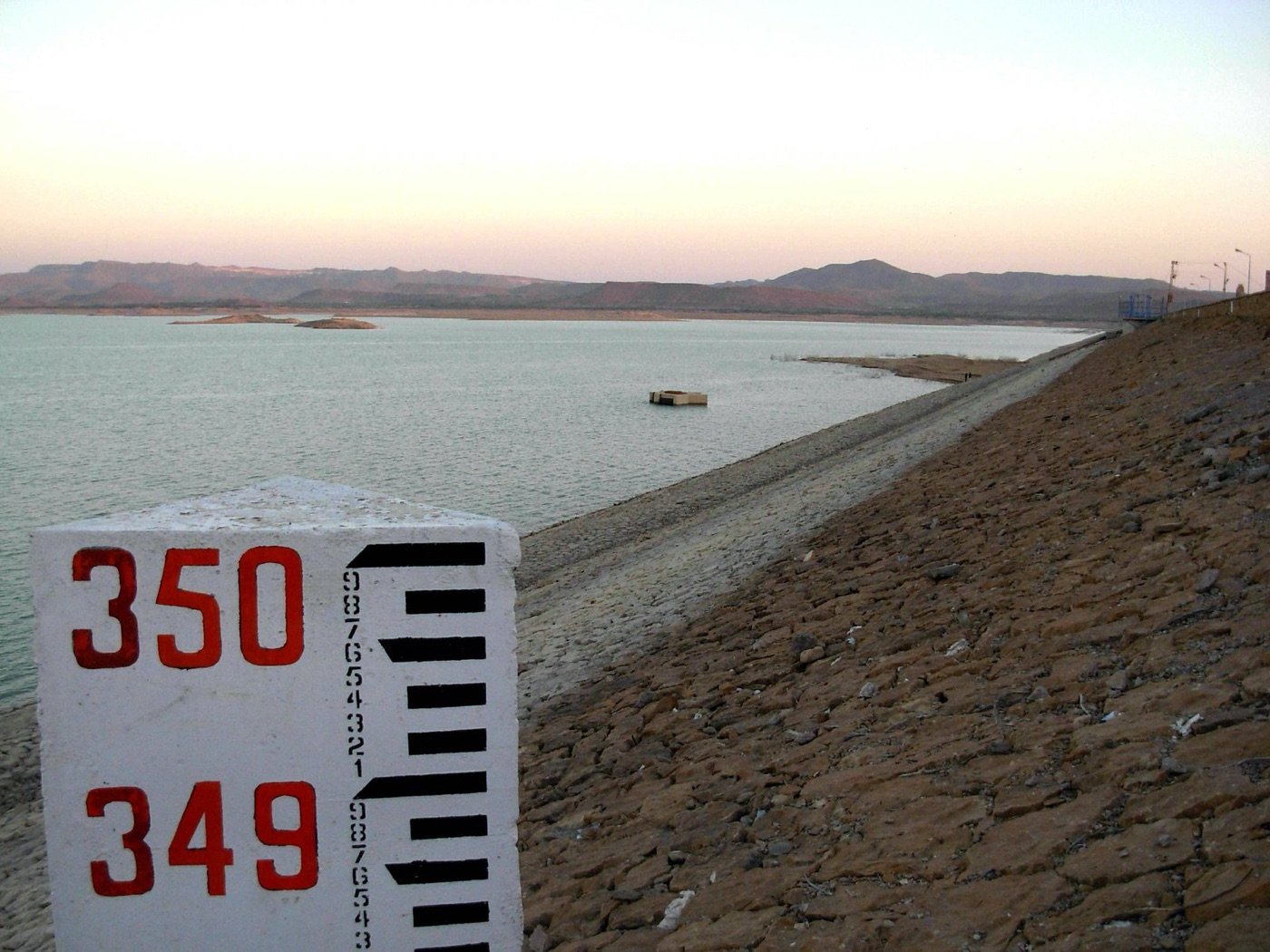
The bulk supply has a name, K4, a project to bring 650 million gallons a day more from the Indus through a new canal, and it has been designed since the 1990s, approved in 2007, started in 2016, halted in 2018 with its alignment found to be wrong, redesigned, restarted, and, at the last announcement, due in the late 2020s at a cost several times the original. Each delay has a reason: the money, the land, the contractor, the alignment, the argument between the province and the federal government about who pays. Behind the reasons is the fact that the project would, when finished, end a business worth a great deal to people close to the decisions.
The network has had less attention than the canal, because a canal is a project that can be photographed and a repaired main under a road is not. The tariff is the lowest of any large city in the region and has not been raised in years, because raising it is unpopular and the utility's losses mean that most customers would be paying more for water that still does not arrive.
What it teaches
Karachi is the city in this series where the water problem is least about water. The Indus has enough for the city; the canal to carry more of it has been designed for thirty years; the leaks are of a kind that Tokyo fixed in a decade. What stands between the city and its supply is a market that profits from the shortage and reaches into the institutions that would have to end it, and no pumping station solves that. The people who pay are the ones in the lanes at the end of the pipes, buying back at twenty times the price the water that was meant for them.
Half the city's water through the pipes, half through the trucks, and a canal on paper since 1990.
Sources
- Karachi Water and Sewerage Corporation, supply figures: about 650 million gallons a day against a demand of 1,200 million.
- Water and Sanitation Program, World Bank (2016). Karachi water and sewerage: a diagnostic. Network losses, tanker markets and the K4 project.
- Supreme Court of Pakistan, Water Commission (Justice Amir Hani Muslim), reports 2017 to 2019 on Karachi's illegal hydrants and water theft.
- Orangi Pilot Project, documentation of community sewerage and water in Karachi's informal settlements since 1980.
- Reporting by Dawn and Reuters on the K4 bulk water project delays and cost overruns, 2016 to 2024.
- Photographs: opener: Karachi Clifton Skyline by Ahmad Haq (CC BY-SA) via Wikimedia Commons; inline: Water tanker karachi by کراچی (CC BY-SA) via Wikimedia Commons; inline: Hub Dam Karachi Pakistan - panoramio - Haddid Uddin (3) by Haddid Uddin (CC BY) via Wikimedia Commons.