Thirsty Places: Kathmandu
A valley of four million people at the foot of the Himalaya, in a country with more water per head than almost any on Earth, where the taps run for a few hours a week, the tankers queue at dawn, and the tunnel that was meant to fix it took twenty three years to dig and was blocked by a flood a month after it opened. Where Kathmandu's water comes from, why the valley is short, what the stone spouts and the wells tell about the ground beneath, what Melamchi was and what happened to it, and why a city under the largest snowpack on Earth drinks from a tanker.
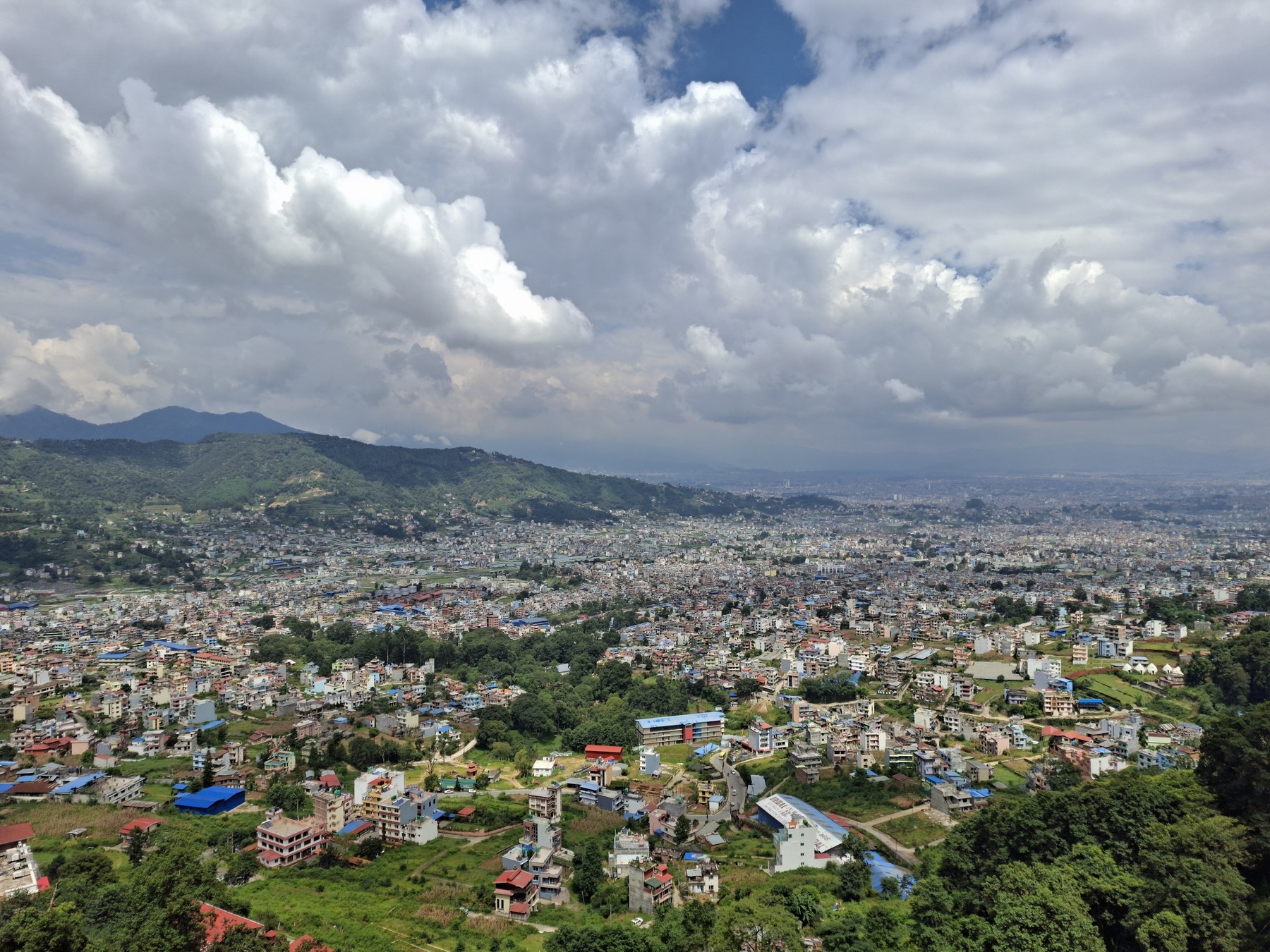
Nepal has more fresh water per person than almost any country on Earth, and its capital gets water a few hours a week. The Kathmandu valley is a bowl of hills at 1,400 metres with the Himalaya on its northern horizon, and it holds four million people on the bed of a lake that drained in the Pleistocene, drinking from rivers that are small, from springs that are drying, from wells that are falling, and from a fleet of tankers that queue at the wells before dawn and sell what they pump by the litre. The tunnel that was meant to end this took twenty three years to dig and was blocked by a flood a month after it opened.
This article is about why a city under the largest snowpack on Earth is short of water, what the valley's stone spouts and its wells say about the ground, what Melamchi was and what happened to it, and what a tanker costs.
The valley
The valley is drained by the Bagmati and its tributaries, rivers that rise in the hills on its rim, not in the Himalaya, and that carry, in the dry months from October to May, a few cubic metres a second between them, and below the city, the city's sewage. The snow of the high mountains drains north and east into other valleys and does not reach Kathmandu. The utility draws from the rivers above the city, from a few dozen deep wells, and from springs on the valley's rim, and its supply is about 150 million litres a day in the dry season against a demand it puts at about 450, so that most of the city's pipes carry water for a few hours on a few days a week and the rest of the demand is met by whatever a household can find.
The rain comes in the monsoon, from June to September, about 1,400 millimetres of it, and it floods the low districts of the valley and runs off through the Bagmati's gorge at the southern end, taking the sewage with it. The problem is storage, and the valley has almost none.
| Kathmandu's water | |
|---|---|
| People | About 4 million in the valley |
| Demand | About 450 million litres a day |
| Utility supply | About 150 in the dry season; about 200 in the wet |
| Sources | Small rivers on the valley rim, deep wells, springs, and since 2021 the Melamchi tunnel |
| Non revenue water | About 40 percent |
| The gap | Private wells, most unlicensed, and about 500 tankers |
The spouts and the wells
The old cities of the valley, Kathmandu, Patan and Bhaktapur, were watered for a thousand years by stone spouts, dhunge dhara, sunk in courtyards below street level and fed by channels and brick lined canals from ponds on the valley's edge that collected the monsoon and released it slowly through the shallow aquifer. There were several hundred, they were the city's public water until the 1900s, and about half have dried in the last thirty years, because the ponds have been built over, the channels broken by construction, and the shallow aquifer they drew on pulled down by the deep wells around them. The ones that still run are the places where the poor of the old cities queue with jerry cans.
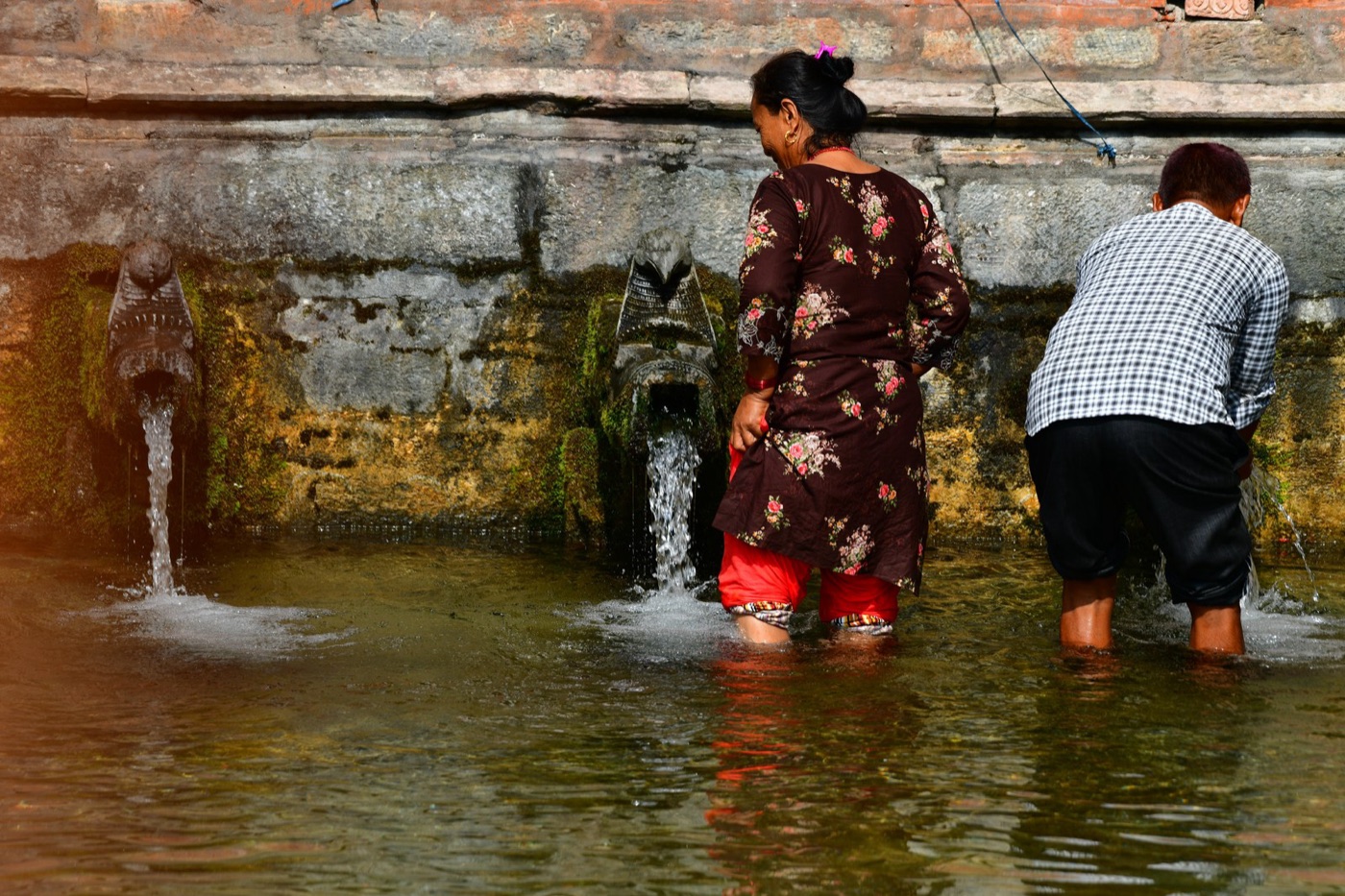
The deep wells are the modern version, and they are the groundwater article's story on this site at a valley's scale. The utility's wells, and the thousands of private ones sunk by hotels, hospitals, factories and apartment blocks through the 1990s and 2000s, draw from a deep aquifer under the lake sediments that fills slowly through the clay above it, and the water table in the central valley has fallen by fifteen to twenty metres in three decades. The tankers draw from wells on the valley's edge, where the aquifer is shallower and the water is closer, and the villages there have watched their own wells fall as the tankers' pumps run through the night.
| The valley's own water | |
|---|---|
| Stone spouts | Several hundred, fed by ponds and canals; about half dry |
| Shallow aquifer | Drawn down by deep wells and cut off by building |
| Deep aquifer | Water table down 15 to 20 metres since the 1990s |
| Private wells | Thousands, mostly unlicensed |
| Tanker wells | On the valley's edge, drawn overnight |
Melamchi
The Melamchi is a river in the next valley to the north east, fed by the snow the Kathmandu valley never gets, and the plan to bring it through the hills was drawn in the 1980s: a weir on the river, a tunnel twenty six kilometres through the ridge, and a treatment works at Sundarijal on the city's edge, delivering 170 million litres a day, which would more than double the utility's dry season supply. The development banks financed it in 1998. Then the Maoist insurgency closed the site for years, the first contractor left, the second went bankrupt, the earthquake of 2015 cracked the tunnel and the works, the third contractor left in a dispute over payment in 2018, and a fourth finished the tunnel in 2020. Water reached the city in March 2021, twenty three years after the loan and a generation after the design.
In June 2021 a monsoon cloudburst on the Melamchi's upper catchment sent a debris flow down the river that buried the intake, the weir and the access road under metres of boulders and mud, killed several people in the villages along it, and cut the tunnel off from the river. It has since run for a few months each dry season, when the river is low enough to clear a channel to the intake, and stopped each monsoon when the debris moves again, while the engineers argue over a new intake further upstream and the banks over who pays for it. The tunnel that was the answer for forty years delivers, in a good year, half of what it was built for, in the months the valley needs it least.
| Melamchi | |
|---|---|
| Designed | 1980s |
| Financed | 1998 |
| Tunnel | 26.5 kilometres |
| Capacity | 170 million litres a day |
| Finished | 2021, after insurgency, earthquake and three contractors |
| June 2021 | Debris flow buried the intake |
| Since | Runs in the dry months; stopped each monsoon |
The tanker
The gap between the utility and the demand is filled by tankers: about five hundred of them, drawing from wells on the valley's edge and selling a five thousand litre load to apartment blocks, hotels and households at a price that varies with the season and, in the dry months, doubles. A household that buys a load a week is paying, per litre, several times the utility's tariff, and the water is untreated, tested by nobody and, in the surveys that have sampled it, contaminated in a large share of loads with the bacteria of the wells it came from. Bottled water in twenty litre jars is the other supply, sold from every corner shop, and it is the Lagos sachet at Himalayan altitude. The valley's water economy, in the absence of the pipe, is a private one run from the back of a lorry, which is the pattern of every city on this site where the utility supplies a third of the need.
The river below
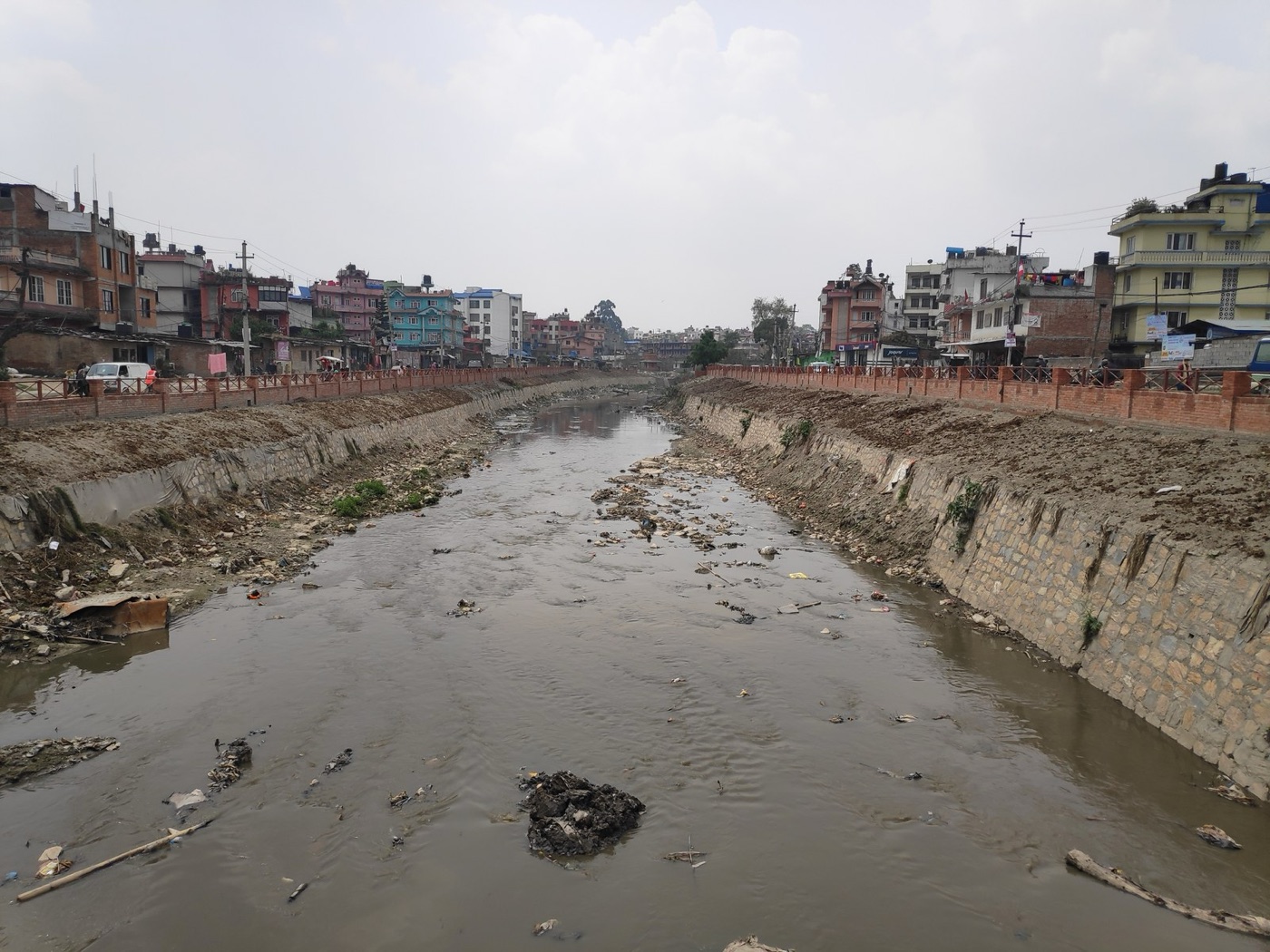
The Bagmati leaves the valley as a sewer. The city has sewers for a share of its people and treatment works for almost none of them, and the river through the old city, past the temples of Pashupatinath where the dead are cremated on its bank, is black in the dry season and carries the city's waste to the plains below. The campaign to clean it, which has run every Saturday for a decade with volunteers pulling plastic from the banks, has not been matched by the treatment works, of which the first at any scale has been under construction for most of that time. The river that could be the city's water, stored behind a dam on the valley rim, is the river the city has made undrinkable, which is the Dhaka and Lahore arithmetic in a mountain valley.
The monsoon that leaves
The valley gets nearly a metre and a half of rain, most of it in four months, and keeps almost none. The lake bed the city sits on is clay for much of its depth, so the rain that falls on the paved valley runs off rather than soaking in, and the ponds and the rice terraces that once held it through the dry season have been built over in the thirty years in which the valley's population tripled. The monsoon floods the low districts along the Bagmati and the Bishnumati every year, the floods carry the sewage and the plastic, and by December the rivers are back to their trickle and the tankers are back at the wells. The recharge that the Bangalore and Chennai articles on this site describe, sending the roof's rain into the ground on purpose, has been made a rule in the valley and is fitted on a few hundred buildings out of a few hundred thousand. The reservoir on the valley rim that would hold the monsoon for the dry season has been in the plans as long as Melamchi and has no financier.
What it teaches
Kathmandu is the city on this site that shows that a country's water and a city's are different things. Nepal has the snow and the rivers; the valley has a small catchment, no storage, a falling aquifer and a tunnel that took a generation and was buried in a month. The stone spouts that watered the old cities dried when the ponds were built over, the wells that replaced them are being emptied, and the tankers that fill the gap sell the valley's edge to its centre by the litre. The tunnel will be repaired. The valley will still have a monsoon it cannot keep and a dry season it cannot fill.
Twenty six kilometres of tunnel, twenty three years to dig it, and a flood that buried the intake a month after the water came.
Sources
- Kathmandu Upatyaka Khanepani Limited (KUKL), annual reports: demand about 450 million litres a day; supply about 150 in the dry season and 200 in the wet; non revenue water about 40 percent.
- Asian Development Bank, Melamchi Water Supply Project completion and evaluation reports (2021 to 2023): 26.5 kilometre tunnel; 170 million litres a day; the June 2021 flood damage.
- Shrestha, S. et al. (2017). Groundwater environment in Kathmandu Valley. In Groundwater Environment in Asian Cities. Elsevier. Water table decline of 15 to 20 metres in the central valley.
- UN Habitat and NGO Forum, Water Movements in Patan: the stone spouts (dhunge dhara) of the valley and their decline.
- Kathmandu Valley Water Supply Management Board, tanker water supply surveys: about 500 tankers; prices per 5,000 litre load.
- Photographs: opener: Panoramic view of Kathmandu Valley from the Chandragiri Cable Car (12) by Saddam Hussain Ansari (CC BY) via Wikimedia Commons; inline: Dhunge Dhara Stone Spout Godawari Kunda Godawari Lalitpur Nepal Rajesh DhunganaJPG (3) by Rajesh Dhungana (CC BY-SA) via Wikimedia Commons; inline: Bagmati River 1 by Gaurav Dhwaj Khadka (CC BY-SA) via Wikimedia Commons.