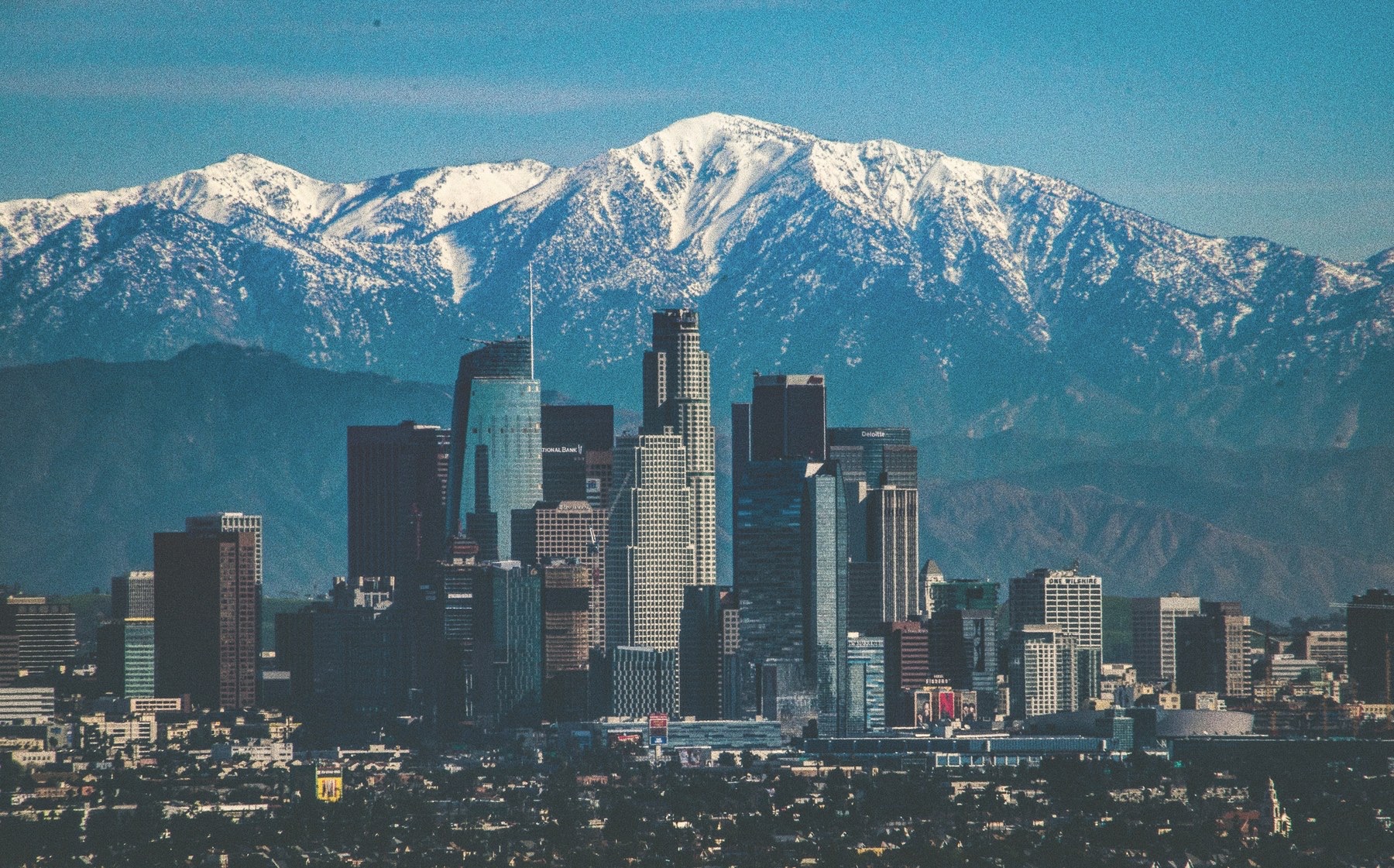
Thirsty Places: Los Angeles
A city of four million in a semi desert that took a river from a valley three hundred and seventy five kilometres away in 1913, drained a lake into a dust bowl, then reached for the Colorado and the rivers of northern California, and now plans to make its own water from what it flushes. Where Los Angeles's water comes from and how it was taken, what the Owens valley became, what the Colorado's shrinking means for a city at the end of the pipe, how the city cut its use by a third while growing by a million, and what it means to recycle everything.
Los Angeles is a city of four million people, and a region of eighteen, on a coastal plain that gets about 380 millimetres of rain a year and has a river that the city paved into a concrete channel after a flood in 1938 and that is dry for most of the year. It is on this site because it is the clearest case in the world of a city built on water from somewhere else: it took a river from a valley three hundred and seventy five kilometres away in 1913, a share of the Colorado in 1941, and the rivers of northern California in 1972, and every one of those sources is now shrinking, so that the city that has lived for a century on other people's water is planning, for the first time, to make its own.
This article is about how the water was taken and what it did to the places it came from, what the shrinking of the Colorado means for a city at the end of the pipe, how the city cut its use by a third while growing by a million, and what it means to recycle everything.
The Owens valley
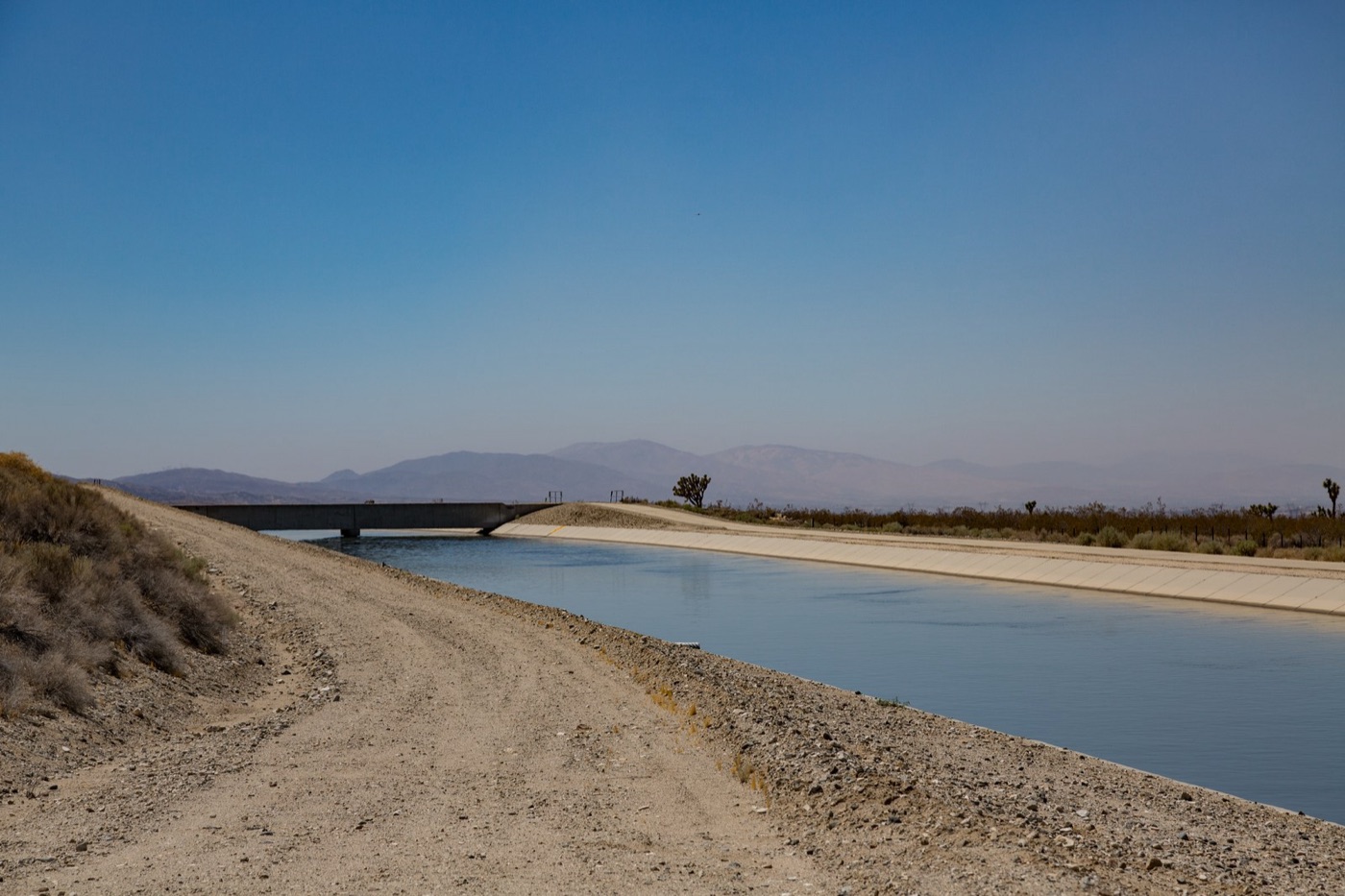
In 1904 the superintendent of the city's water department, William Mulholland, and a former mayor, Fred Eaton, went to the Owens valley, a farming valley on the dry side of the Sierra Nevada two hundred miles to the north, and Eaton began buying land and water rights along the Owens river, telling the sellers he was buying for a federal irrigation project. He was buying for the city. By 1907 the city had the rights, the federal project was cancelled, and the aqueduct, three hundred and seventy five kilometres of channel, tunnel and pipe running by gravity from the valley to the San Fernando valley on the city's edge, was built in five years and opened in November 1913 with Mulholland's five word speech: there it is, take it. The land in the San Fernando valley, which the aqueduct's water made worth farming and then worth building on, had been bought in advance by a syndicate that included the men who had promoted the aqueduct, which is the part of the story that the film got right.
The Owens valley's farms went dry, its people fought, dynamited the aqueduct in the 1920s and lost, and by 1926 Owens Lake, a hundred square miles of shallow water at the valley's end, had been drained to a salt flat. The city bought the rest of the valley through the following decades and owns most of it still, which is why it is empty.
| Los Angeles's water | |
|---|---|
| People | About 4 million in the city; 18 million in the region |
| Rain | About 380 millimetres a year, in winter |
| LA Aqueduct, 1913 | From the Owens valley and Mono basin, 375 kilometres; about a third of supply in an average year |
| Colorado River Aqueduct, 1941 | From Lake Havasu, 390 kilometres, through the regional wholesaler |
| State Water Project, 1972 | From the Sacramento delta, 700 kilometres, over the Tehachapi mountains |
| Local groundwater and recycled | About a fifth, rising |
The dust
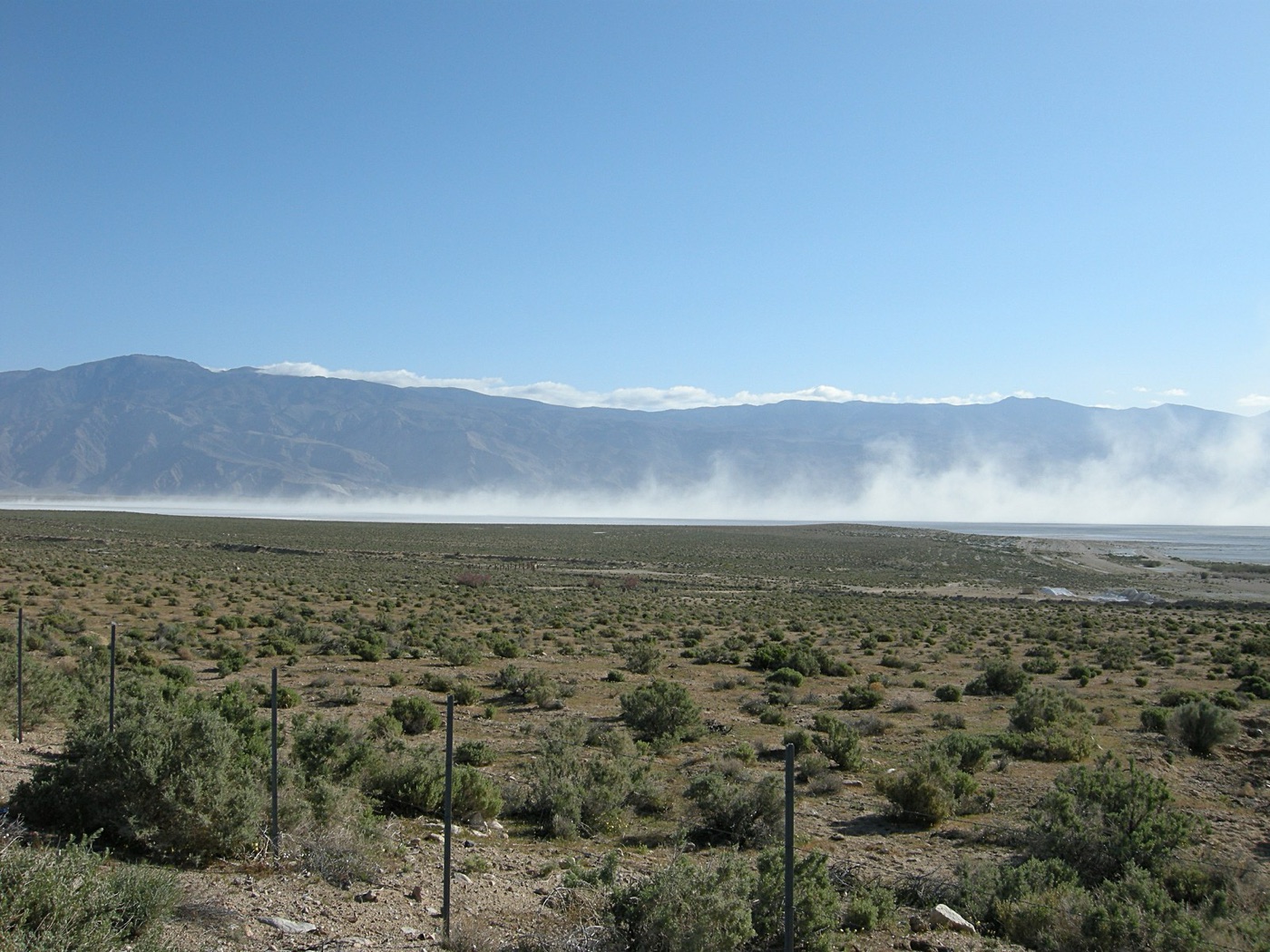
The salt flat that had been Owens Lake became, over the following seventy years, the largest single source of dust pollution in the United States. Its bed of fine alkaline sediment, laced with arsenic, lifted in the valley's winds into storms that closed the road, put the towns along it over every air quality limit, and reached the city that had made it. In 1997 the air quality district ordered the city to control the dust, and the city has since spent more than two billion dollars flooding parts of the lakebed in shallow ponds, planting salt grass on other parts, and spreading gravel on the rest, at a cost in water of about a hundred million cubic metres a year, which is more than the aqueduct now takes from the valley in a dry year. The city that drained a lake to grow now waters its bed to keep the dust down, which is the most expensive lesson in the history of American water and it was learned in the same place it was taught.
Mono Lake, further north, which the aqueduct's second stage began draining in 1941, was saved by a court in 1983 that ruled the state held the lake in trust for the public and the city's diversions had to stop at a level that kept it alive. The city lost a sixth of its aqueduct supply and the lake has been slowly rising since.
The Colorado
The region's second source is the Colorado, delivered through the regional wholesaler's aqueduct from Lake Havasu on the Arizona border, and it is the river that the Las Vegas and Phoenix articles on this site describe as allocated, in 1922, on the basis of a wet decade, to seven states and Mexico in quantities that add up to more than it has carried in any year since. The reservoirs that hold it, Mead and Powell, fell in the drought of 2000 to 2023 to a third of their capacity, the federal government has cut the states' allocations twice, and the negotiations over the rules that take effect in 2026 are about how much less each state will get and in what order. California's share is the largest and, under the law of the river, the last to be cut, which is why Arizona's farms went dry before Los Angeles's lawns, and why Arizona's negotiators are asking for a different order. A city at the end of the longest pipe is a city with the least control over what comes through it.
| Where the water is going | |
|---|---|
| Owens valley | Diversions cut by courts and dust orders; more water spent on the lakebed than taken |
| Mono basin | Diversions capped since 1994 to keep the lake alive |
| Colorado | Reservoirs at a third; allocations cut; new rules from 2026 |
| Sacramento delta | Pumping limited to protect fish; supply varies from nearly nothing to full |
| Local aquifer | Contaminated in part by the aerospace industry; being cleaned and refilled |
Using less
The city's use of water peaked in 1990 and has fallen by about a third since, while the population grew by a million. The fall came from the fixtures, the tariff, the drought campaigns of 2015 and 2022, and from the lawns: the city paid households to tear out turf, restricted sprinklers to two days a week and then, in 2022, to one, and the front gardens of the San Fernando valley are gravel and succulents where they were grass. A resident of the city now uses about four hundred litres a day, which is high by the standards of this site and half of what it was, and the region's per capita figure is among the lowest of any American city in a dry climate. The city has grown into its water by using less of it, which is the Melbourne and Cape Town pattern on a larger scale and over a longer time.
Making its own
The city's plan for the next century is to import less and make more. The largest sewage works on the coast, at Hyperion by the airport, treats about 850 million litres a day and has, since 1950, discharged it to the sea through a pipe eight kilometres out. The plan is to rebuild it, by 2035, to purify all of that to drinking standard, by the membranes, reverse osmosis and ultraviolet that the Orange County and Singapore articles on this site describe, and to put it into the aquifer under the San Fernando valley and the pipes that come out of it, which would give the city about a third of its supply from within its own borders for the first time since 1913. Alongside it, the city is capturing the stormwater that its concrete channels were built to send to the sea, in basins that let it soak into the aquifer, and cleaning the aquifer of the solvents the aerospace industry left in it. The Colorado will still come through the pipe. The city will need less of it.
The river in the channel
The Los Angeles river runs for eighty kilometres through the middle of the region in a concrete channel that the Army engineers built after the flood of 1938 drowned a hundred people, and for most of the year it carries a few inches of treated effluent from the works upstream and, in a storm, a torrent that reaches the sea in hours. The channel was built to get the rain out of the city as fast as possible, and it does, sending to the ocean each winter a volume of stormwater that the city's engineers now put at enough, if captured, for a tenth of the region's use. The plan to unpave parts of it, to slow the water and let it soak, has been argued since the 1980s and begun in a few reaches, and the basins and the wetlands the county has dug beside it are the stormwater capture that the recycling plan depends on. The river that the city buried to make room for itself is the source it is now trying to dig up.
What it teaches
Los Angeles is the city on this site that took its water furthest and paid for it longest. The valley it drained became a dust bowl it now waters, the lake it began to drain was saved by a court, the river it shares is shrinking under seven states, and the delta it pumps is protected for fish. The city's answer, a century after Mulholland, is to recycle what it flushes and catch what falls on it, which is the answer every dry city on this site reaches when the pipes from elsewhere run short. It will still be a city of four million in a semi desert, and it will still drink from the Colorado. It will simply, at last, drink some of its own.
Three hundred and seventy five kilometres of aqueduct, a lake turned to dust, and a sewage works being rebuilt to make a third of the city's water.
Sources
- Los Angeles Department of Water and Power (LADWP), Urban Water Management Plan 2020 and annual water supply reports: about 40 percent imported through the Metropolitan Water District, about 35 percent the LA Aqueduct in an average year, the rest groundwater and recycled water.
- Reisner, M. (1986). Cadillac Desert. Viking. The Owens valley acquisition and the aqueduct of 1913.
- Great Basin Unified Air Pollution Control District, Owens Lake dust control: about 100 million cubic metres of water a year applied; the largest dust source in the United States before 2000.
- US Bureau of Reclamation, Colorado River Basin: Lake Mead and Lake Powell operations; the 2026 operating guidelines negotiations.
- City of Los Angeles, Hyperion 2035 programme: full recycling of about 850 million litres a day of treated wastewater to potable use.
- Photographs: opener: Los Angeles, Winter 2016 by salewskia (CC BY-SA) via Wikimedia Commons; inline: Los Angeles Aqueduct (29081069995) by Tony Webster (CC BY-SA) via Wikimedia Commons; inline: Blowing-alkali-dust-Owens-Lake by Richard Ellis (CC BY) via Wikimedia Commons.