Thirsty Places: Lahore
A city of thirteen million on a river that was given to another country in 1960 and now carries the city's sewage, which drinks every litre it uses from wells and has watched the water table fall by a metre a year for three decades. Where Lahore's water comes from, what happened to the Ravi, why a city on the largest irrigation system on Earth has no surface water to drink, what is in the wells now, and what the plan to build a new city on the riverbed has to do with any of it.
Lahore is a city of thirteen million people built on the bank of a river that no longer reaches it as a river, and it drinks entirely from the ground. The utility that supplies it runs more than five hundred deep wells sunk into the sand and silt of the Punjab plain, and private wells by the tens of thousands supplement them, and the water table under the city, which was a few metres below the surface when the wells were first sunk in the 1960s, has been falling by half a metre to a metre a year for three decades and is now forty to fifty metres down under the centre. The city sits on the largest irrigation system in the world, the canals of the Punjab, and has no surface water it can drink.
This article is about why, which is a story about a treaty, a river turned into a drain, an aquifer being spent, and a plan to build a new city where the river was.
The river that was given away
The Ravi rises in the Indian Himalaya and flows south west into Pakistan past Lahore, and until 1960 it was the city's river: the Mughal gardens were laid out on its bank, the old city's walls faced it, and its floods and its fish were part of the city's year. The Indus Waters Treaty, signed that year to settle the partition of the Punjab's rivers, gave the three eastern rivers, the Ravi, the Beas and the Sutlej, to India, and the three western ones to Pakistan, and India has since built the dams and barrages that take the Ravi's flow for its own canals before the border. What crosses into Pakistan, for most of the year, is a trickle, and what reaches Lahore is that trickle plus the city's own discharge.
The treaty is the most durable agreement the two countries have, and it has survived three wars. It also left Lahore, whose water had never depended on the river directly, with a channel beside it that carries, in the dry season, almost nothing but what the city puts in.
| Lahore's water | |
|---|---|
| People | About 13 million |
| Source | Groundwater, entirely; about 550 utility wells and tens of thousands of private ones |
| Supply | About 2 billion litres a day |
| Water table | Falling 0.5 to 1 metre a year; 40 to 50 metres down in the centre |
| The Ravi | Allocated to India in 1960; carries the city's sewage below the city |
| Surface water treatment | None, as yet |
The river as a drain
The Ravi below Lahore is, by the surveys that have measured it, among the most polluted stretches of river in Asia. The city has sewers for most of its centre and treatment works for almost none of it, so that the sewage of thirteen million people goes to the river through a dozen outfalls untreated, along with the effluent of the tanneries, the textile mills, the paper plants and the chemical works of the industrial districts along the road to Sheikhupura, and the river in the dry season has no oxygen in it, the black colour and the smell that the Dhaka article on this site describes for the Buriganga, and a fish population of nothing. In the monsoon the floods from India flush it, and the sewage and the floods together spread over the plain.
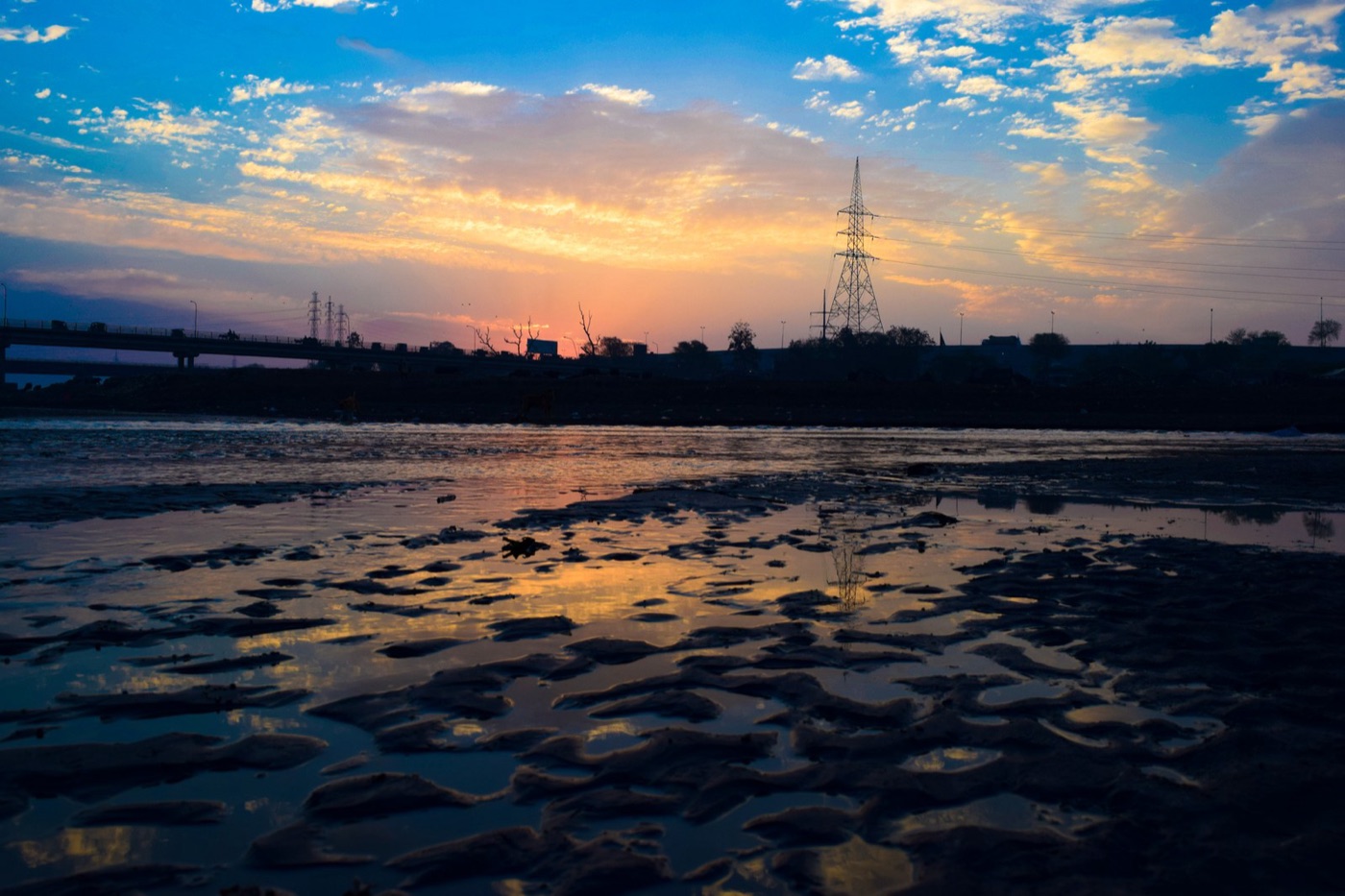
A city that had a river to treat would build a works on it. Lahore has a drain to treat, and the utility's calculation for fifty years has been that the wells were cleaner and cheaper. That calculation is now changing at both ends.
What is in the wells
The aquifer under Lahore is the alluvium of the Indus plain, hundreds of metres of sand and silt laid down by the rivers, and it is a large and good aquifer that the city has been drawing on faster than the plain's rain and the leakage of the canals refill it. The fall of the water table is the plain arithmetic of the groundwater article on this site, and it has two consequences beyond the pumping cost. The first is the Ravi itself, which seeps into the ground along its bed, so that the wells nearest the river draw water that was, a few years earlier, the city's sewage, filtered through sand but carrying what sand does not stop. The second is arsenic. The sediments of the Indus plain, like those of the Bengal delta, carry arsenic that dissolves into groundwater under the conditions that heavy pumping creates, and surveys since the 2000s have found a share of Lahore's wells above the ten microgram limit that the arsenic article on this site describes, with the highest levels in the older, shallower wells near the river. The utility has been sinking its new wells deeper, to two hundred metres and more, to get below both, and the deep water is the water that does not refill.
The salt is the third. The Punjab's canals, spread over the plain for a century and a half, raised the water table under the fields and left salt in the soil as the water evaporated, and the shallow groundwater across much of the plain is brackish; the city's aquifer is fresher, and it is fresher because the city sits on a strip that the rivers recharged, which the treaty's diversions and the pumping are both reducing.
| What the wells are finding | |
|---|---|
| Depth | Deeper each year; new wells to 200 metres and more |
| Near the Ravi | Recharge from the river bed, which is the city's sewage |
| Arsenic | Above the limit in a share of wells, mostly older and shallower |
| Salt | Brackish shallow water across the plain; the city's strip fresher |
| Bacteria | In the pipes, from intermittent pressure and old mains |
The plan
The city's plan, in two parts, is the plan of every groundwater city on this site. The first part is surface water: a canal offtake from the Indus system to the east of the city, and a treatment works, the city's first, to take a share of the supply off the wells. It has been in the utility's master plan since the 1990s, and the first plant is now in design, at a scale that would cover a fifth of the city's use. The second part is recharge: wells that take the monsoon floods, which flood the streets every summer, and send them into the aquifer instead of the Ravi, at a few sites so far and in the plan at hundreds. The plan's third part, which is the one that was announced first, is the Ravi Riverfront: a new city for six million people, to be built along forty kilometres of the riverbed and its floodplain, with the river itself to be turned into a chain of lakes fed by treated sewage and barrages. The courts stopped it in 2022 on the grounds that the land had been taken from farmers without due process, and the government has since restarted it in parts. The new city would need water, and the plan's answer is the same aquifer.
The politics of the river
Lahore's water is also a border question. The treaty that gave the Ravi to India is under strain: India has announced projects to use every drop of the eastern rivers before they cross, which the treaty permits, and Pakistan has objected to Indian dams on the western rivers, which it may not, and in 2025 India said it was holding the treaty in abeyance. The Ravi's flow into Pakistan, already a trickle, is the least of the rivers at stake and the one that matters most to one city. A river that was a city's for a thousand years is now a line in an agreement between two governments who are not speaking, and the city drinks from the ground while they decide.
The canal through the city
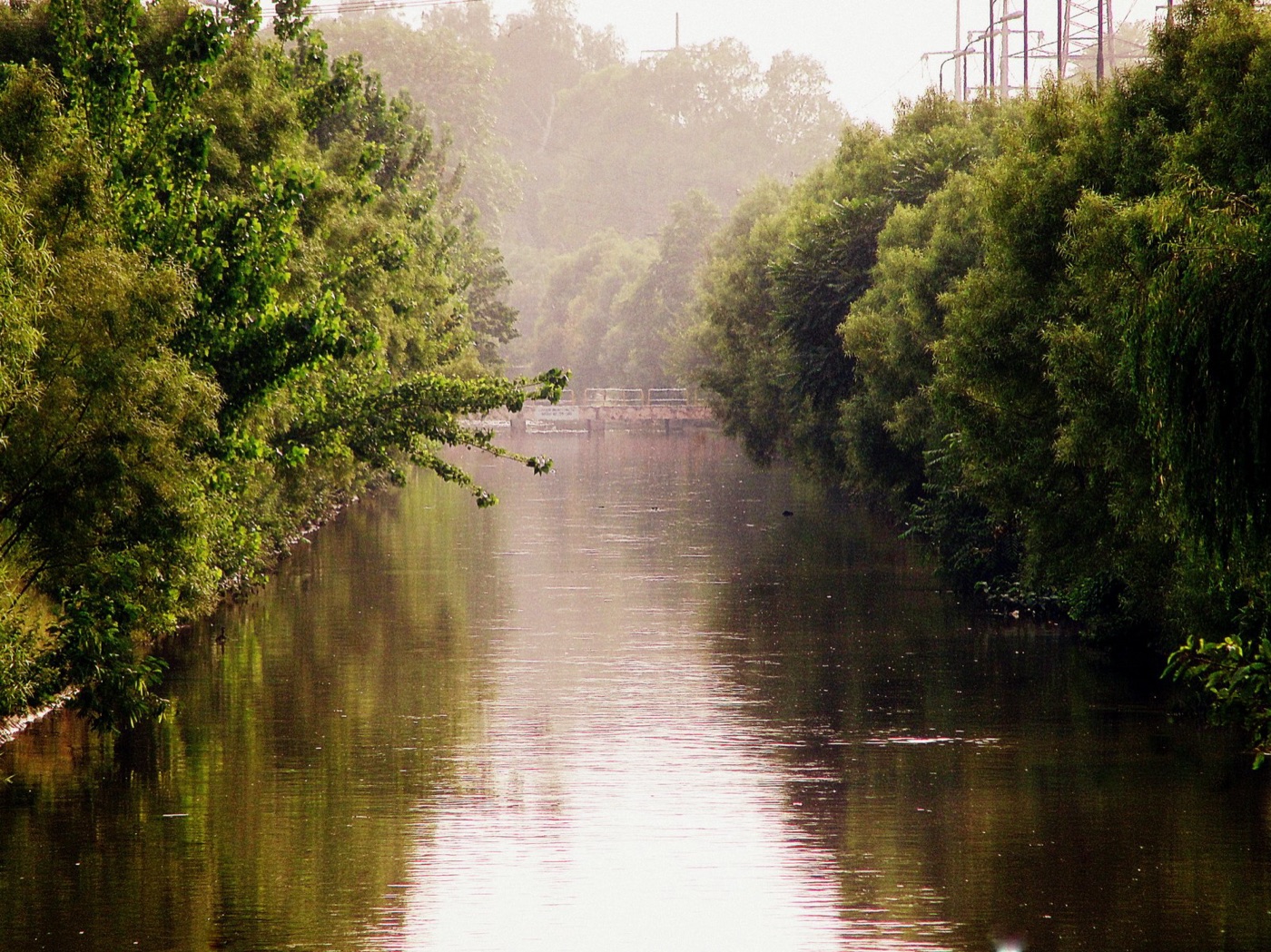
Lahore has one open water it can see, and it is the canal. The Bambanwala Ravi Bedian canal, dug in the 1860s to carry Ravi water to the fields east of the city, runs through the middle of Lahore's newer districts under a double row of trees, and it is the city's river in every sense but the one that matters: the boys swim in it in the summer, the roads run beside it, the housing estates are named for it, and the water in it is irrigation water, silt laden and allocated to farms, that the city has never treated for drinking and that the treaty's arithmetic does not spare for it. The plan for the city's first treatment works takes its water from this canal, at the eastern edge where it enters, and it will need an allocation that the farms downstream currently hold. The Punjab's irrigation system is the largest on Earth and every drop of it is spoken for, which is the other reason a city on a plain full of canals has drunk from the ground for sixty years.
What it teaches
Lahore is the city on this site whose water was decided by a treaty and spent by a pump. The river was given away in 1960 and turned into a drain by the city that lost it, the wells that replaced it have been falling for thirty years and are reaching arsenic and the river's own seepage, and the plan to fix both has been in a drawer since the 1990s while a plan to build a new city on the riverbed went ahead. The Punjab has more canals than any place on Earth. Lahore has none it can drink from.
A hundred percent from the ground, a metre a year, and a river that carries the city's sewage past the gardens that were built to face it.
Sources
- Water and Sanitation Agency (WASA) Lahore, annual reports: about 550 tube wells; supply about 2 billion litres a day; groundwater the sole source; water table decline of 0.5 to 1 metre a year.
- Indus Waters Treaty (1960), Annexure: the Ravi, Beas and Sutlej allocated to India; the Indus, Jhelum and Chenab to Pakistan.
- Basharat, M. and Rizvi, S.A. (2011). Groundwater extraction and waste water disposal regulation: is Lahore aquifer at stake with as usual approach. Pakistan Engineering Congress.
- Punjab Environmental Protection Department and WWF Pakistan, Ravi river water quality surveys: dissolved oxygen near zero below the city; arsenic in groundwater above 10 micrograms per litre in a share of wells.
- Ravi Urban Development Authority, Ravi Riverfront Urban Development Project documents (2020 onward); Lahore High Court rulings 2022.
- Photographs: opener: Badshahi Mosque in Lahore ,Pakistan 07 by Harvinder Chandigarh (CC BY) via Wikimedia Commons; inline: Ravi Lahore LRM by Hamzazahid04 (CC BY-SA) via Wikimedia Commons; inline: Canal of Lahore, Pakistan by S zillayali (CC BY-SA) via Wikimedia Commons.