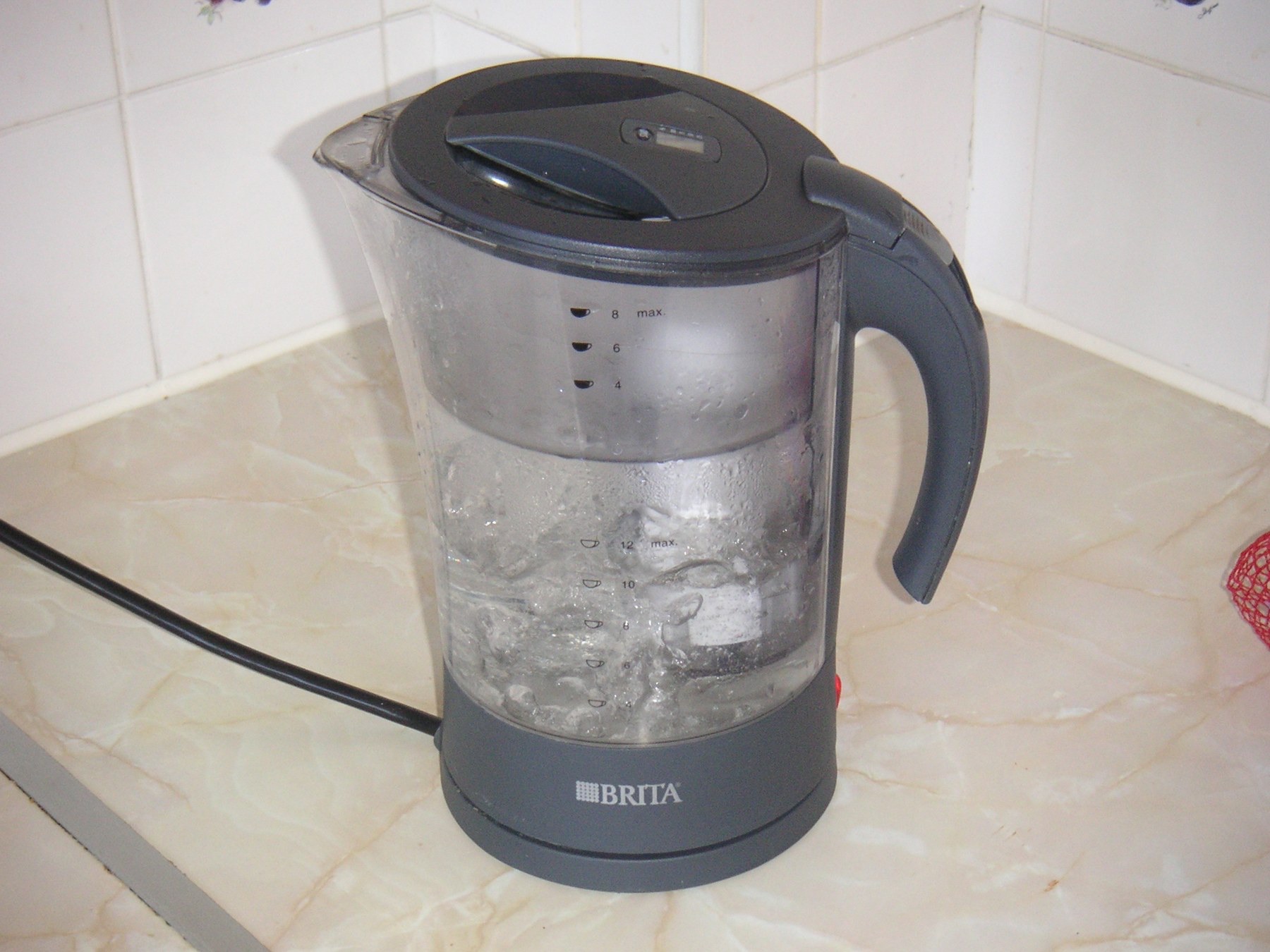
Myth: Reboiling Water Makes It Harmful
The warning that boiling water twice concentrates arsenic, nitrate and fluoride into something dangerous has gone round the internet for a decade, and the arithmetic does not support it. What boiling actually does to water, how much evaporates in a kettle and what that means for what is left, why reboiled tea tastes flat and why that is a different thing, what does build up in a kettle, and what the small true part of the warning is about.
The claim runs like this: boiling water drives off some of it as steam, so whatever was dissolved in the water becomes more concentrated, so a kettle that is boiled twice holds water with twice the arsenic, twice the nitrate and twice the fluoride, and those things are harmful, so never reboil a kettle. Each step in the chain is true in the way a myth needs it to be, and the arithmetic of the whole is wrong by a factor of about twenty. This article is about what boiling actually does to water, what a kettle loses to steam, why reboiled water tastes different and why that is a different question, and what the small true part of the warning is.
What a boil takes away
A kettle brought to the boil and switched off has turned a small share of its water into steam. The measured figure, from the energy tests that look at how much people overfill kettles, is between two and six percent of the volume per boil, more for a kettle left rolling, less for one that clicks off at the first boil. Take five percent. The water that remains holds everything that was dissolved in the original volume, so the concentration of every dissolved thing has risen by about five percent: arsenic at ten micrograms a litre becomes ten and a half, nitrate at twenty milligrams becomes twenty one. A second boil does it again, to about eleven and twenty two. To double the concentration of anything in the kettle, the kettle would have to be boiled until half of it was gone, which takes an hour on a hob with the lid off and does not happen in a kitchen by accident.
The limits, meanwhile, are set with margins. The guideline for arsenic is ten micrograms a litre, set at a level where the lifetime risk is judged acceptable and well below the level at which the arsenic article on this site describes harm; the limit for nitrate, fifty milligrams a litre, was set from the blue baby cases at levels several times higher; and fluoride at one and a half milligrams a litre is a tenth of the level that causes the bone disease. A tap water that meets the standard, boiled twice, or ten times, is a tap water that meets the standard.
| What reboiling does to concentration | |
|---|---|
| Water lost to steam per boil | About 5 percent |
| Rise in concentration per boil | About 5 percent |
| After two boils | About 10 percent |
| To double the concentration | Boil away half the kettle |
| Arsenic at the limit, twice boiled | 11 micrograms a litre, against a limit of 10 set with a wide margin |
| Nitrate at half the limit, twice boiled | 27 milligrams a litre, against a limit of 50 |
Water that does not meet the standard
The one case in which the warning has a point is water that was over the limit to begin with. A well with arsenic at fifty micrograms a litre, which the wells of Bangladesh and West Bengal in the arsenic article on this site carry, is dangerous cold, boiled once and boiled twice, and boiling makes it very slightly worse and, more to the point, does nothing to make it better, because boiling removes nothing that is dissolved. The same is true of nitrate in a farm well and fluoride in a Rift Valley borehole. The boil water notice that a utility issues after a burst main is about bacteria, which a minute of boiling kills, and it is not about chemistry, which a minute of boiling concentrates by a few percent and otherwise leaves alone. The myth's error is to take a warning that belongs to contaminated water and apply it to a kettle full of tap water that passed fifty tests.
Why the tea is flat
Reboiled water does taste different, and the reason is the gas. Cold tap water holds dissolved oxygen and carbon dioxide, a boil drives most of them off, and a second boil drives off the rest, and tea made with water that has no dissolved gas in it tastes flat, in a way that tea drinkers notice and that the chemists who have looked at it attribute to the gases' effect on how the tea's compounds extract and on the sensation in the mouth. The advice to use freshly drawn water for tea is old, and it is right, and it is about taste. The tea trade's own guidance, which has run tests on it, puts the difference down to the oxygen and to the water's temperature on the leaf rather than to anything that would show up in a laboratory's analysis of what the water contains, because nothing in that analysis changes with the boil except the gas. It has been borrowed by the myth as evidence of harm, and flat tea is not a harm.
Boiling also drives off the chlorine, which is why boiled and cooled water tastes better to most people than the tap, and why a jug of it in the fridge is the answer the filter jug article on this site gives to the household that dislikes the taste. The chlorine leaving is a loss of the disinfectant, which matters in a bottle kept for days and not in a cup drunk now.
What does build up
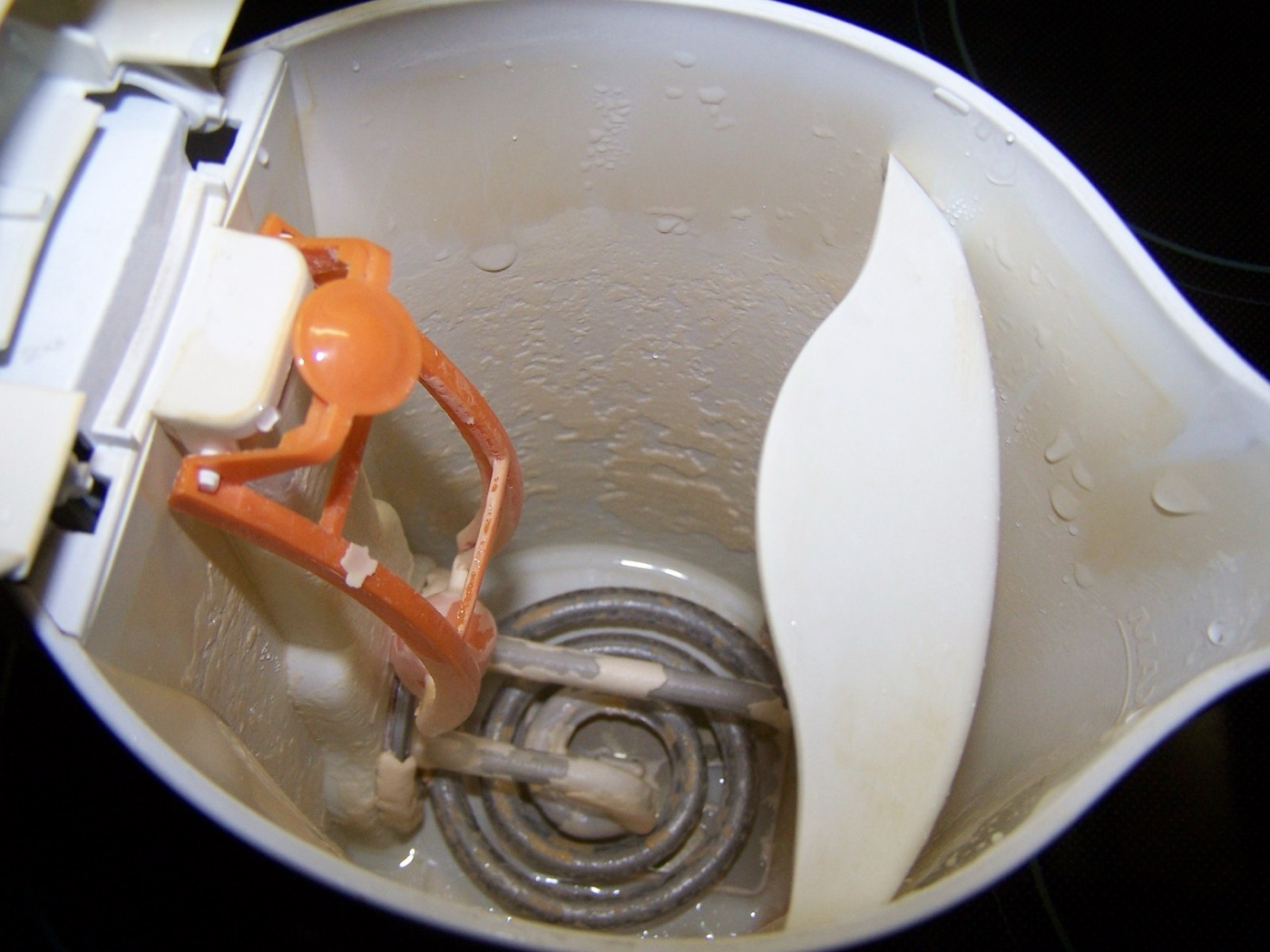
Two things do build up in a kettle, and neither is dissolved. The first is scale: the calcium and magnesium of hard water, which the hard water article on this site describes, come out of solution when the water is heated and coat the element and the walls in a white crust that reduces the kettle's efficiency and flakes into the cup. It is chalk, it is harmless to drink, and a kettle in a hard water district that is never descaled boils slowly rather than dangerously. The second is the kettle left with a little water in the bottom for days, in a warm kitchen, with the lid closed, which is a small version of the still warm water that the Legionella and filter jug articles describe: a place where the bacteria that live in any water grow to numbers that the next boil will kill anyway. Empty the kettle between uses, and the question of reboiling does not arise. The kettle that is worth worrying about is the one nobody has descaled in a year, in a hard water district, that takes four minutes to boil a cup: it is wasting electricity rather than concentrating anything, and a bag of citric acid fixes it in an afternoon.
| What accumulates in a kettle | |
|---|---|
| Scale | Calcium and magnesium from hard water; harmless; slows the kettle |
| Bacteria | In water left standing warm for days; killed by the next boil |
| Arsenic, nitrate, fluoride | Rise by a few percent per boil; never approach the limit in water that met it |
| Chlorine and dissolved gas | Lost, which changes the taste and nothing else |
Where the myth came from
The claim appeared on lifestyle websites around 2015, in articles that named arsenic, nitrate and fluoride because those are the three chemical contaminants that the reader has heard of, and it spread because it had the shape of a warning and cost nothing to pass on. It has since been repeated by television doctors, by appliance makers selling kettles with a fresh water function, and by well meaning relatives. The fact checkers who have looked at it found no study behind it and no case of harm, and the water agencies' own advice on boiling, which is that it kills organisms and does not remove chemicals, has been on their websites since before the claim was made. The myth persists because it is easy to believe that doing something twice makes it more, which is the same mistake that the bath and shower myth and the dishwasher myth on this site turn on, in the other direction.
The energy in the kettle
The one thing reboiling reliably wastes is electricity. A kettle boiled twice has used the energy of two boils, and the second was for water that was already hot enough to make tea a minute ago, and the household that fills the kettle to the top for one cup and boils it again for the next is spending, over a year, the energy that the dishwasher article on this site counts as the larger half of a hot water appliance's footprint. The advice that saves energy and the advice that makes better tea are the same: fill the kettle with what you need, from the cold tap, and boil it once. The myth, which tells people to pour out the water and start again for their health, sends them to the same place for the wrong reason, and a myth that happens to give good advice is still a myth.
What it teaches
The reboiling myth is the smallest on this site and it is a lesson in arithmetic. A boil loses five percent of the water and raises whatever is dissolved by five percent, against limits set with margins of tens and hundreds, and the water that would be dangerous reboiled was dangerous cold. Flat tea is real and is about gas. Scale is real and is chalk. A kettle emptied between uses, descaled when it slows, and filled from the cold tap, is safe to boil as many times as the tea requires. The energy is the only thing the second boil costs, and the taste is the only thing it changes.
Five percent to steam, five percent more of everything in the rest, and a limit that a hundred boils would not reach.
Sources
- WHO (2022). Guidelines for Drinking Water Quality: arsenic 10 micrograms per litre; nitrate 50 milligrams per litre; fluoride 1.5 milligrams per litre; derivation of the guideline values and their margins.
- US EPA and UK DWI, boil water advisories: one minute at a rolling boil kills bacteria, viruses and protozoa; boiling does not remove chemical contaminants.
- Evaporative loss in domestic kettles: measured losses of 2 to 6 percent of volume per boil in energy efficiency testing (Energy Saving Trust, kettle overfilling studies).
- Dissolved oxygen and carbon dioxide loss on boiling and the effect on tea flavour: UK Tea Academy and Royal Society of Chemistry, How to make a perfect cup of tea (2003).
- Snopes and Full Fact, reviews of the reboiling claim (2015 onward).
- Photographs: opener: Kettle (4141300920) by Lee Haywood (CC BY-SA) via Wikimedia Commons; inline: Waterboiler-internal by Henna (CC BY-SA) via Wikimedia Commons; inline: Pouring Tea. by Mizzyjo (CC BY-SA) via Wikimedia Commons.