Thirsty Places: Sydney
A city of five million that drinks from one enormous dam, built a desalination plant in a drought, switched it off when the rain came and left it idle for seven years, then switched it on again in the next drought and is now doubling it. What Sydney's water is, why one dam holds four fifths of it, what the 2019 drought did to the plan, and why a plant that sits idle for years is doing exactly what it was built for.
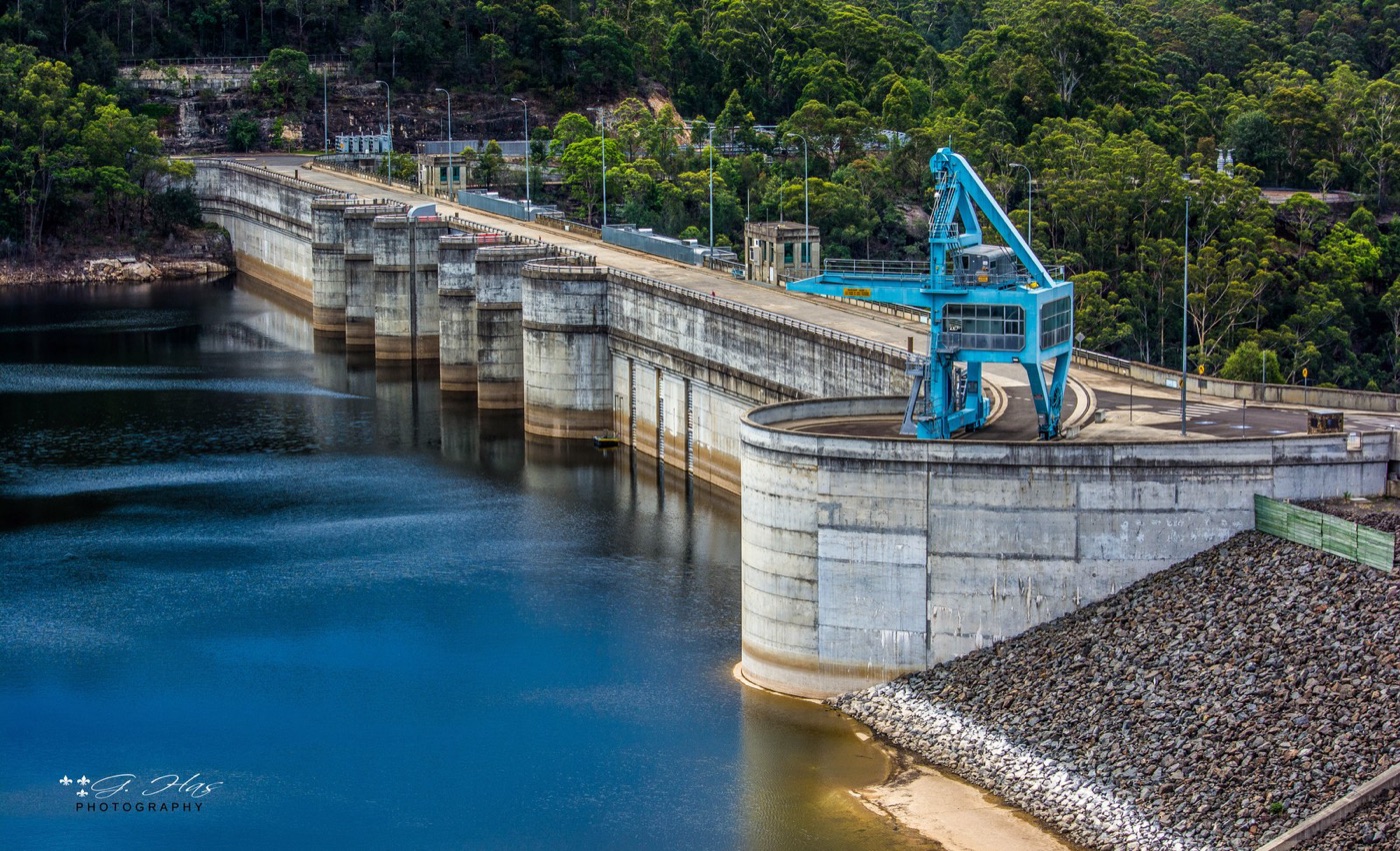
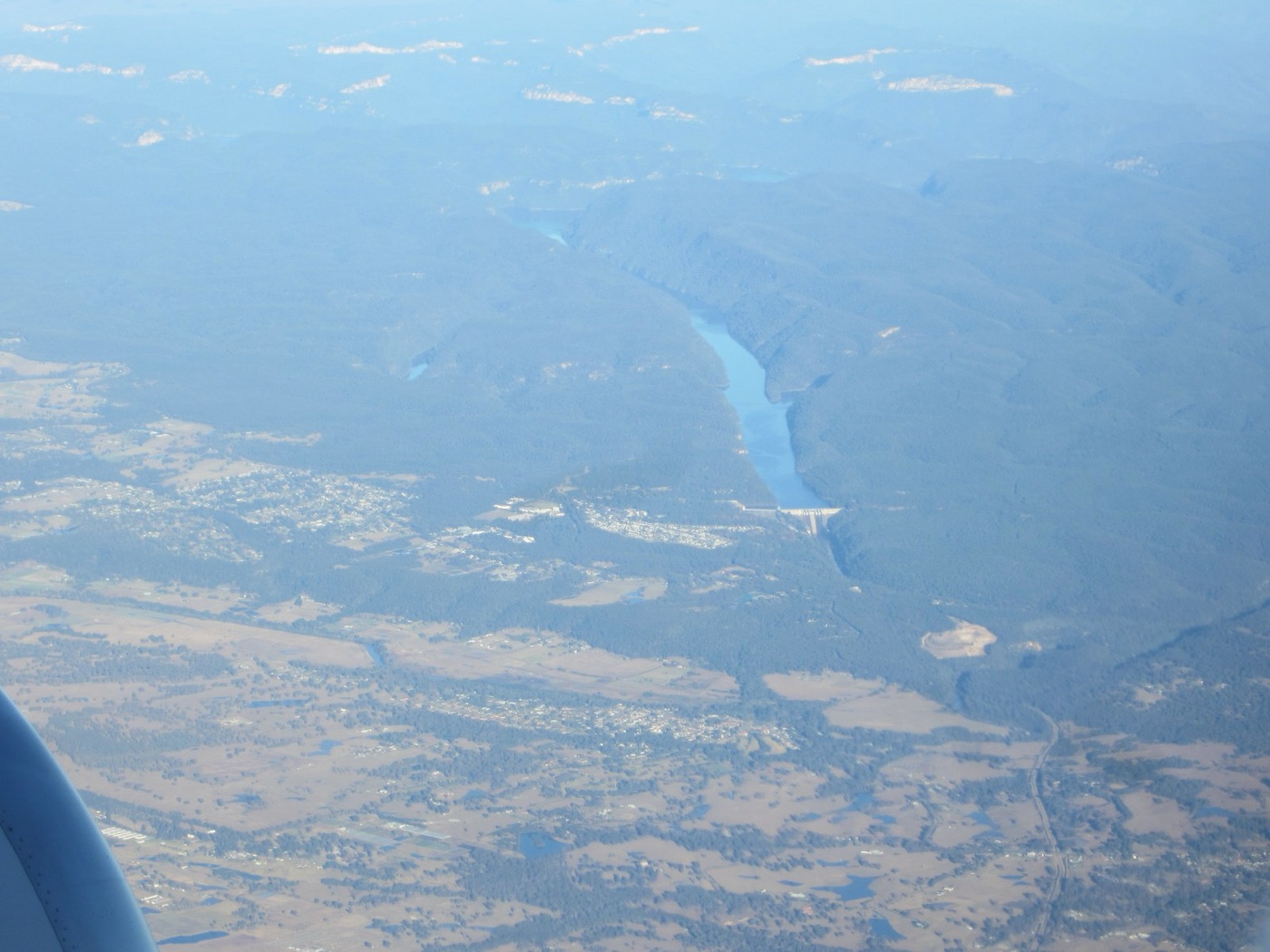
Sydney is the largest city in Australia and it drinks, for the most part, from a single dam. Warragamba, sixty kilometres west of the harbour, holds about two thousand billion litres behind a concrete wall across the Nepean gorge and supplies about four fifths of the city's water. When it is full the city has three or four years of ordinary use stored in the valley behind it. When it falls, the city has a problem with no second answer, and twice in twenty years it has fallen far enough that the answer had to be built.
This article is about what Sydney's water is, what the two droughts did, what the desalination plant at Kurnell was built for and why it spent most of its life switched off, and why that, rather than being a scandal, is the plan working.
One dam
Sydney's water comes from a ring of dams in the sandstone country south and west of the city, built between the 1880s and the 1960s as the city outgrew each in turn, and Warragamba, finished in 1960, is the last and by far the largest. The catchment is about nine thousand square kilometres of mostly forested and farmed country, closed to public access near the water as Melbourne's is, and the water is soft, low in dissolved solids and treated at Prospect, the largest water filtration plant in the southern hemisphere, by the coagulation and filtration the plain water articles describe.
The city uses about one and a half billion litres a day, of which households take the larger part at around two hundred litres a person. In an average year the dams catch more than that and the surplus spills. In a dry one they do not, and because the storage is so large and so concentrated, the city's fortunes rise and fall with one valley's rain.
| Sydney's water | |
|---|---|
| People | About 5.3 million |
| Warragamba capacity | About 2,000 billion litres, four fifths of the system |
| Total storage | About 2,600 billion litres |
| Use | About 1,500 million litres a day |
| Household use | About 200 litres a person a day |
| Desalination | 250 million litres a day, being doubled |
The first drought
The Millennium Drought that emptied Melbourne's reservoirs did the same to Sydney's, more slowly. From 1998 the dams fell, and by February 2007 Warragamba was at about a third, with the city on restrictions that banned sprinklers and hoses on hard surfaces and, by the end, allowed a hand held hose on a garden only on two days a week. The government looked at the rate of fall, at a catchment that had had eight dry years, and at the forecast, and decided the city could not depend on rain returning in time.
The answer was a desalination plant at Kurnell, on the peninsula south of the harbour, drawing seawater from the Tasman and sending it through reverse osmosis at 250 million litres a day, with a wind farm built inland to offset its electricity. It cost about two billion dollars and it was finished in 2010, by which time the drought had broken, the dams were at ninety percent, and the plant's water was not needed. It ran for two years to prove itself and was put on standby in 2012.
Seven years idle
For seven years the plant sat at Kurnell doing nothing, and the argument about it never stopped. It was leased to private owners who were paid a standby charge whether it ran or not, which the newspapers reported every year as the cost of a white elephant. A tornado tore the roof off part of it in 2015 and the repairs took three years. The dams, meanwhile, stayed full, and the city's use, which the drought restrictions had cut from about 350 litres a person to about 200, stayed low, because the habits and the fittings had changed.
The rule that governed the plant was written into its contract: it would be switched on when total storage fell below sixty percent and off when it rose above seventy. The rule was the whole point. A desalination plant, as the desalination article on this site argues, is expensive water and it makes sense only when the alternative is no water; a plant that runs all the time in a city with a two thousand billion litre dam is wasting electricity, and a plant that runs only when the dam is low is doing what it is for.
The second drought
In 2017 the rain stopped again, and this time the dam fell faster than anyone had modelled. The catchment was dry and warm, the inflows were the lowest on record, and Warragamba went from full in 2016 to below sixty percent in January 2019, when the rule triggered and the plant was restarted. It reached full output within weeks and ran through the year. The city went on to restrictions in June 2019, the first in a decade, and to tighter ones in December, as the dam approached forty percent and the government began to plan for what it had never had to plan for before: the dam running out.
The plan, drawn up in the second half of 2019, was to double the desalination plant, to build a second one, to build the pipes to bring purified recycled water into the dams, and to cut use further. It was published as the drought reached its worst and then, in February 2020, the rain came: a week of it, filling Warragamba from about forty percent to over eighty in ten days and flooding the valley below. The restrictions were lifted, the plant ran on until the dams passed the threshold, and the plan was kept.
| Sydney's two droughts | |
|---|---|
| 1998 to 2007 | Dams fell to about a third; restrictions; desalination ordered |
| 2010 | Plant finished; dams full; plant on standby from 2012 |
| 2017 to 2019 | Fastest fall on record; plant restarted January 2019; restrictions June and December |
| February 2020 | A week of rain refilled Warragamba to over 80 percent |
| 2022 | Floods; the dam spilled for weeks |
What the second drought taught
The lesson Sydney drew, written into its water strategy in 2022, was that its one dam is the problem and the plant is the answer. A catchment that can go from full to forty percent in three years, in a climate where the dry spells are getting longer and the inflows lower, cannot be the city's only source, and the only source that does not depend on rain is the sea. The plant at Kurnell is being doubled to five hundred million litres a day, a third of the city's use, and a second plant is being designed for the north. Purified recycled water, of the kind Singapore drinks and Orange County puts into its aquifer, is being planned for the dams, against the public reluctance that has stalled it in Australia before. And the wall of Warragamba, which the government proposed to raise for flood control, was left alone in 2023 after the cost and the drowning of the valley above were judged too high.
The plant's critics have gone quiet, because the seven idle years now read differently. A plant that was switched on within days when the dam fell, and that carried a sixth of the city through its worst year, cost the standby charge for exactly the reason the standby charge exists.
The water nobody wants to drink
The cheaper answer than a second desalination plant is the one Sydney already makes and throws away. The city's sewage works treat about a billion litres a day and discharge most of it to the ocean through three deep outfalls off the northern beaches, and the technology to purify a share of it to drinking standard and put it into Warragamba is the one the Orange County and Singapore articles on this site describe: membranes, reverse osmosis, ultraviolet light and a long rest in the dam. It costs less than desalination, because the water is already fresh, and it uses less than half the electricity. It has been proposed for Sydney in every drought since 2006 and rejected in every one, by governments that read the polling. Toowoomba, in Queensland, voted against it in 2006 by a margin of two to one, and the word that won the vote was the one the campaigners used on the posters. The 2022 strategy names purified recycled water as a source to be built by the 2030s and does not say when, which is how a government keeps an option without spending on it. Perth, the Australian city with the least rain, has been putting purified recycled water into its aquifer since 2017 and drinking it since, and nobody there has noticed.
What it teaches
Sydney is the city on this site that answers the argument the desalination myth article makes. Desalination is expensive, energy hungry and the wrong first answer for a city that can cut its use and catch its rain; and for a city of five million with one dam in a drying climate, it is the only answer that does not depend on the sky. The two are reconciled by the switch: a plant that sits idle in the wet years and runs in the dry ones, paid for as insurance and used as insurance. Melbourne built the same and left it idle for a decade. Cape Town nearly ran out for want of one. Sydney is doubling its own.
250 million litres a day, idle for seven years, and running when it counted.
Sources
- WaterNSW, Greater Sydney dam levels and storage: Warragamba capacity 2,027 GL; system total about 2,600 GL. Lowest levels about 32 percent in February 2007 and about 42 percent in February 2020.
- Sydney Water, Water Conservation Report and annual reports: residential use around 200 litres per person per day; total demand around 1,500 to 1,700 ML per day.
- Sydney Desalination Plant, plant facts: 250 ML per day, commissioned 2010, on standby 2012 to 2019, restarted January 2019 when total storage fell below 60 percent.
- NSW Government, Greater Sydney Water Strategy (2022): desalination expansion, purified recycled water, and demand reduction.
- Bureau of Meteorology, Special Climate Statement 70: the 2017 to 2019 drought in eastern Australia.
- Photographs: opener: Sydney Harbour Bridge & Opera House (20231001) (53322902670) by Takeshi Aida (CC BY-SA) via Wikimedia Commons; inline: Warragamba Dam (January 2014) by Goran Has (CC BY) via Wikimedia Commons; inline: Aerial view of Warragamba Dam, Silverdale and Wallacia by Bidgee (CC BY-SA) via Wikimedia Commons.